Autoclave sterilizer
1344×768 · AVIF · CC BY 4.0
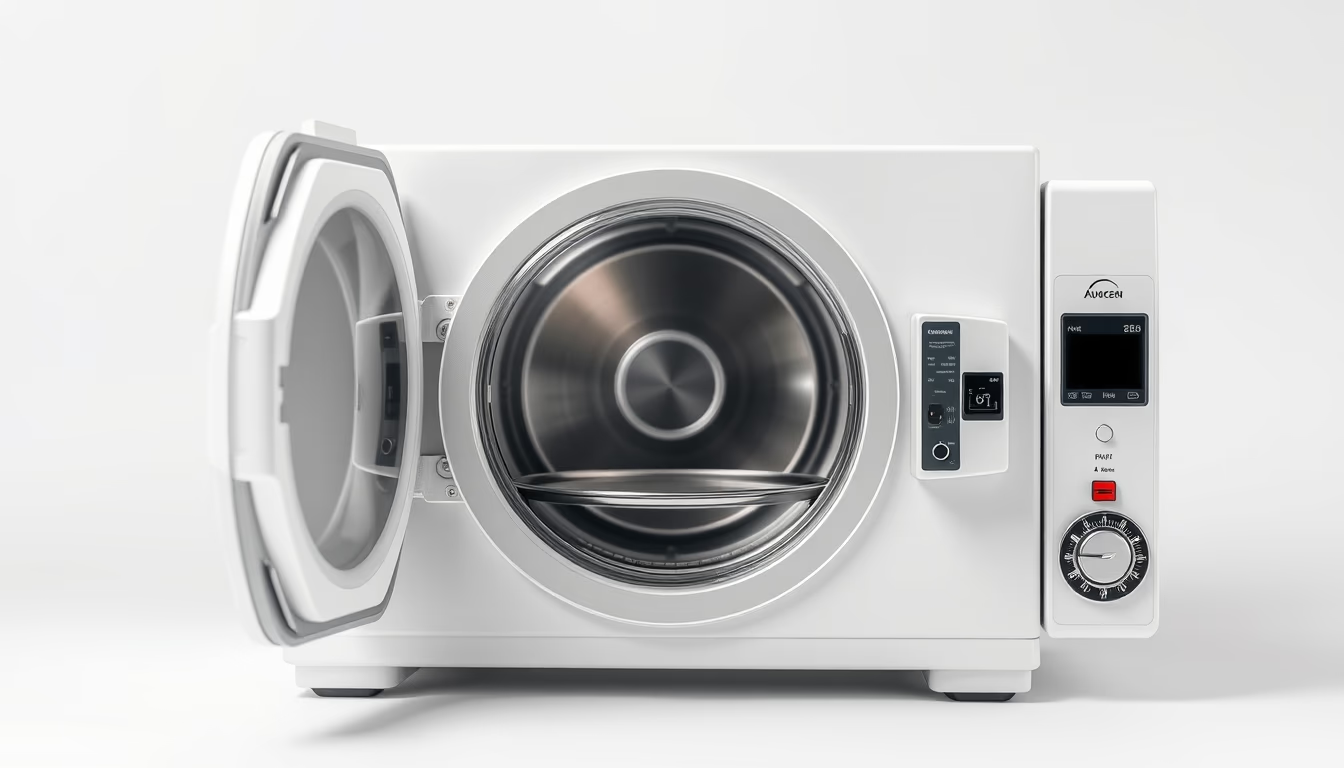
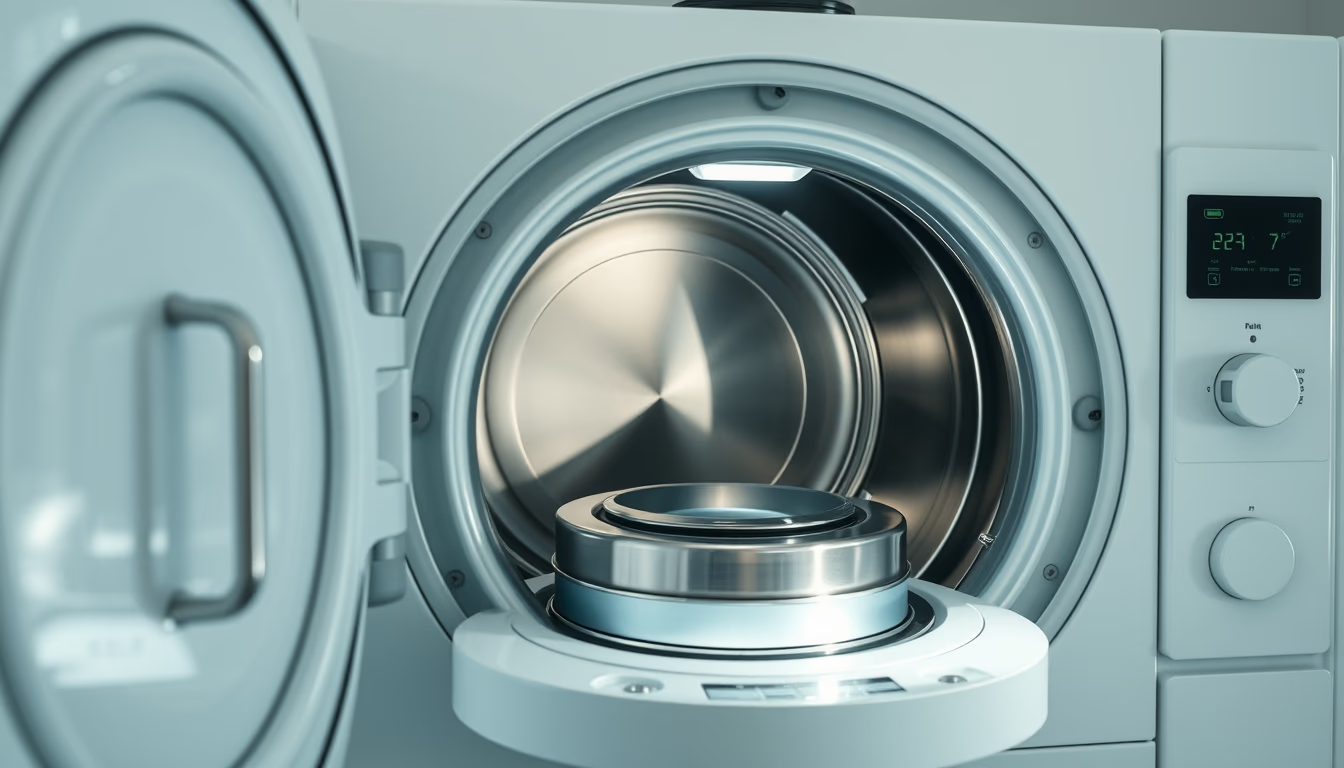
Autoclave sterilizer: essential equipment for steam sterilization under pressure in laboratories and hospitals.
About this subject
An autoclave is a device used to sterilize materials and instruments through steam under pressure. Its operating principle involves heating water to produce steam, which is kept in a sealed chamber under controlled pressure, typically between 121°C and 134°C. This process eliminates microorganisms, including bacterial spores, ensuring the sterility of surgical instruments, laboratory glassware, culture media, and biological waste.
The development of the autoclave dates back to the late 19th century, with microbiologist Charles Chamberland refining the concept for use in Louis Pasteur's laboratories. Since then, the equipment has become a standard in environments requiring strict contamination control. There are different types of autoclaves: gravity displacement, which removes air by gravity; vacuum-assisted, which uses pumps to extract air before steam injection; and rapid-cycle autoclaves, suitable for materials that cannot withstand prolonged heat exposure.
Modern autoclaves feature electronic controls, temperature and pressure sensors, pre-set programs for different load types, and safety systems such as relief valves and automatic locks. In Brazil, ANVISA regulates the use of autoclaves in healthcare facilities, requiring periodic validation of sterilization cycles. Beyond hospital and laboratory use, autoclaves are employed in the pharmaceutical industry, food production, and even for treating infectious waste.
An interesting fact: the word autoclave comes from the Greek 'auto' (self) and Latin 'clavis' (key), referring to the hermetic sealing system that prevents pressure loss. Proper cycle selection and preventive maintenance are crucial for sterilization efficacy, as failures can compromise the process and endanger patients or researchers.
Frequently Asked Questions
What are typical temperature and pressure in an autoclave?
The most common setting is 121°C at 1 atm of pressure, with cycles lasting 15 to 30 minutes. For more heat-resistant items, 134°C at 2 atm is used with shorter cycles.
Which materials cannot be autoclaved?
Heat-sensitive materials such as non-autoclavable plastics, sharp instruments that may dull, and liquids in sealed containers that could explode should be sterilized using alternative methods.
How often should an autoclave be maintained?
Preventive maintenance is recommended every 6 months or as per manufacturer instructions, including sensor calibration and safety valve testing.
Direct URL
https://pub-c7d6a6ea828543ac903a74a341ccb2e1.r2.dev/imagens/autoclave-sterilizer-commercial-product-photography-fresh1.avifHow to credit
Include a visible link back to UtilizAí. Copy one of the snippets below:
<a href="https://xn--utiliza-eza.com/en/midia/imagens/autoclave-sterilizer-commercial-product-photography-fresh1">Autoclave sterilizer</a> by <a href="https://xn--utiliza-eza.com">UtilizAí</a>, licensed under <a href="https://creativecommons.org/licenses/by/4.0/">CC BY 4.0</a>.
[Autoclave sterilizer](https://xn--utiliza-eza.com/en/midia/imagens/autoclave-sterilizer-commercial-product-photography-fresh1) by [UtilizAí](https://xn--utiliza-eza.com), CC BY 4.0
License: CC-BY-4.0