Antelope canyon arizona
1344×768 · AVIF · CC BY 4.0
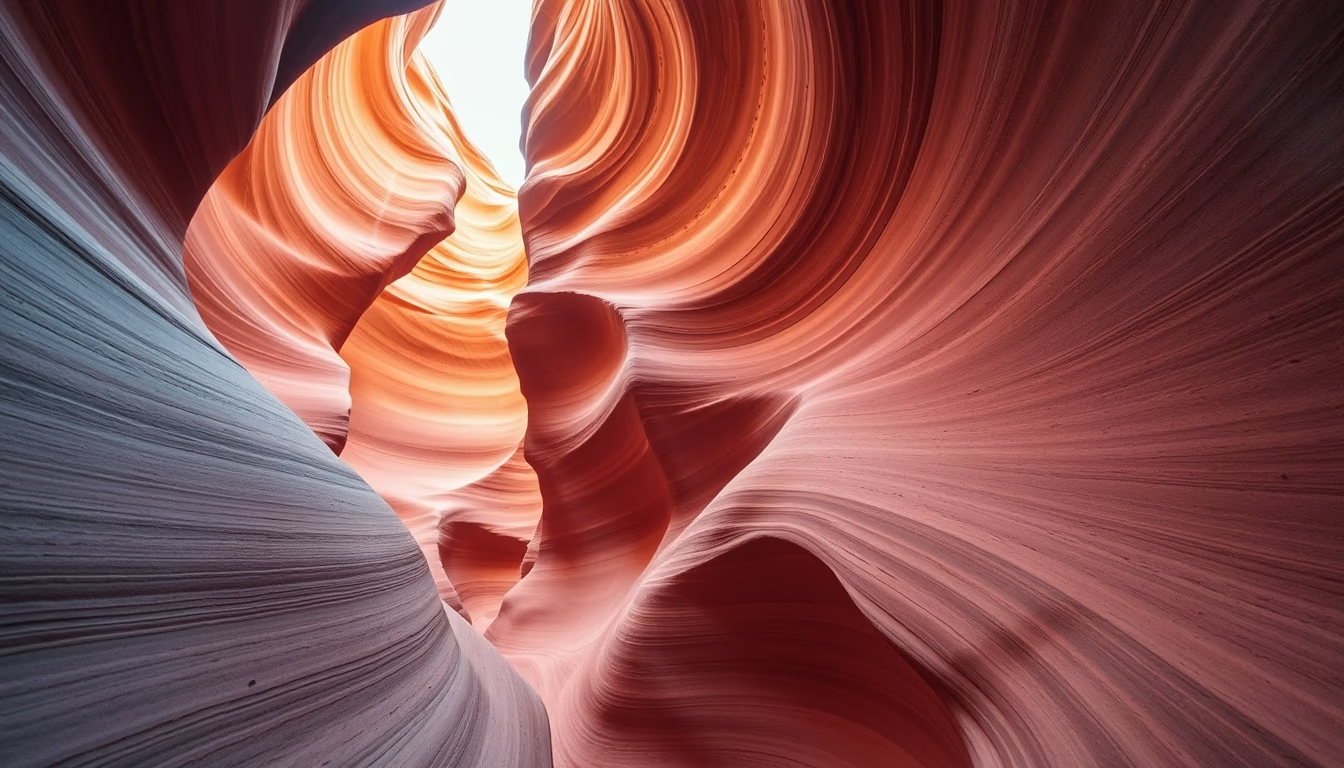
Antelope Canyon is a sandstone slot canyon in Arizona, renowned for its wave-like formations and shafts of light that penetrate its narrow passages.
About this subject
Antelope Canyon, located on Navajo land in Arizona, is one of the most photographed slot canyons in the world. Its formation dates back millions of years, with water and wind erosion sculpting the Navajo sandstone into smooth, flowing curves and mesmerizing patterns. The canyon is divided into two main sections: Upper Antelope Canyon, known as "The Crack," and Lower Antelope Canyon, called "The Corkscrew." The upper section is wider and flatter, while the lower requires climbing ladders and navigating tighter spaces.
The name "Antelope" comes from the pronghorn antelope that once grazed the area, but the Navajo call it "Tse' bighanilini" (the place where water runs through rocks). The most dramatic light beams occur from March to October, especially in summer when the sun is higher, creating a spectacle of light and shadow on the orange-red walls.
Visitation is controlled by Navajo guides, as the canyon lies on tribal land. In 1997, a flash flood killed 11 tourists in Lower Antelope Canyon, leading to safety measures such as ladder installations and weather monitoring systems. Professional photography requires a special permit, and tripods are allowed only during specific guided tours.
Geologically, the Navajo sandstone is an iconic formation of the Colorado Plateau, dating from the Jurassic period. The wavy patterns result from ancient sand dune deposits that were compacted and later eroded. Interestingly, the reddish color comes from iron oxides, and slight chemical variations produce vibrant hues.
Frequently Asked Questions
What is the best time to visit Antelope Canyon?
The best time for light beams is from March to October, especially at midday in summer (June, August). To avoid crowds, consider spring or fall outside peak months.
Do you need a guide to visit Antelope Canyon?
Yes, visitation is only allowed with authorized Navajo guides. Several companies offer tours for Upper and Lower Canyon.
How was Antelope Canyon formed?
The canyon was carved by flash floods over millions of years, eroding the Navajo sandstone. The wavy shapes result from wind and water shaping fractures and sediments.
Direct URL
https://pub-c7d6a6ea828543ac903a74a341ccb2e1.r2.dev/imagens/antelope-canyon-arizona-national-geographic-style-p4.avifHow to credit
Include a visible link back to UtilizAí. Copy one of the snippets below:
<a href="https://xn--utiliza-eza.com/en/midia/imagens/antelope-canyon-arizona-national-geographic-style-p4">Antelope canyon arizona</a> by <a href="https://xn--utiliza-eza.com">UtilizAí</a>, licensed under <a href="https://creativecommons.org/licenses/by/4.0/">CC BY 4.0</a>.
[Antelope canyon arizona](https://xn--utiliza-eza.com/en/midia/imagens/antelope-canyon-arizona-national-geographic-style-p4) by [UtilizAí](https://xn--utiliza-eza.com), CC BY 4.0
License: CC-BY-4.0