Analytical balance closeup
1344×768 · AVIF · CC BY 4.0
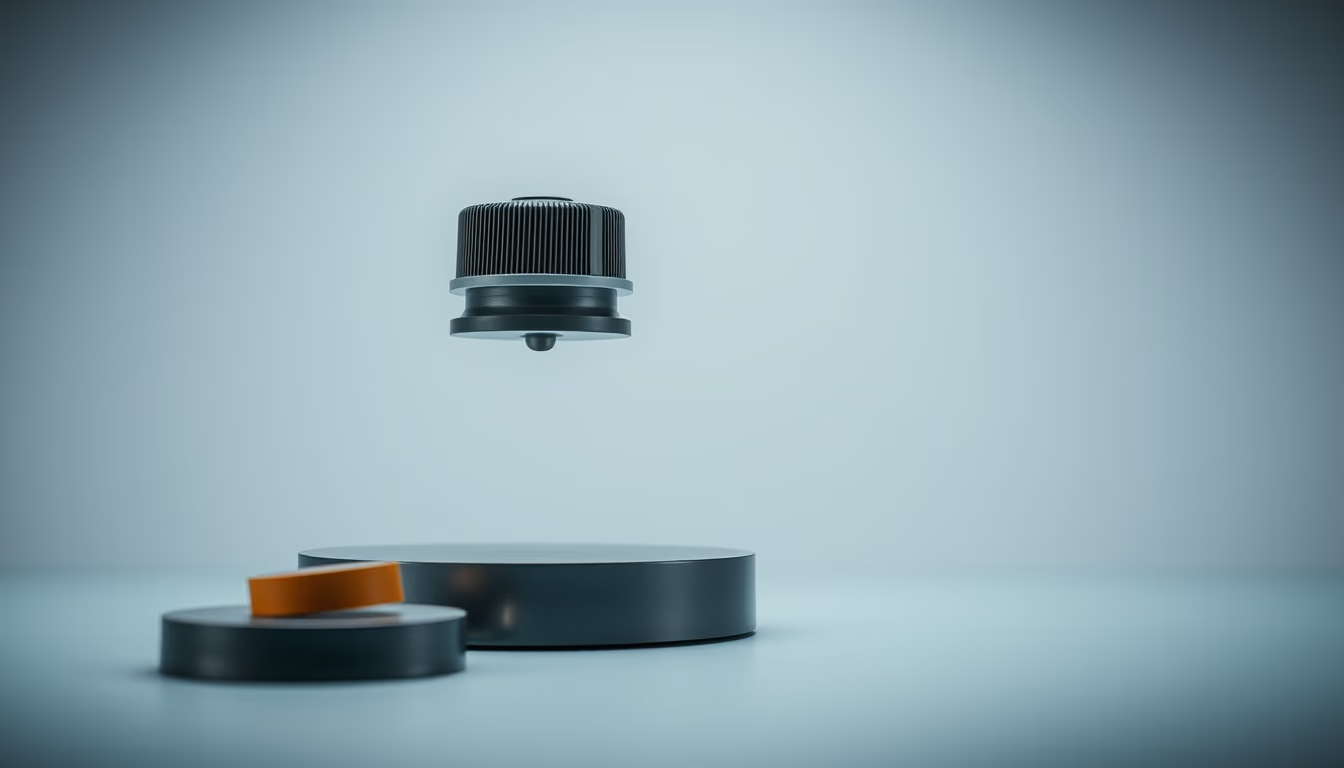
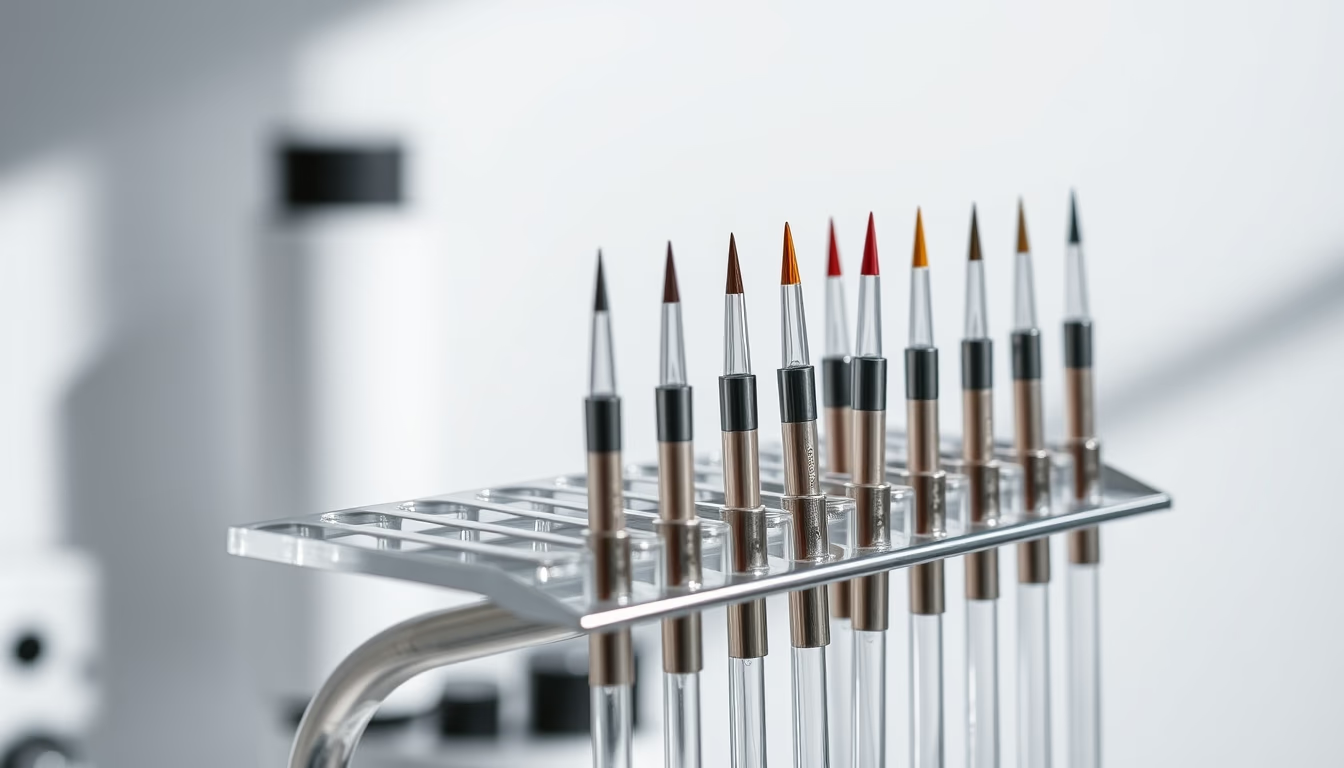
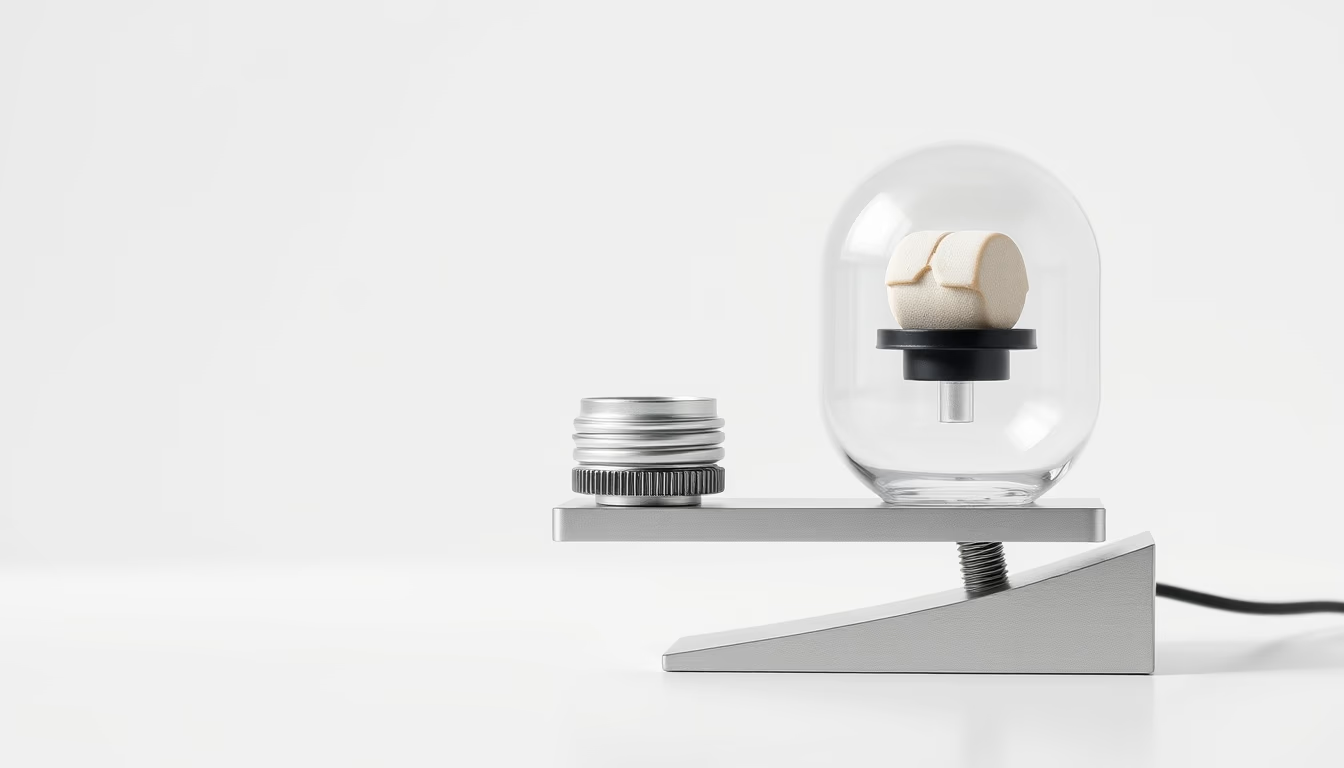
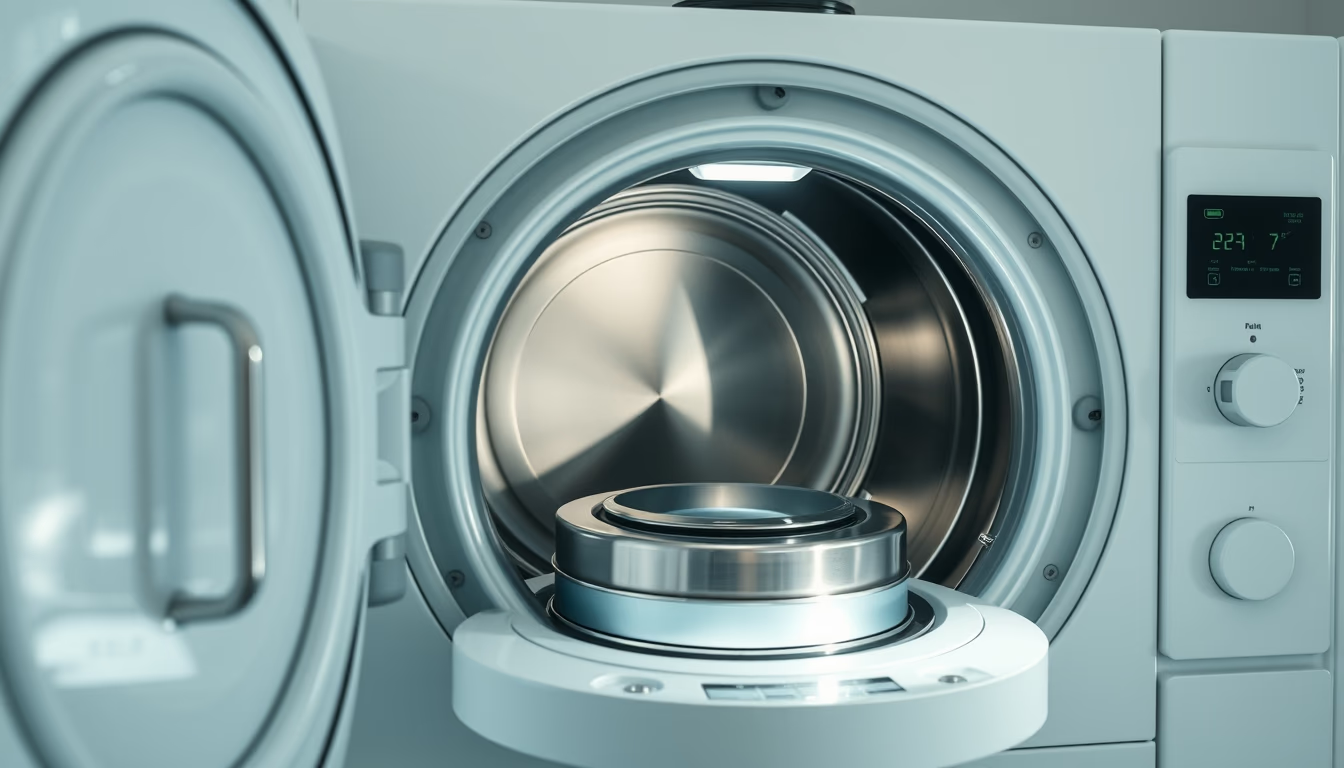
Close-up of an analytical balance, a precision instrument used in laboratories to measure masses with accuracy down to 0.0001 gram.
About this subject
The analytical balance is one of the most precise instruments found in chemistry, pharmacy, and biology laboratories. Capable of measuring masses with a resolution of 0.0001 g (0.1 mg), it is essential for procedures that require exact quantification of reagents, such as preparing standard solutions and gravimetric analyses. Unlike common precision balances, analytical balances feature a glass draft shield that protects the sample from air currents and thermal variations, ensuring measurement stability.
To obtain reliable results, the analytical balance must be calibrated daily with certified standard weights, typically 100 g or 200 g. Calibration can be internal (automatic) or external depending on the model. Additionally, factors such as bench leveling, absence of vibrations, and controlled temperature are crucial for accuracy. Many laboratories place the balance on an antivibration table and monitor relative humidity.
Modern analytical balances incorporate features like automatic tare adjustment, sensitive digital touch displays, and interfaces for computer connection, facilitating data recording. Semi-micro and micro models extend capabilities to even smaller measurements, reaching 0.01 mg or 0.001 mg, respectively. Periodic maintenance, including cleaning the pan and checking for wear, extends the equipment's lifespan.
In practice, correct use of an analytical balance involves procedures such as handling the sample with a clean spatula, never touching the pan with bare hands, and waiting for the signal to stabilize before recording the value. Common errors, such as forgetting to close the draft shield door or placing heated substances on the pan, can compromise measurement accuracy.
Frequently Asked Questions
What is the difference between an analytical balance and a precision balance?
An analytical balance measures with a precision of 0.0001 g (0.1 mg) and features a draft shield. A precision balance has lower resolution (typically 0.01 g or 0.001 g) and may lack a shield, used for less critical measurements.
How to properly calibrate an analytical balance?
Calibration can be internal (automatic) or external. For external calibration, place a certified standard weight (e.g., 100 g) on the center of the pan and follow the manufacturer's procedure. Calibration should be performed daily or whenever the balance is moved.
What essential precautions should be taken when using an analytical balance?
Keep the draft shield closed during measurement, avoid bench vibrations, do not place hot or volatile substances directly on the pan, and use clean, dry containers. Also, ensure the balance is leveled and wait for the display to stabilize.
Direct URL
https://pub-c7d6a6ea828543ac903a74a341ccb2e1.r2.dev/imagens/analytical-balance-closeup-studio-still-life-fresh4.avifHow to credit
Include a visible link back to UtilizAí. Copy one of the snippets below:
<a href="https://xn--utiliza-eza.com/en/midia/imagens/analytical-balance-closeup-studio-still-life-fresh4">Analytical balance closeup</a> by <a href="https://xn--utiliza-eza.com">UtilizAí</a>, licensed under <a href="https://creativecommons.org/licenses/by/4.0/">CC BY 4.0</a>.
[Analytical balance closeup](https://xn--utiliza-eza.com/en/midia/imagens/analytical-balance-closeup-studio-still-life-fresh4) by [UtilizAí](https://xn--utiliza-eza.com), CC BY 4.0
License: CC-BY-4.0