Analytical balance closeup
1344×768 · AVIF · CC BY 4.0

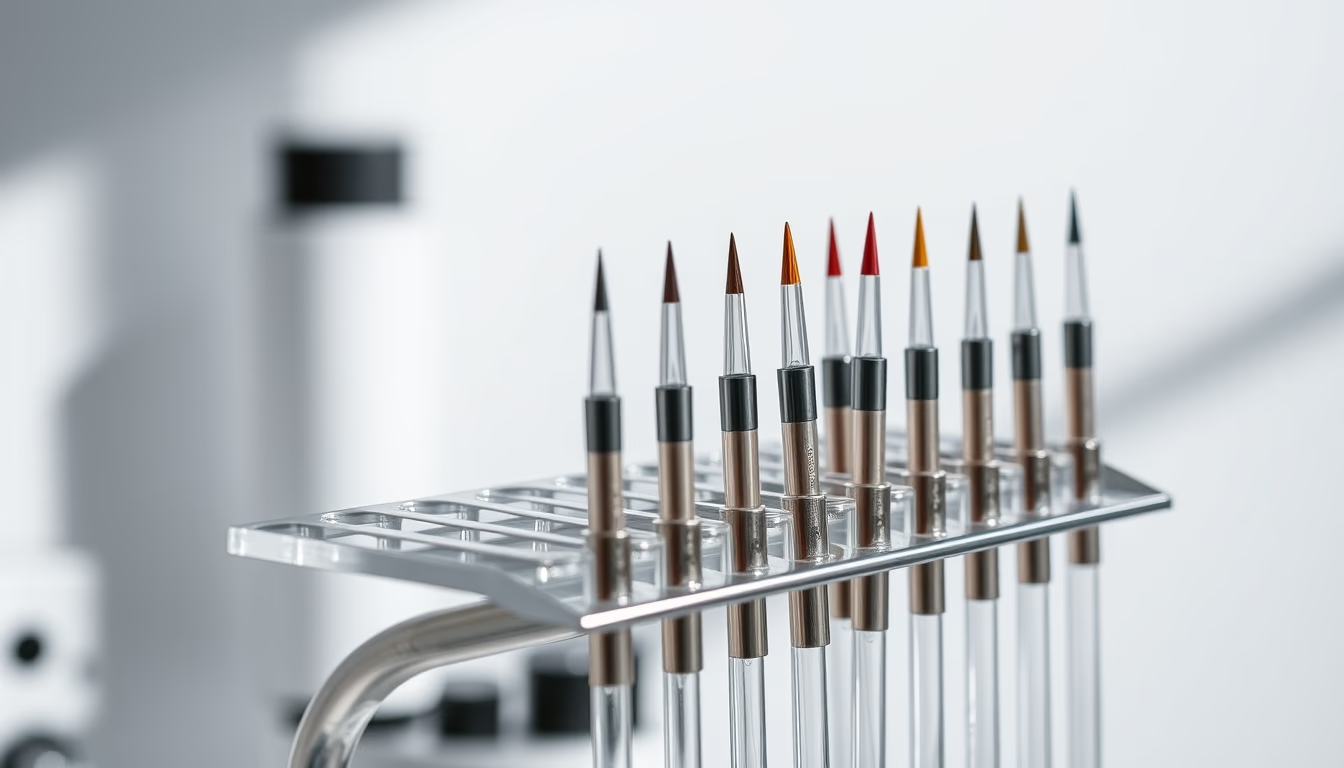
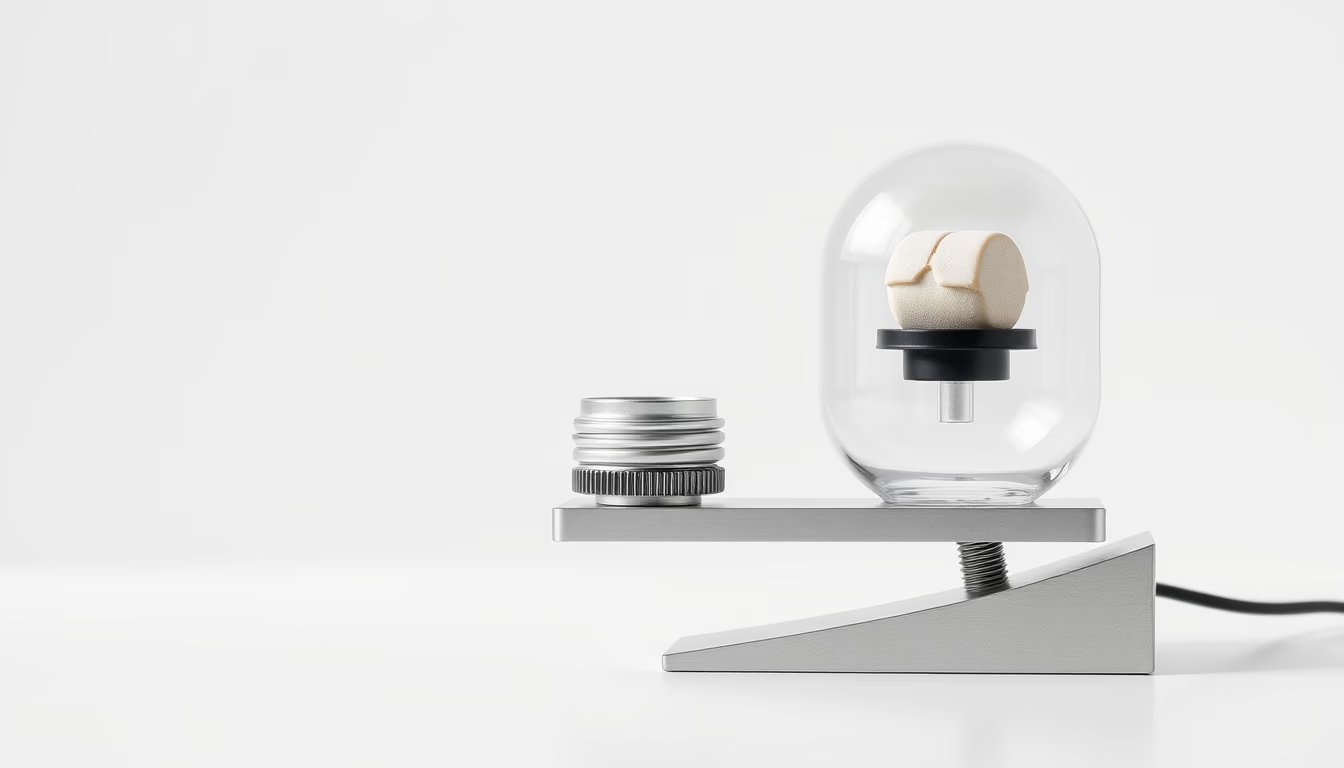
High-precision analytical balance used in laboratories to measure mass with accuracy up to 0.1 mg, essential in chemistry and pharmacy.
About this subject
An analytical balance is an extremely precise measuring instrument capable of detecting mass variations on the order of 0.1 mg or even 0.01 mg. Unlike common scales, it features a glass or plastic draft shield to isolate the sample from air currents and dust, which could compromise the reading. Its operation relies on electromagnetic load cells or strain gauge sensors that convert the weight force into an electrical signal.
This type of balance is indispensable in chemical analysis laboratories, pharmaceutical quality control, and scientific research. For example, in the preparation of standard solutions, exact mass of reactants is critical for final concentration. In the pharmaceutical industry, dosing active ingredients in medications requires analytical balances to ensure safety and efficacy.
Periodic calibration is mandatory, usually with certified standard weights, and factors such as temperature, humidity, and ambient vibration affect precision. Modern models feature automatic internal adjustment, bubble leveling, and digital interfaces for data recording. Maintenance includes careful cleaning of the pan and chamber, avoiding residues that could alter measurements.
Interestingly, the first analytical balance was developed in the 18th century by Antoine Lavoisier, and since then technology has evolved to meet increasingly strict accuracy demands. Today, analytical balances are found in universities, hospitals, and metrology laboratories, being fundamental tools for modern science.
Frequently Asked Questions
What is the typical precision of an analytical balance?
Typical precision is 0.1 mg (0.0001 g), but advanced models can achieve 0.01 mg (0.00001 g), depending on the measurement range and equipment quality.
Why does an analytical balance need a glass enclosure?
The glass or plastic enclosure protects the sample from air currents, dust, and temperature variations, factors that can cause fluctuations in the reading and compromise precision.
How to properly calibrate an analytical balance?
Calibration should be performed with certified standard weights, following the manufacturer's instructions. Many models have automatic internal calibration, but periodic external verification is recommended.
Direct URL
https://pub-c7d6a6ea828543ac903a74a341ccb2e1.r2.dev/imagens/analytical-balance-closeup-minimalist-composition-fresh15.avifHow to credit
Include a visible link back to UtilizAí. Copy one of the snippets below:
<a href="https://xn--utiliza-eza.com/en/midia/imagens/analytical-balance-closeup-minimalist-composition-fresh15">Analytical balance closeup</a> by <a href="https://xn--utiliza-eza.com">UtilizAí</a>, licensed under <a href="https://creativecommons.org/licenses/by/4.0/">CC BY 4.0</a>.
[Analytical balance closeup](https://xn--utiliza-eza.com/en/midia/imagens/analytical-balance-closeup-minimalist-composition-fresh15) by [UtilizAí](https://xn--utiliza-eza.com), CC BY 4.0
License: CC-BY-4.0