Analytical balance closeup
1344×768 · AVIF · CC BY 4.0

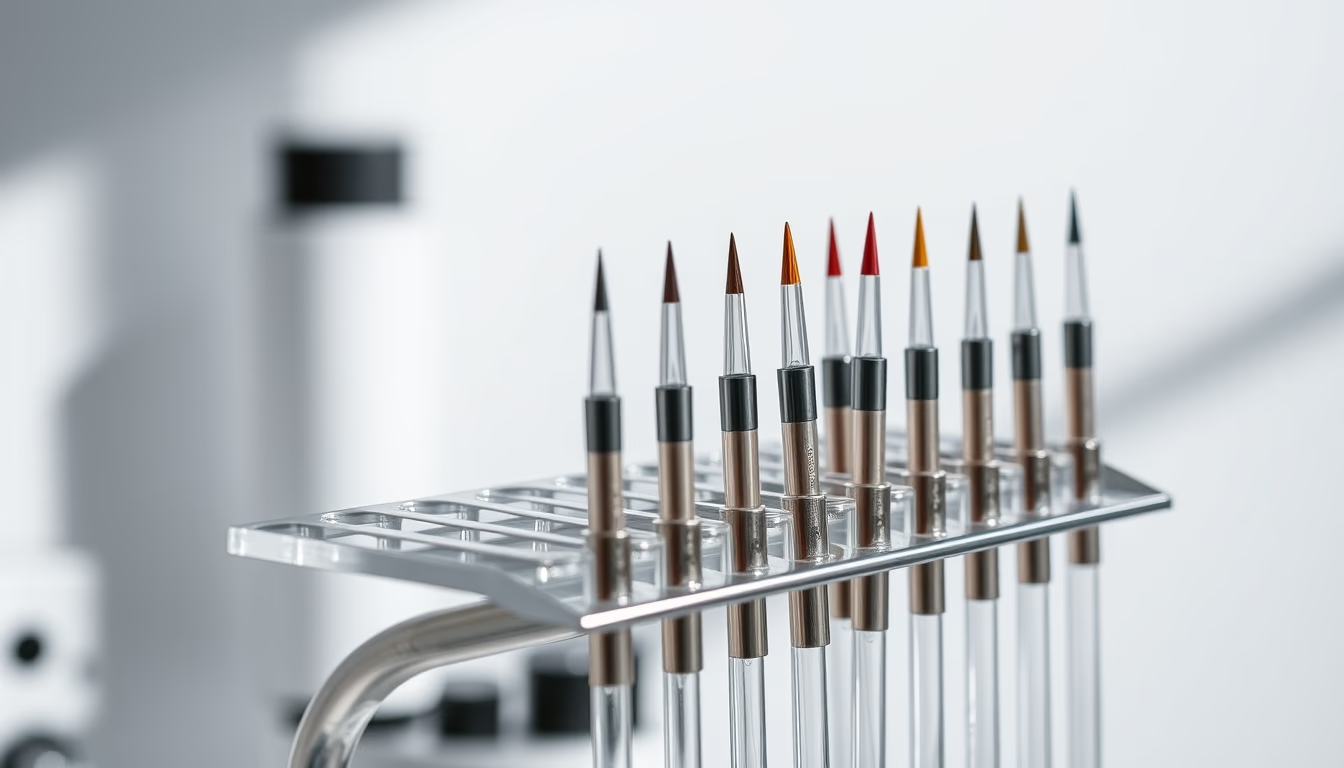
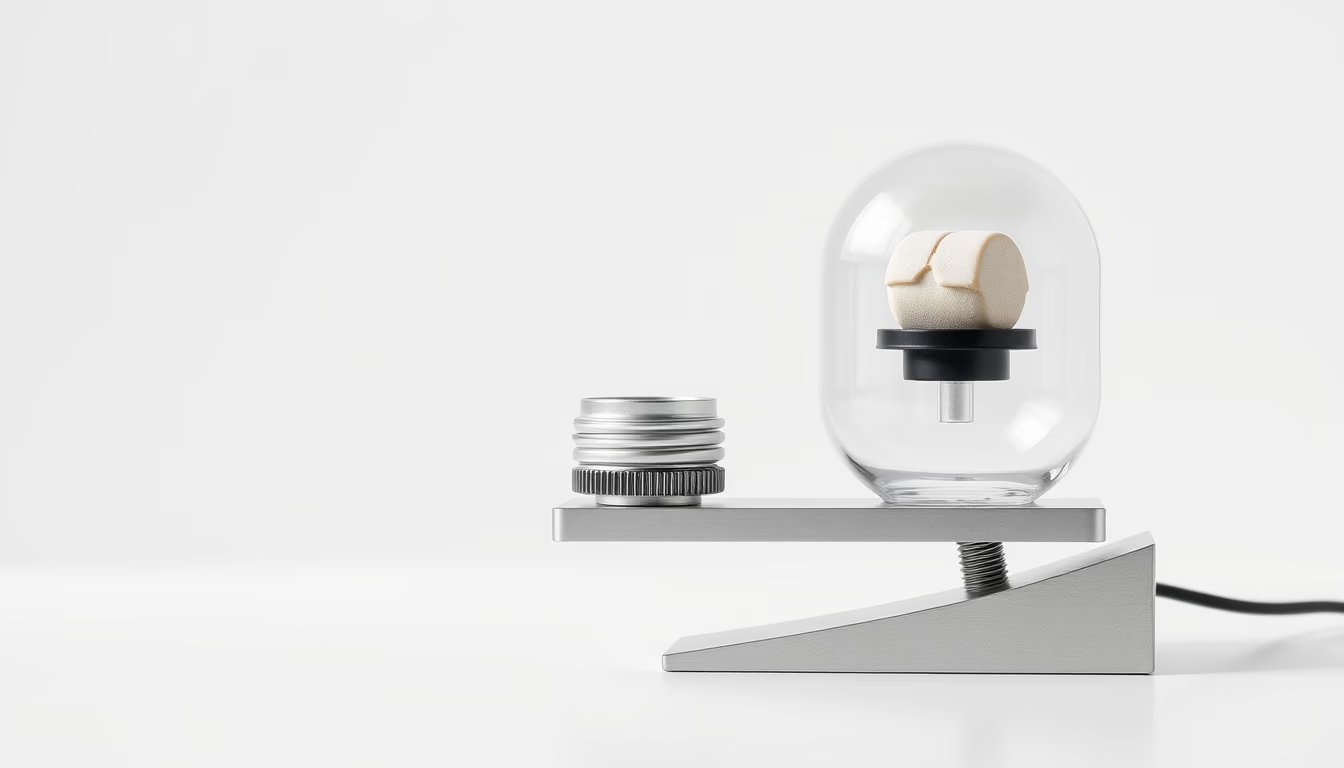
High-precision analytical balance, an essential instrument in chemical and pharmaceutical laboratories for accurate mass measurements.
About this subject
The analytical balance is a laboratory instrument designed to measure mass with extremely high accuracy, typically in the range of 0.1 mg or 0.01 mg. Unlike common precision balances, it features an electromagnetic weighing system or a high-sensitivity load cell, protected by a glass chamber that isolates the pan from air currents and thermal variations.
Its importance is critical in fields such as analytical chemistry, pharmaceuticals, and biotechnology, where small mass variations can compromise experimental results. For instance, in preparing standards for chromatography or dosing active ingredients in medicines, the analytical balance ensures reproducibility and metrological traceability.
Periodic calibration is mandatory, usually with certified weights of class E1 or E2. Environmental factors like vibration, temperature, and humidity must be controlled to avoid errors. Modern models offer digital interfaces, internal auto-calibration, and connectivity to laboratory data management software.
Interestingly, the working principle dates back to equal-arm balances, but today uses electromagnetic sensors that counterbalance the force exerted by the sample. A typical resolution of 0.1 mg allows detecting the mass of a grain of table salt.
Frequently Asked Questions
How to calibrate an analytical balance?
Calibration should be done with certified standard weights, following the manufacturer's procedure. Usually, activate the calibration mode and place the indicated weight on the pan. Some models have automatic internal calibration.
What is the difference between an analytical balance and a precision balance?
An analytical balance offers higher resolution (0.1 mg or 0.01 mg) and has a draft shield. A precision balance has a resolution of 1 mg to 0.1 g and is more rugged for routine weighings.
Why does an analytical balance need a glass chamber?
The glass chamber isolates the pan from air currents, temperature variations, and dust, which can affect the measurement of very small masses, ensuring stability and accuracy.
Direct URL
https://pub-c7d6a6ea828543ac903a74a341ccb2e1.r2.dev/imagens/analytical-balance-closeup-architectural-photography-fresh1.avifHow to credit
Include a visible link back to UtilizAí. Copy one of the snippets below:
<a href="https://xn--utiliza-eza.com/en/midia/imagens/analytical-balance-closeup-architectural-photography-fresh1">Analytical balance closeup</a> by <a href="https://xn--utiliza-eza.com">UtilizAí</a>, licensed under <a href="https://creativecommons.org/licenses/by/4.0/">CC BY 4.0</a>.
[Analytical balance closeup](https://xn--utiliza-eza.com/en/midia/imagens/analytical-balance-closeup-architectural-photography-fresh1) by [UtilizAí](https://xn--utiliza-eza.com), CC BY 4.0
License: CC-BY-4.0