Analytical balance closeup
1344×768 · AVIF · CC BY 4.0

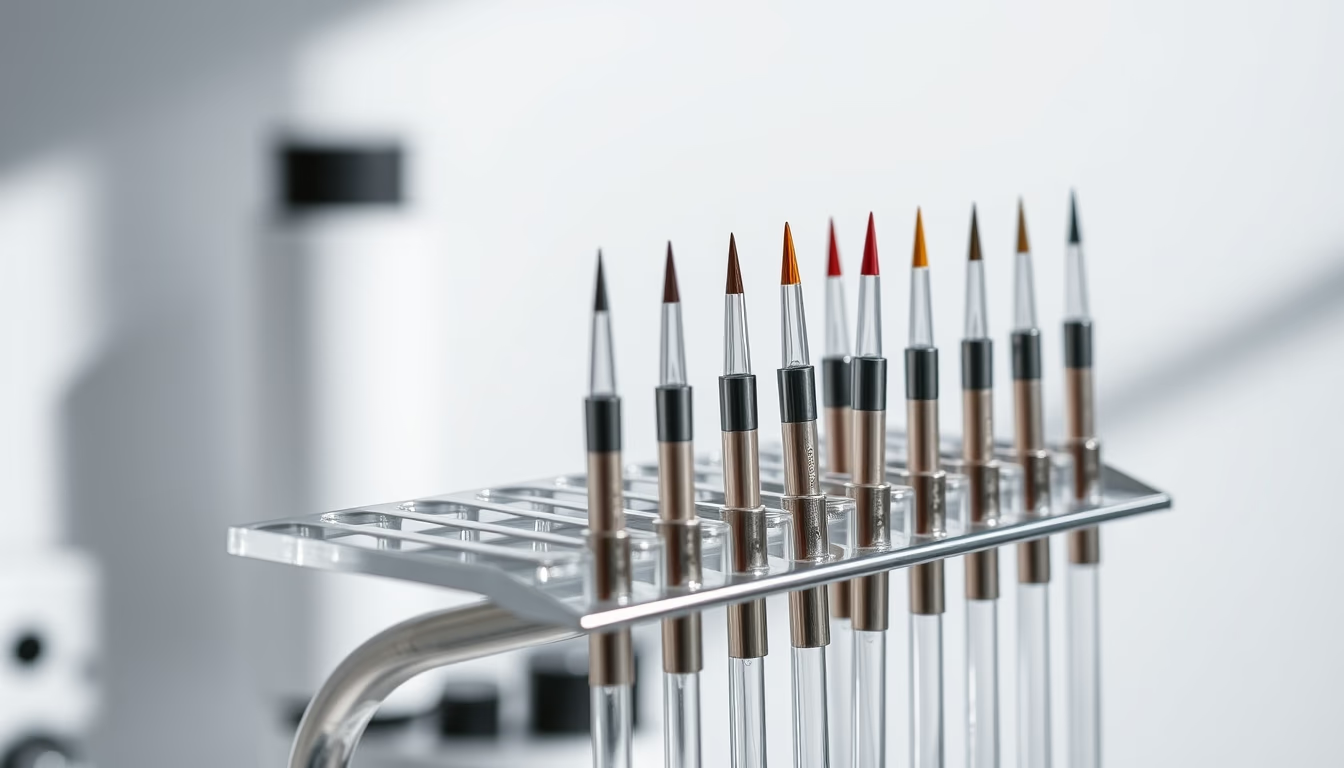
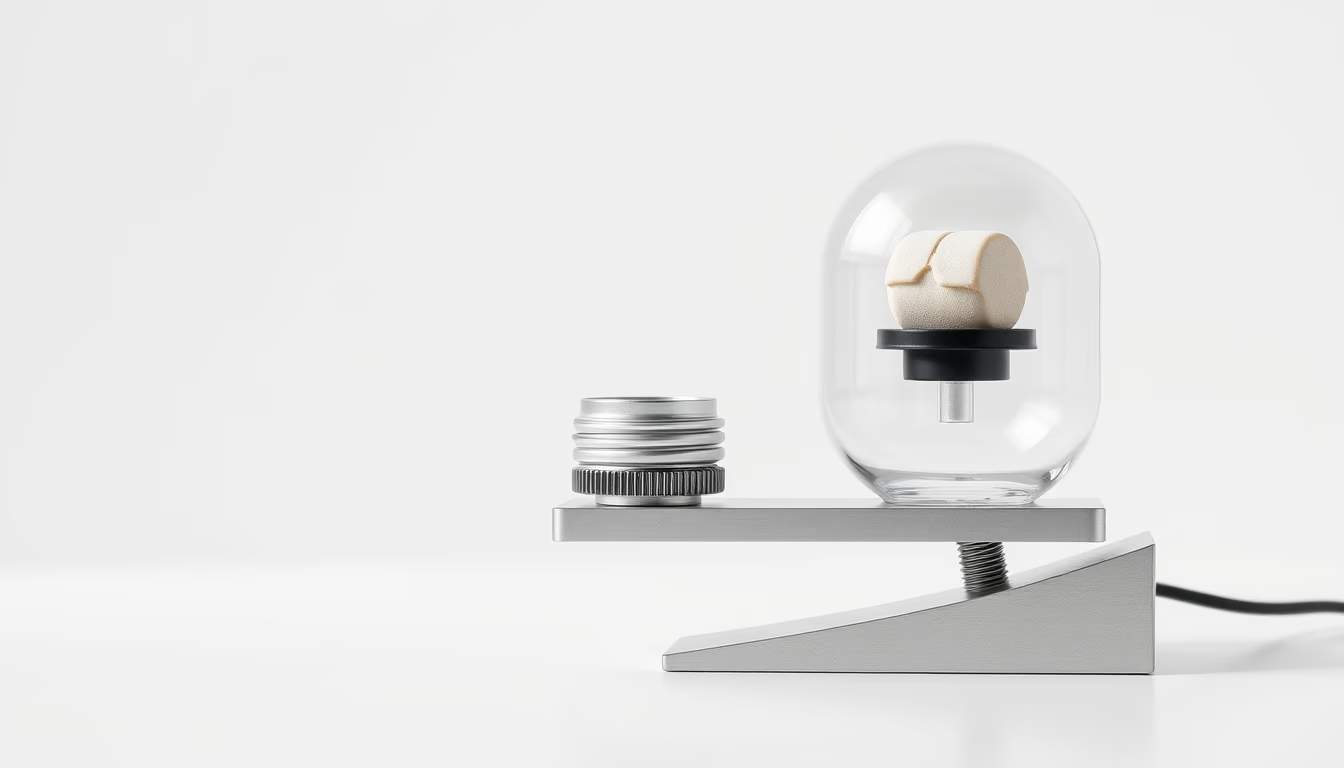
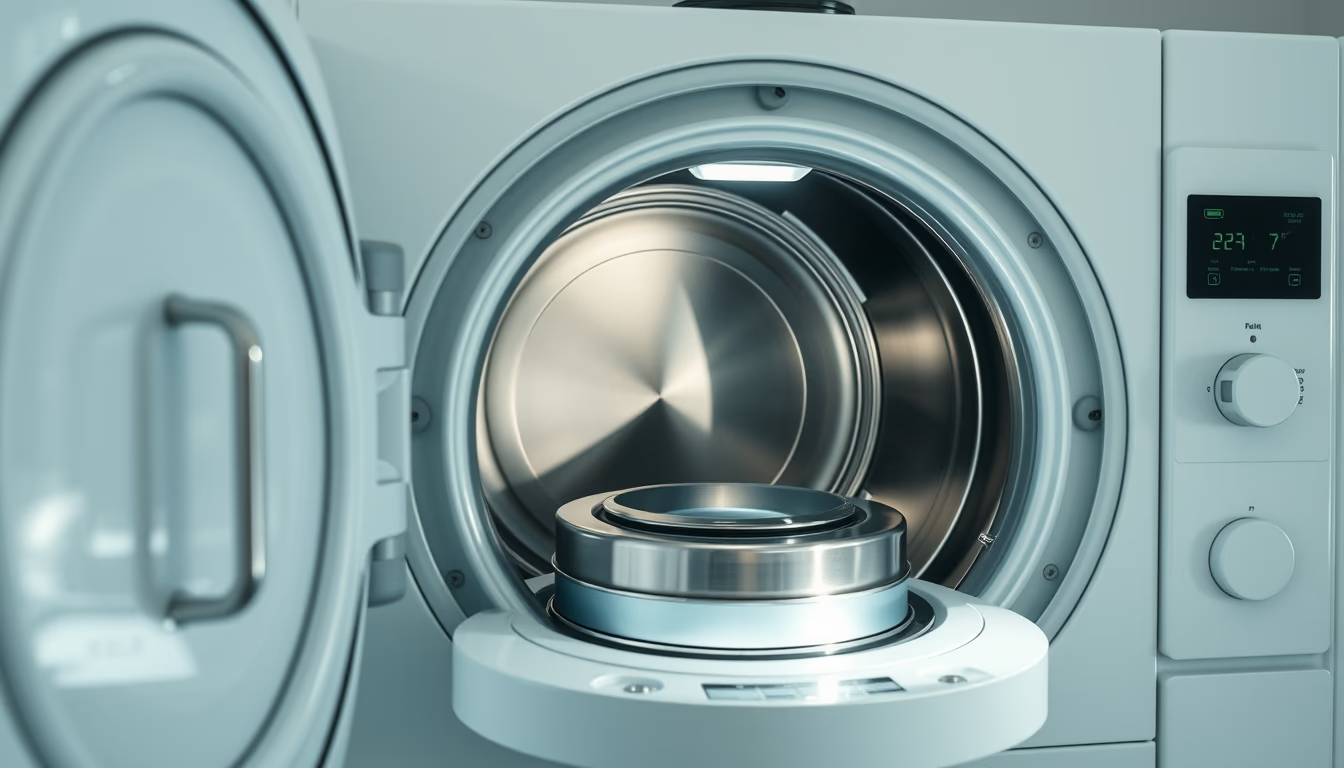
High-precision analytical balance used in laboratories for mass measurements with accuracy up to 0.0001 g, essential in chemical and pharmaceutical analyses.
About this subject
The analytical balance is a high-sensitivity weighing instrument capable of measuring mass with an accuracy of 0.1 mg (0.0001 g). This level of precision is essential in analytical chemistry, pharmaceuticals, and biotechnology, where minor deviations can compromise experimental results. To ensure such accuracy, analytical balances operate in controlled environments free from air currents, vibrations, and temperature fluctuations.
Its operation relies on electromagnetic load cells, which balance the object's mass using an opposing magnetic force. Most models feature automatic internal calibration, adjusting the instrument with integrated standard weights. Leveling is critical: a bubble indicator shows when the balance is perfectly horizontal, and adjustable feet allow corrections. The tare function is essential to subtract the mass of containers like beakers or weighing dishes.
Applications are vast: preparing solutions with exact concentrations, gravimetric analyses for determining metals or compounds, quality control in pharmaceutical and food industries, and academic research. Standards such as ISO/IEC 17025 require periodic calibration and traceability to national standards, like the kilogram prototype. Even sample humidity can affect results: hygroscopic substances must be weighed quickly or in sealed containers.
Daily care includes never placing reagents directly on the pan, using tweezers or gloves when handling objects, and cleaning the surface with isopropyl alcohol. Verification with certified standard weights should be done before each use, and the balance should be left in standby mode to avoid wear on the mechanism. The instrument's longevity depends on these practices, ensuring reliable measurements for years.
Frequently Asked Questions
What is the difference between an analytical balance and a semi-analytical balance?
An analytical balance measures with a precision of 0.1 mg (0.0001 g), while a semi-analytical balance has a precision of 0.001 g (1 mg). Analytical balances are used for more exact measurements, such as in quantitative analysis, and require a more controlled environment.
How to calibrate an analytical balance correctly?
Calibration should follow the manufacturer's manual, typically using certified standard weights. Many models have automatic internal calibration; for external calibration, place the weights (e.g., 100 g, 50 g) and adjust as instructed. Repeat periodically and record results.
What factors affect the accuracy of an analytical balance?
Air currents, vibrations, temperature variations, humidity, unleveling, static electricity, and dirt on the pan. Hygroscopic or volatile samples can also cause fluctuations. Work on an antivibration bench and close the draft shield doors.
Direct URL
https://pub-c7d6a6ea828543ac903a74a341ccb2e1.r2.dev/imagens/analytical-balance-closeup-aerial-drone-shot-fresh13.avifHow to credit
Include a visible link back to UtilizAí. Copy one of the snippets below:
<a href="https://xn--utiliza-eza.com/en/midia/imagens/analytical-balance-closeup-aerial-drone-shot-fresh13">Analytical balance closeup</a> by <a href="https://xn--utiliza-eza.com">UtilizAí</a>, licensed under <a href="https://creativecommons.org/licenses/by/4.0/">CC BY 4.0</a>.
[Analytical balance closeup](https://xn--utiliza-eza.com/en/midia/imagens/analytical-balance-closeup-aerial-drone-shot-fresh13) by [UtilizAí](https://xn--utiliza-eza.com), CC BY 4.0
License: CC-BY-4.0