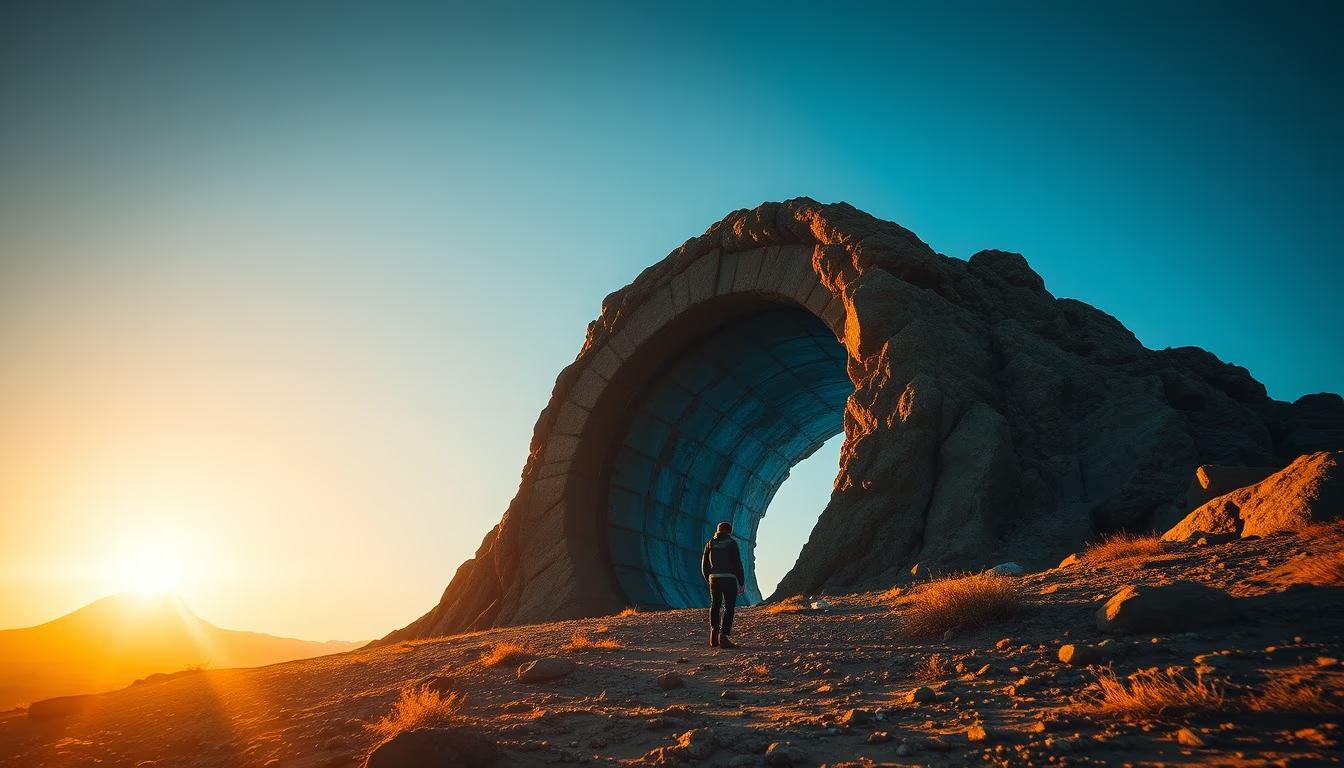
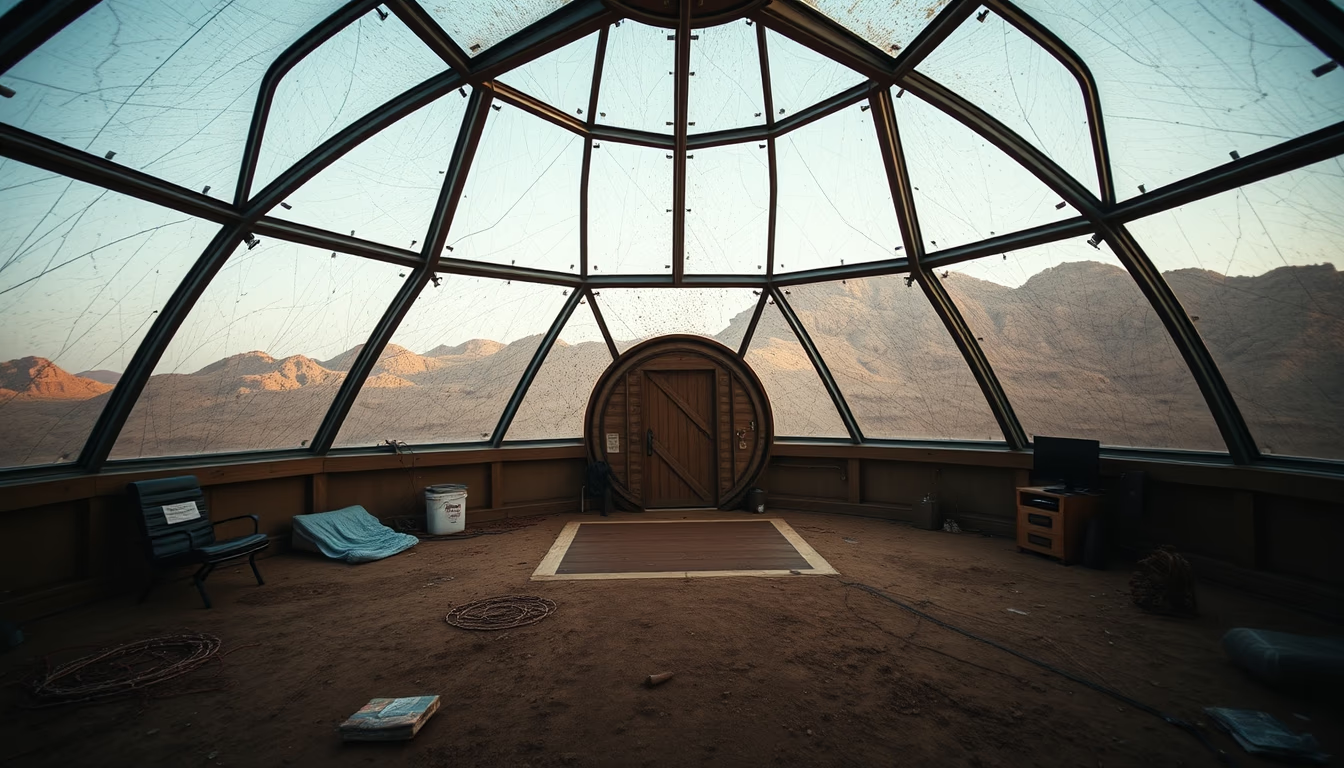
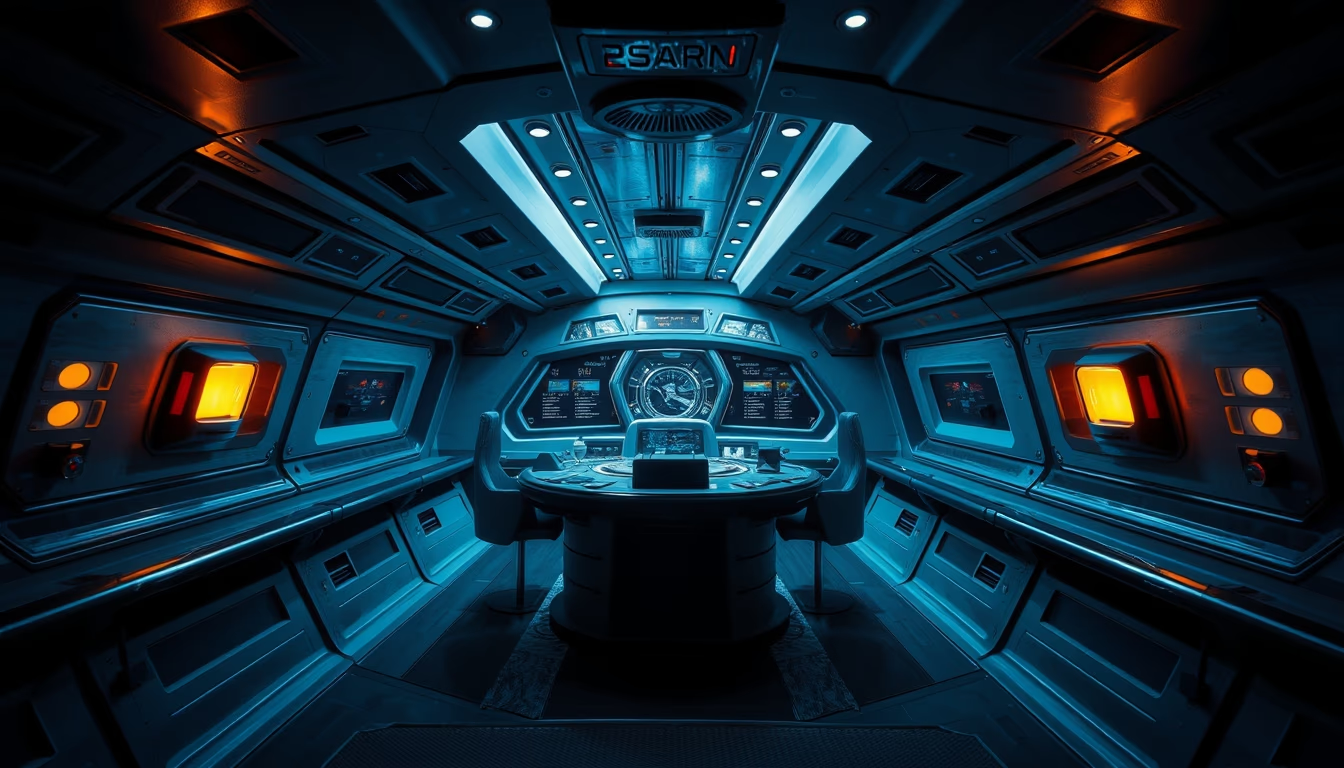
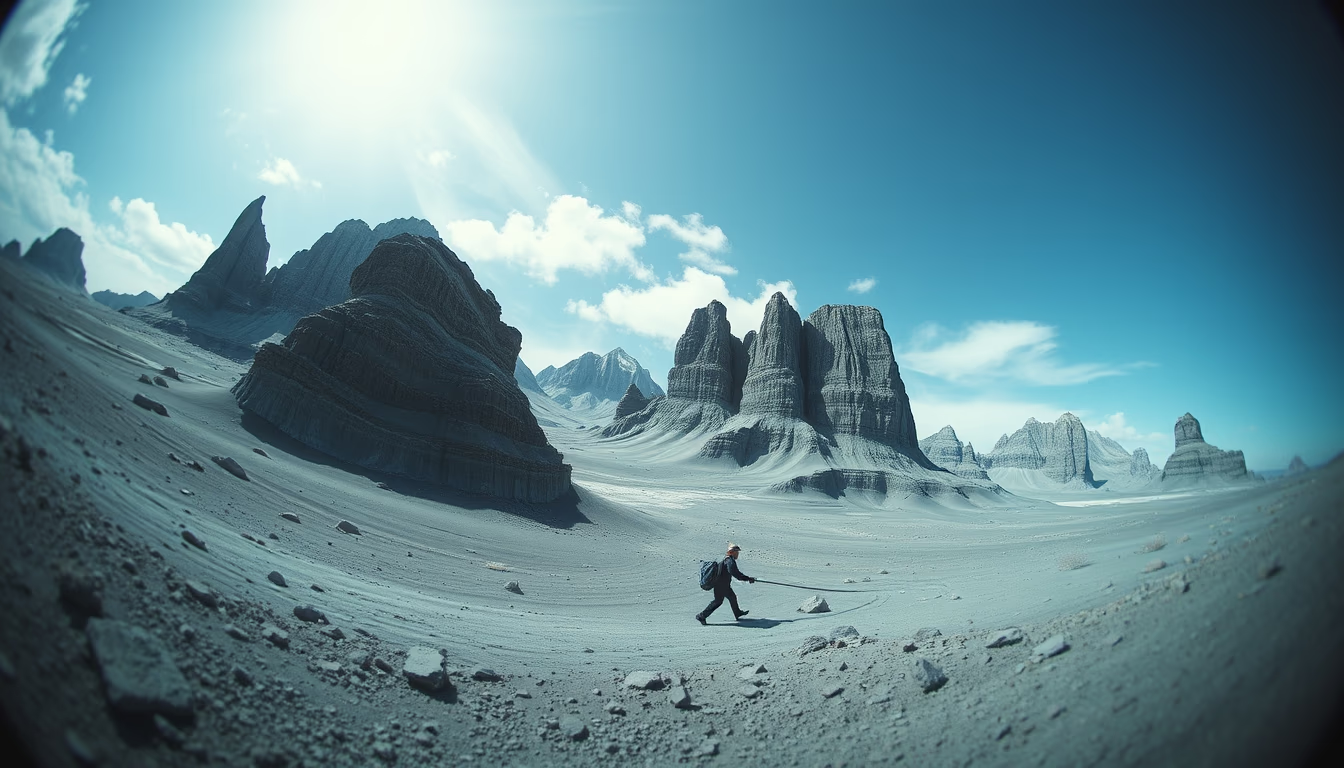
Alien landscape concept
1344×768 · AVIF · CC BY 4.0
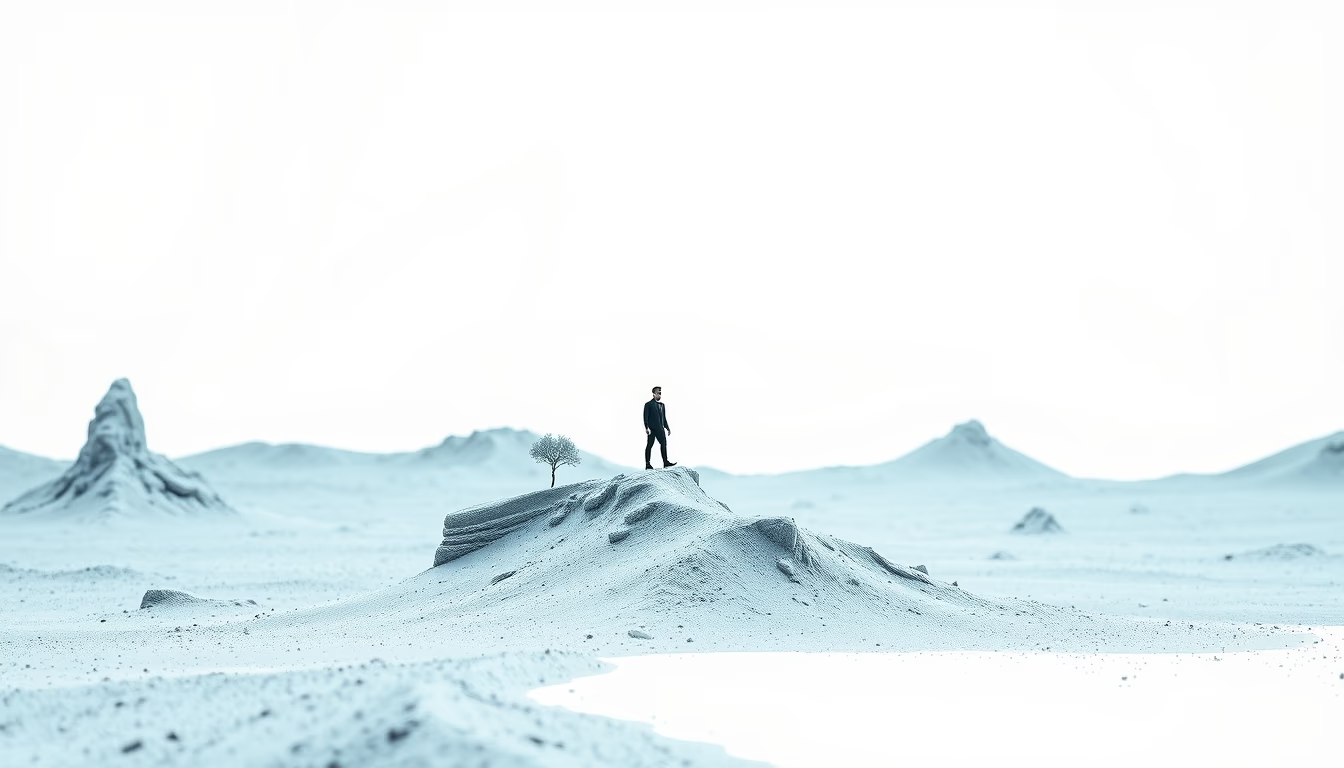
Alien landscapes are fictional environments that blend science and imagination to depict extraterrestrial worlds, often grounded in real exoplanet data.
About this subject
The concept of an alien landscape is central to science fiction, shaped by astronomical discoveries and human creativity. Since early films like 'Le Voyage dans la Lune' (1902), artists and scientists have collaborated to visualize distant worlds. With the detection of thousands of exoplanets by the Kepler telescope, science provided real parameters: exotic atmospheres, red dwarf stars, and icy moons like Europa have inspired plausible settings.
In literature, authors such as Arthur C. Clarke and Ursula K. Le Guin describe silicon deserts, bioluminescent forests, and ammonia oceans. Designing these landscapes considers factors like gravity, atmospheric composition, and stellar radiation. For instance, planets around red dwarf stars may have orange skies and vegetation adapted to infrared light. Moons like Titan, with methane lakes, serve as references for icy, hazy environments.
Film and gaming have popularized these visions. In 'Avatar', Pandora's biome is inspired by terrestrial bioluminescence and interconnected ecosystems. 'Dune' features dunes and giant worms on an arid planet based on real deserts. Concept art for alien landscapes often employs volcanic textures, irregular rock formations, and skies with multiple suns, blending familiar elements with the exotic.
Today, 3D modeling and artificial intelligence enable procedural generation of landscapes using algorithms that simulate erosion, tectonics, and climate under different planetary conditions. This not only fuels the entertainment industry but also helps astrobiologists predict possible scenarios on habitable exoplanets.
Frequently Asked Questions
What defines a realistic alien landscape?
A realistic alien landscape combines scientific data about exoplanets (such as atmospheric composition and gravity) with geological and biological principles, resulting in plausible scenarios within our knowledge.
What are the most iconic alien landscapes in cinema?
Examples include the bioluminescent forest of 'Avatar', the desert of 'Dune', the icy plains of 'Interstellar', and the volcanoes of 'Star Wars: The Empire Strikes Back' on Mustafar.
How does science influence the creation of alien landscapes?
Astronomers and astrobiologists provide data on exoplanets, such as temperature, radiation, and atmospheric chemistry. Artists use this data to create visions that respect physical laws, like skies colored by gases or vegetation adapted to different light spectra.
Direct URL
https://pub-c7d6a6ea828543ac903a74a341ccb2e1.r2.dev/imagens/alien-landscape-concept-commercial-product-photography-fresh9.avifHow to credit
Include a visible link back to UtilizAí. Copy one of the snippets below:
<a href="https://xn--utiliza-eza.com/en/midia/imagens/alien-landscape-concept-commercial-product-photography-fresh9">Alien landscape concept</a> by <a href="https://xn--utiliza-eza.com">UtilizAí</a>, licensed under <a href="https://creativecommons.org/licenses/by/4.0/">CC BY 4.0</a>.
[Alien landscape concept](https://xn--utiliza-eza.com/en/midia/imagens/alien-landscape-concept-commercial-product-photography-fresh9) by [UtilizAí](https://xn--utiliza-eza.com), CC BY 4.0
License: CC-BY-4.0