Aircraft carrier deck
1344×768 · AVIF · CC BY 4.0
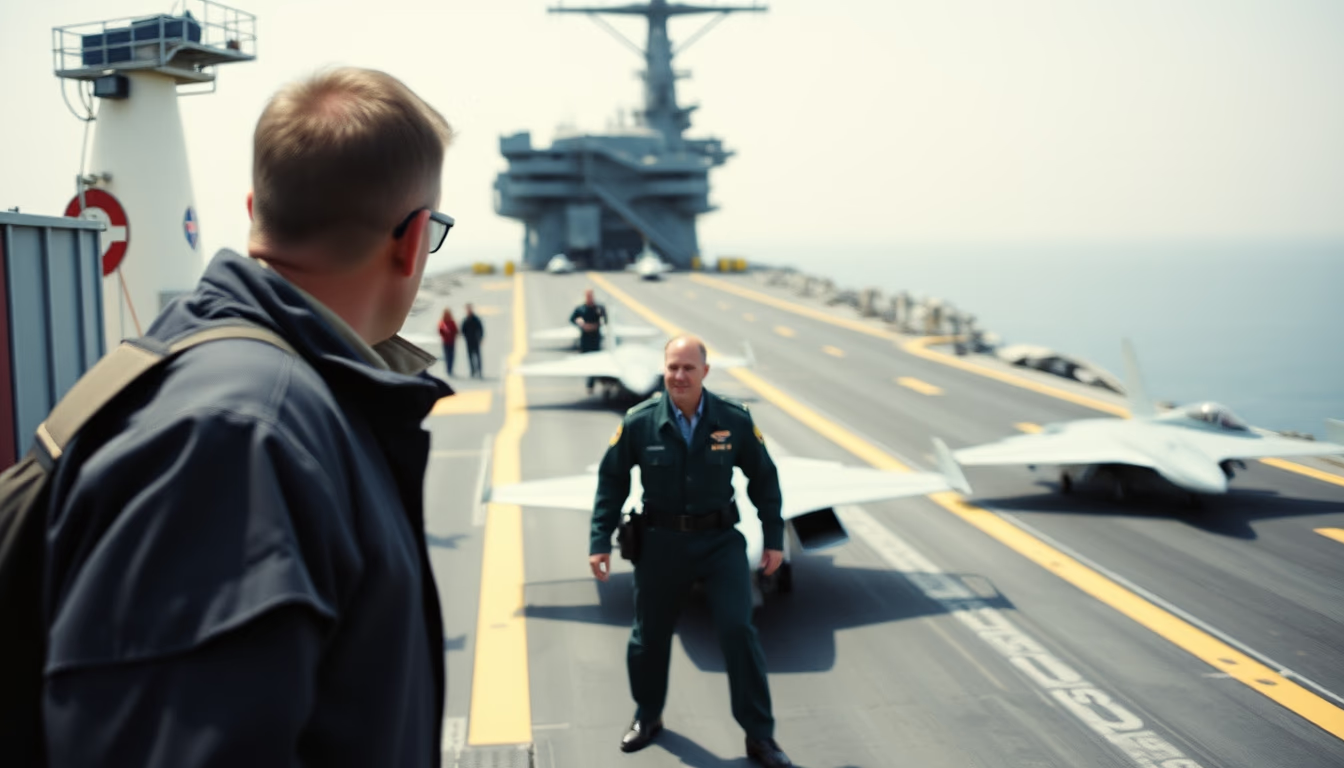
An aircraft carrier deck is a floating runway, designed to launch and recover aircraft at sea with precision and safety.
About this subject
The flight deck of an aircraft carrier is the operational heart of the vessel, functioning as a compact, exceptionally organized airbase at sea. On a U.S. Nimitz-class carrier, the deck measures roughly 333 meters in length and 77 meters in width, an area larger than four football fields. The surface is coated with special non-skid materials and divided into distinct zones: parking areas, catapults, landing strip, and hangar bays below.
Takeoffs are powered by steam or electromagnetic catapults that accelerate aircraft from 0 to 150 mph in two seconds. Landings rely on arresting wires, steel cables stretched across the deck that stop a plane within 300 feet. Each aircraft has a tailhook that catches one of four wires, and pilots must land within a tolerance of just a few meters, guided by an optical landing system. The angled deck, introduced in the 1950s, allows simultaneous launch and recovery by offsetting the landing area about 9 degrees from the ship's centerline, greatly improving safety and efficiency.
Crew members wear color-coded jerseys and helmets: blue for aircraft handling, green for launch and recovery, yellow for catapult officers, red for ordnance and firefighting, purple for fuel, and white for safety. A modern carrier like the USS Gerald R. Ford can carry up to 75 aircraft, including F/A-18 Hornets, E-2 Hawkeye early-warning planes, and MH-60 Seahawk helicopters. Nations operating carriers include the United States, China, the United Kingdom, France, India, and Russia, each with unique designs and operational doctrines.
Flight deck operations are among the most hazardous in aviation, requiring intense coordination and discipline. The surface must be constantly cleared of debris, as even small foreign objects can be ingested by jet engines, causing catastrophic failure. Sailors sleep in shifts, and operations run 24/7 during deployments. The deck is illuminated by dozens of lights: white for the runway, blue for taxiways, red warning lights on antennas, and green for the 'dataline' that guides the pilot's final approach.
Frequently Asked Questions
How large is a typical aircraft carrier deck?
A Nimitz-class carrier deck measures about 333 meters long and 77 meters wide, covering more than four football fields.
How do aircraft land on an aircraft carrier deck?
They use a tailhook to catch one of the arresting wires stretched across the deck, stopping the plane in roughly 300 feet. An optical landing system helps the pilot maintain the correct glide path.
How many aircraft can an aircraft carrier carry?
A modern carrier like the USS Gerald R. Ford can carry up to 75 aircraft, including fighter jets, early-warning planes, and helicopters.
Direct URL
https://pub-c7d6a6ea828543ac903a74a341ccb2e1.r2.dev/imagens/aircraft-carrier-deck-lo-fi-disposable-camera-p7.avifHow to credit
Include a visible link back to UtilizAí. Copy one of the snippets below:
<a href="https://xn--utiliza-eza.com/en/midia/imagens/aircraft-carrier-deck-lo-fi-disposable-camera-p7">Aircraft carrier deck</a> by <a href="https://xn--utiliza-eza.com">UtilizAí</a>, licensed under <a href="https://creativecommons.org/licenses/by/4.0/">CC BY 4.0</a>.
[Aircraft carrier deck](https://xn--utiliza-eza.com/en/midia/imagens/aircraft-carrier-deck-lo-fi-disposable-camera-p7) by [UtilizAí](https://xn--utiliza-eza.com), CC BY 4.0
License: CC-BY-4.0