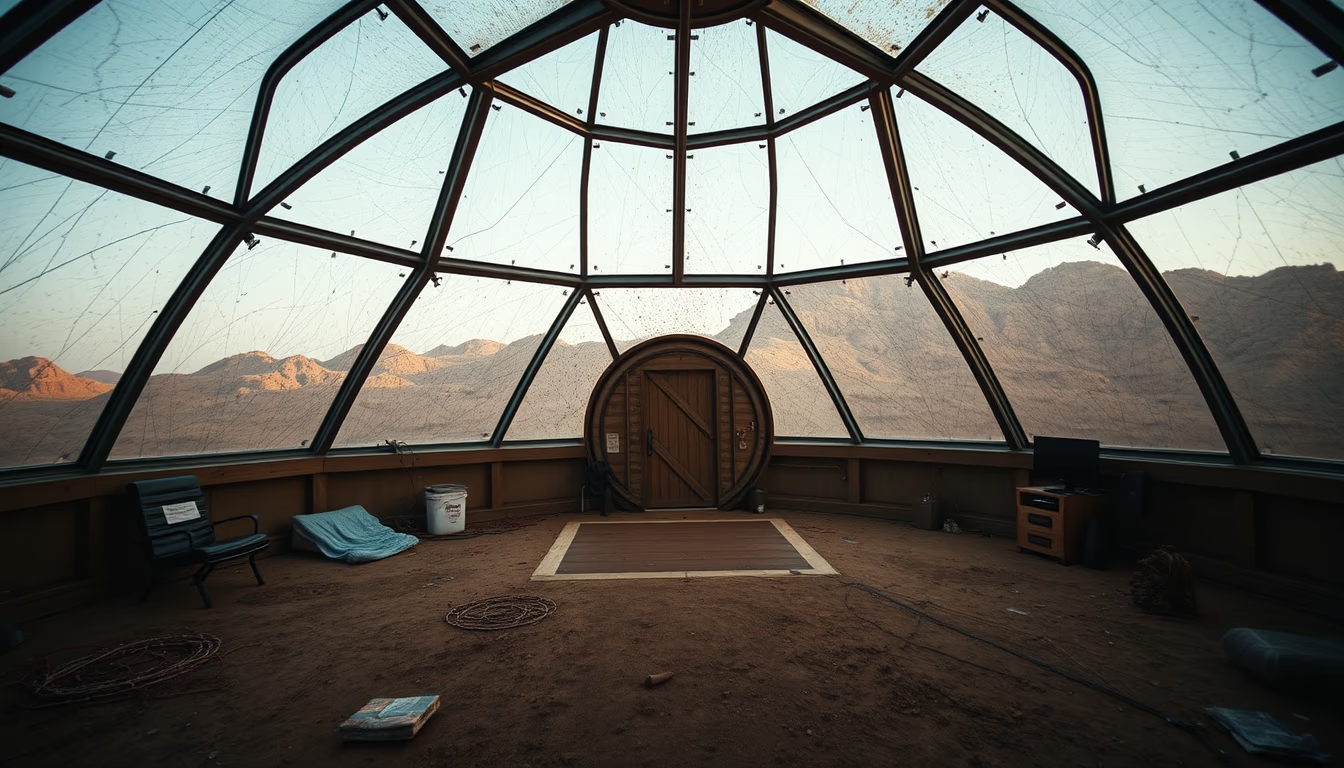
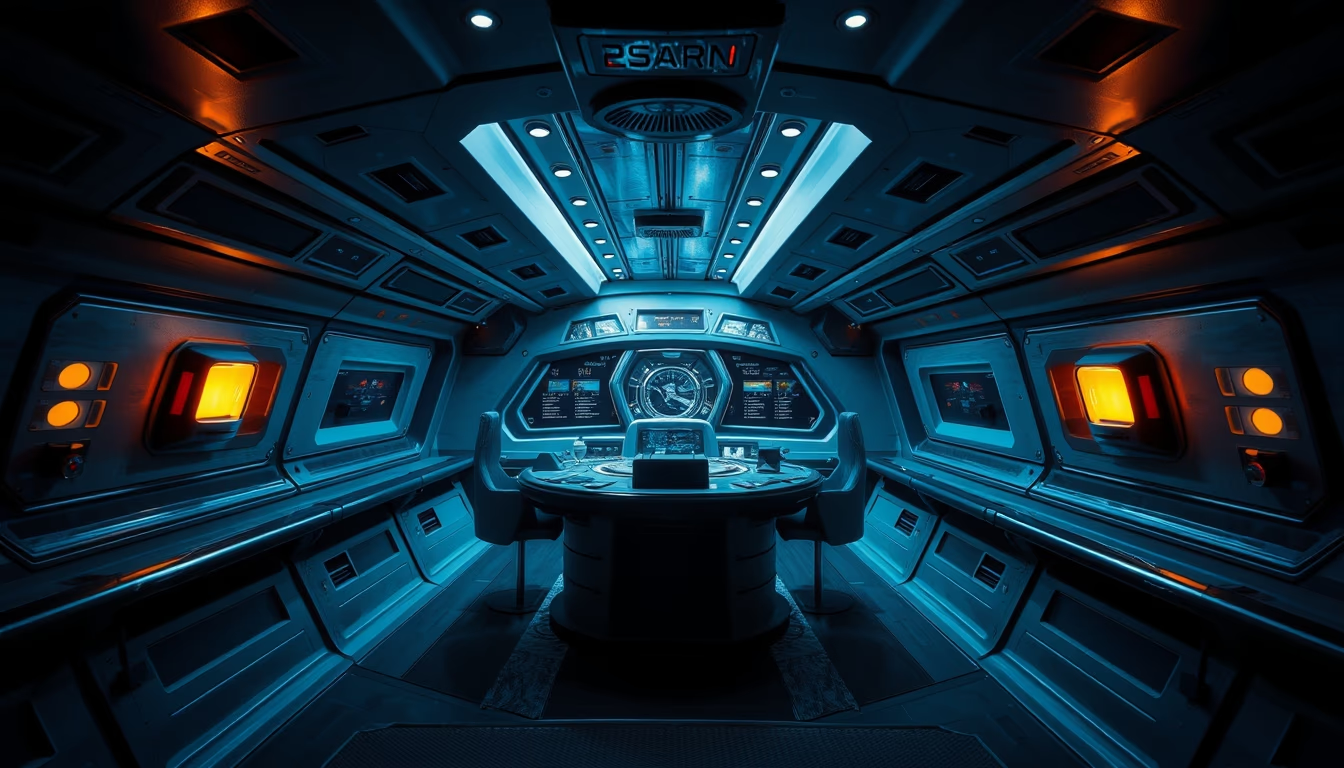
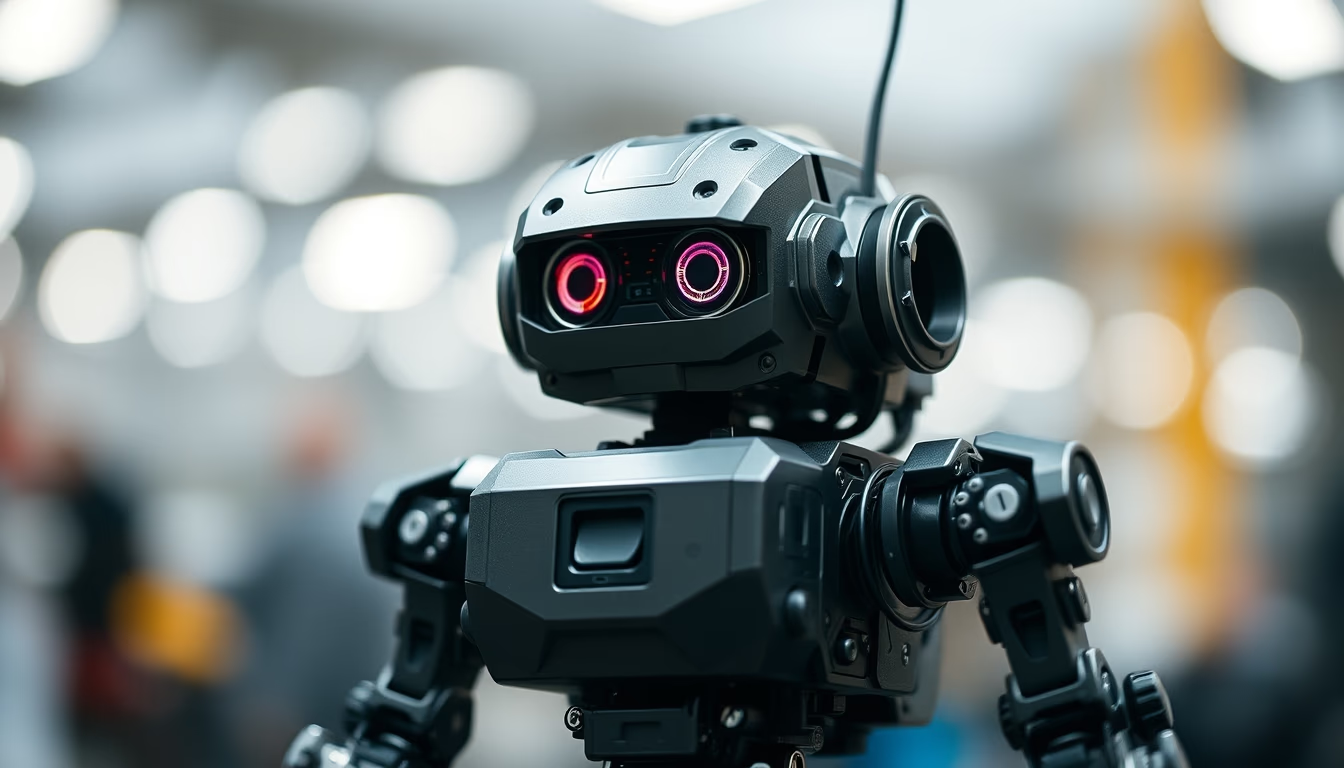
Ai core data center
1344×768 · AVIF · CC BY 4.0

AI data centers are critical infrastructures housing thousands of servers optimized for machine learning algorithms, consuming as much energy as medium-sized cities.
About this subject
An AI core data center is a specialized facility that concentrates high-performance computing resources for training and running artificial intelligence models. Unlike traditional data centers, these spaces are designed to handle GPU and TPU-intensive workloads, requiring liquid cooling systems and ultra-fast interconnection networks. Companies like Google, Microsoft, and Amazon operate dozens of these facilities globally, often in regions with access to cheap renewable energy, such as the Nordic countries.
The demand for AI processing power has exploded since the launch of models like GPT-3 and GPT-4, which require clusters with thousands of specialized chips. A single training run of GPT-4 consumed about 50 gigawatt-hours of electricity, enough to power a small city for a month. To meet this demand, AI data centers are becoming modular, with standardized containers that can be quickly deployed. Strategic location also considers factors like network latency, energy cost, and geopolitical stability.
Physical and cyber security in these centers is rigorous: biometric control, drone surveillance, and intrusion detection systems are common. Internally, the architecture follows a heterogeneous computing model, combining CPUs, GPUs, FPGAs, and ASICs to maximize energy efficiency per inference operation. The heat generated is so intense that many centers already integrate thermal recovery systems for district heating or water desalination.
Interestingly, the term 'AI core' refers to dedicated processing cores in chips like Nvidia's Tensor Core or Apple's Neural Engine, but at data center scale these cores are multiplied by tens of thousands. The future points to underwater data centers, like Microsoft's Natick project, which uses the ocean for natural cooling, and orbital installations where solar energy is constant and latency is reduced.
Frequently Asked Questions
What differentiates an AI data center from a traditional one?
An AI data center is optimized for machine learning workloads with intensive GPU/TPU usage, advanced liquid cooling, and high-speed networks, while traditional data centers focus on CPU servers for cloud and web applications.
How much energy does an AI data center consume?
Consumption varies widely, but a large facility can demand tens of megawatts. For instance, training GPT-4 consumed about 50 GWh, equivalent to the monthly usage of a city of 50,000 inhabitants.
Where are the world's largest AI data centers located?
Major hubs are in the United States (Virginia, California), China (Beijing, Shanghai), Europe (Ireland, Sweden), and Singapore. Locations with cheap renewable energy and cool climates are preferred to reduce cooling costs.
Direct URL
https://pub-c7d6a6ea828543ac903a74a341ccb2e1.r2.dev/imagens/ai-core-data-center-lo-fi-disposable-camera-fresh9.avifHow to credit
Include a visible link back to UtilizAí. Copy one of the snippets below:
<a href="https://xn--utiliza-eza.com/en/midia/imagens/ai-core-data-center-lo-fi-disposable-camera-fresh9">Ai core data center</a> by <a href="https://xn--utiliza-eza.com">UtilizAí</a>, licensed under <a href="https://creativecommons.org/licenses/by/4.0/">CC BY 4.0</a>.
[Ai core data center](https://xn--utiliza-eza.com/en/midia/imagens/ai-core-data-center-lo-fi-disposable-camera-fresh9) by [UtilizAí](https://xn--utiliza-eza.com), CC BY 4.0
License: CC-BY-4.0