Ai core data center
1344×768 · AVIF · CC BY 4.0
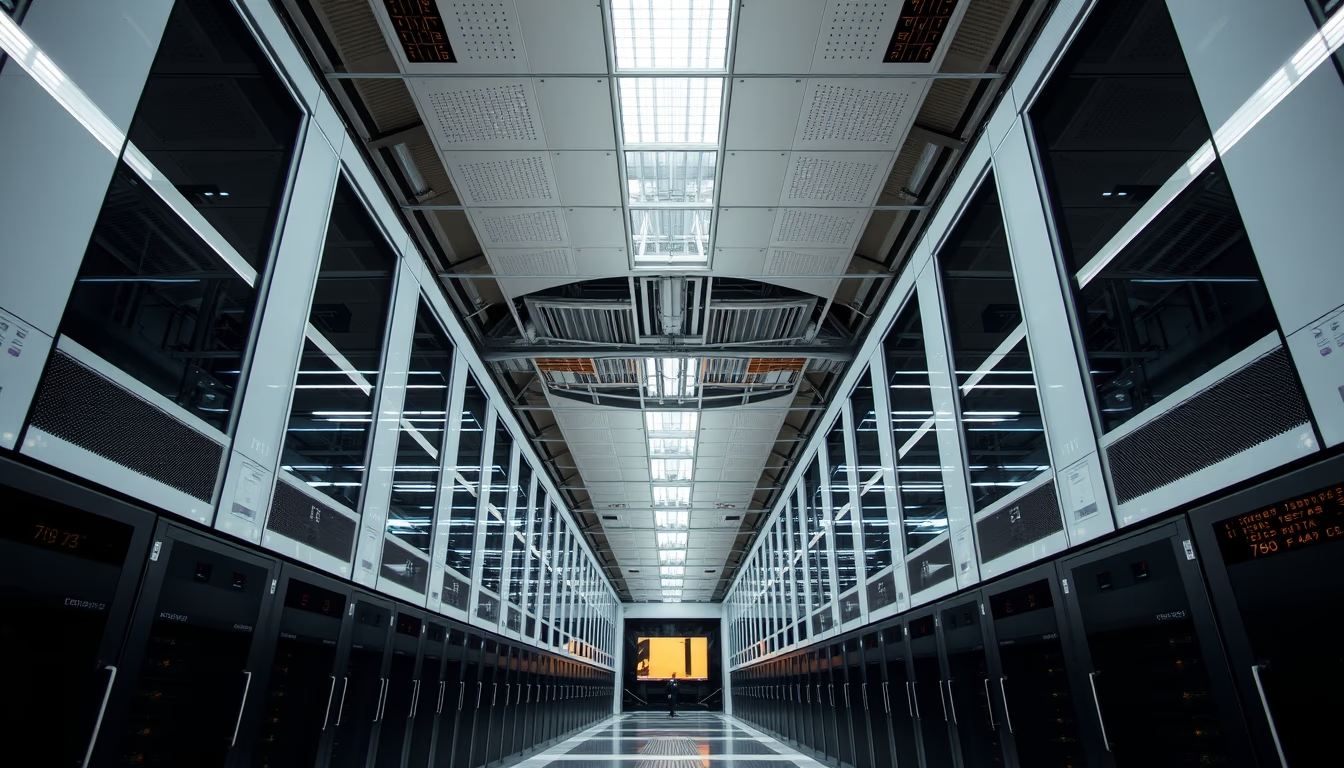
Artificial intelligence data centers combine futuristic architecture and critical infrastructure to support massive processing loads.
About this subject
AI-focused data centers represent the backbone of modern computing. Unlike traditional data centers, these facilities are designed to house thousands of GPUs and TPUs, consuming unprecedented amounts of energy and generating intense heat. The architecture reflects these needs: liquid cooling systems, modular layouts, and high rack densities are common.
Major companies like Google, Microsoft, and Amazon invest billions in AI data centers, many located in regions with cheap renewable energy, such as the US states of Iowa and Virginia, or Nordic countries like Sweden and Finland. The energy consumption of a single AI data center can reach hundreds of megawatts, comparable to a small city. To mitigate environmental impact, techniques like immersion cooling and renewable energy sourcing are becoming standard.
The aesthetics of these data centers often evoke science fiction: corridors of servers illuminated by blue or green LEDs, exposed piping, and temperature-controlled server rooms. This appearance, combined with the colossal scale of the facilities, has inspired films and digital games. In reality, these centers are designed for maximum operational efficiency, with redundancy in power, network, and cooling, ensuring 99.99% uptime.
Interestingly, the term "data center core" is also used in computer networking to refer to high-capacity core routers. In architecture, the "core" is the structural nucleus of the building housing elevators and systems. In AI data centers, the core is the computational heart where models are trained, an environment requiring rigorous physical and cyber security.
Frequently Asked Questions
What is the difference between a regular data center and an AI one?
AI data centers have higher processing density, with thousands of GPUs/TPUs, advanced cooling systems (liquid or immersion), and much higher energy consumption. They are designed for non-linear workloads and demand spikes during model training.
How do AI data centers handle the heat generated?
They use direct-to-chip liquid cooling, immersion in dielectric fluid, or precision air conditioning. New techniques include heat reuse for district heating or agriculture, as in Meta's data center in Denmark.
Why do many data centers have a futuristic architecture?
The futuristic look results from functional requirements: ventilation, security, modular expansion, and energy efficiency. Colors and lighting are design choices to ease maintenance and indicate operational status.
Direct URL
https://pub-c7d6a6ea828543ac903a74a341ccb2e1.r2.dev/imagens/ai-core-data-center-architectural-photography-fresh7.avifHow to credit
Include a visible link back to UtilizAí. Copy one of the snippets below:
<a href="https://xn--utiliza-eza.com/en/midia/imagens/ai-core-data-center-architectural-photography-fresh7">Ai core data center</a> by <a href="https://xn--utiliza-eza.com">UtilizAí</a>, licensed under <a href="https://creativecommons.org/licenses/by/4.0/">CC BY 4.0</a>.
[Ai core data center](https://xn--utiliza-eza.com/en/midia/imagens/ai-core-data-center-architectural-photography-fresh7) by [UtilizAí](https://xn--utiliza-eza.com), CC BY 4.0
License: CC-BY-4.0