Zen rock garden
1344×768 · AVIF · CC BY 4.0
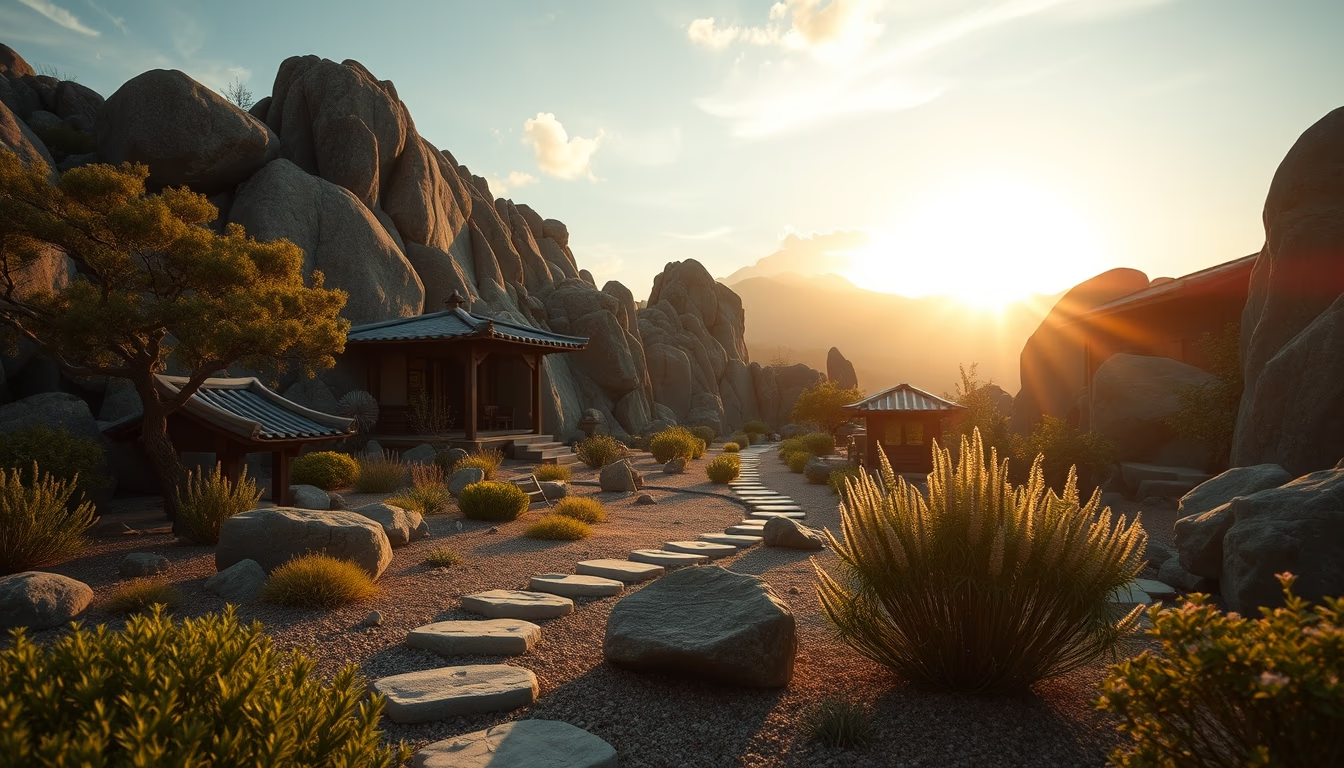
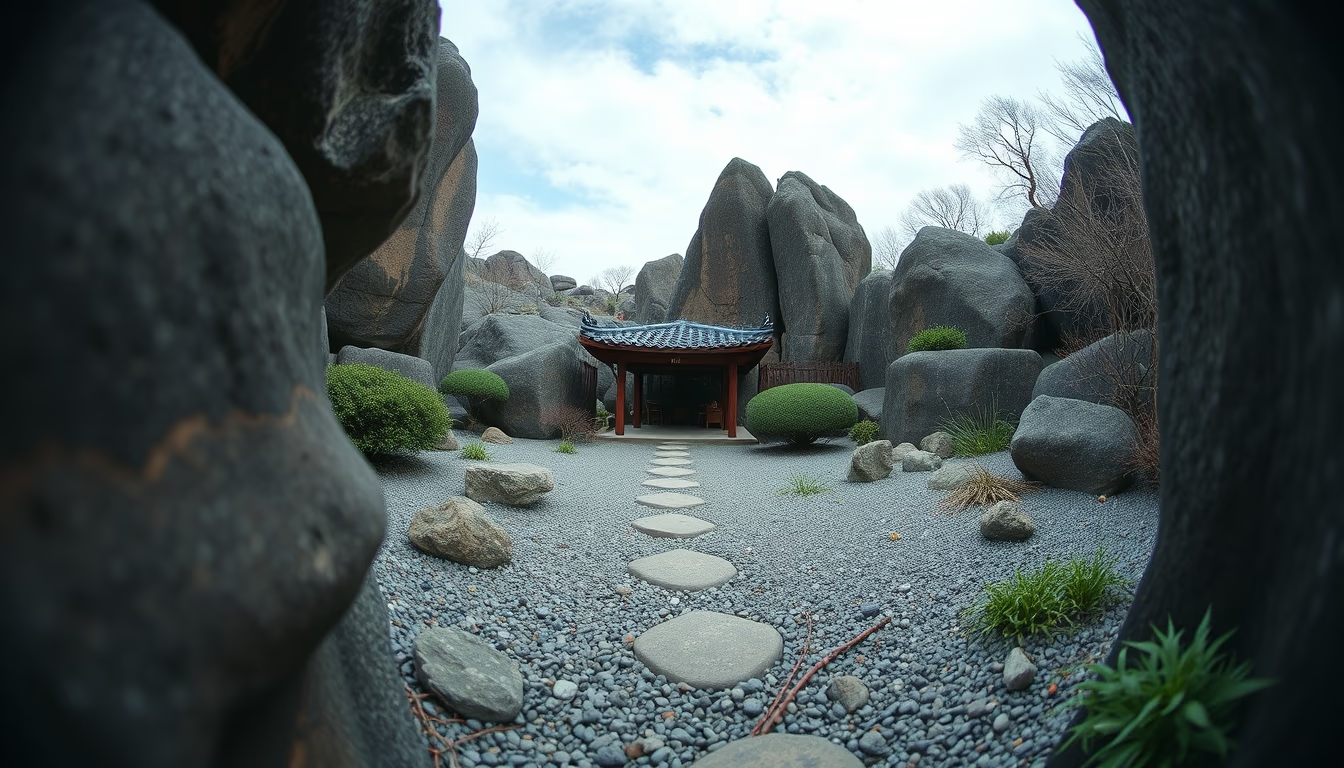
Zen rock gardens, known as karesansui, are minimalist expressions of Japanese aesthetics that invite contemplation and meditation.
About this subject
Originating in Japan, Zen rock gardens (karesansui) are dry landscapes composed primarily of finely raked gravel or sand, rocks, and occasionally moss. Unlike traditional gardens, they do not use water, instead representing it through wavy patterns in the gravel that mimic rivers or ocean waves. These gardens flourished during the Muromachi period (1336, 1573), heavily influenced by Zen Buddhism, designed to aid monks in meditation and study. Their minimalist design seeks to capture the essence of nature, often depicting abstract landscapes. Rocks are arranged in asymmetrical yet balanced compositions, following aesthetic principles such as wabi-sabi (beauty in imperfection) and yohaku-no-bi (beauty of empty space).The famous Ryoanji Temple in Kyoto houses the most iconic rock garden, dating from the late 15th century. It features 15 rocks arranged in five groups on white gravel, arranged so that only 14 are visible from any angle, a puzzle that invites contemplation. Maintaining a Zen garden requires practice and patience. Monks use rakes to create precise patterns in the gravel, a meditative act in itself. Daily upkeep reinforces discipline and mindfulness. While more common in temples, many private gardens and public spaces worldwide have adopted this technique to create tranquil areas. Despite its simple appearance, each element is carefully chosen and positioned, carrying symbolic meanings. For instance, vertical rocks may represent mountains, while horizontal ones suggest islands or boats.
Frequently Asked Questions
What is the purpose of a Zen rock garden?
The main purpose is to aid meditation and contemplation. The minimalist design and abstract nature help calm the mind and focus on the present moment.
Do the patterns in the gravel have specific meanings?
Yes, wave or concentric circle patterns represent water, rivers, or oceans. Straight lines may symbolize tranquility, while circles around rocks suggest islands. Raking patterns daily is a meditative practice.
Can I create a Zen garden at home?
Yes, you can create a miniature version using a tray, sand, and small stones. Choose a quiet spot and maintain regular upkeep to preserve the aesthetic and meditative purpose.
Direct URL
https://pub-c7d6a6ea828543ac903a74a341ccb2e1.r2.dev/imagens/zen-rock-garden-cinematic-wide-shot-fresh2.avifHow to credit
Include a visible link back to UtilizAí. Copy one of the snippets below:
<a href="https://xn--utiliza-eza.com/en/midia/imagens/zen-rock-garden-cinematic-wide-shot-fresh2">Zen rock garden</a> by <a href="https://xn--utiliza-eza.com">UtilizAí</a>, licensed under <a href="https://creativecommons.org/licenses/by/4.0/">CC BY 4.0</a>.
[Zen rock garden](https://xn--utiliza-eza.com/en/midia/imagens/zen-rock-garden-cinematic-wide-shot-fresh2) by [UtilizAí](https://xn--utiliza-eza.com), CC BY 4.0
License: CC-BY-4.0