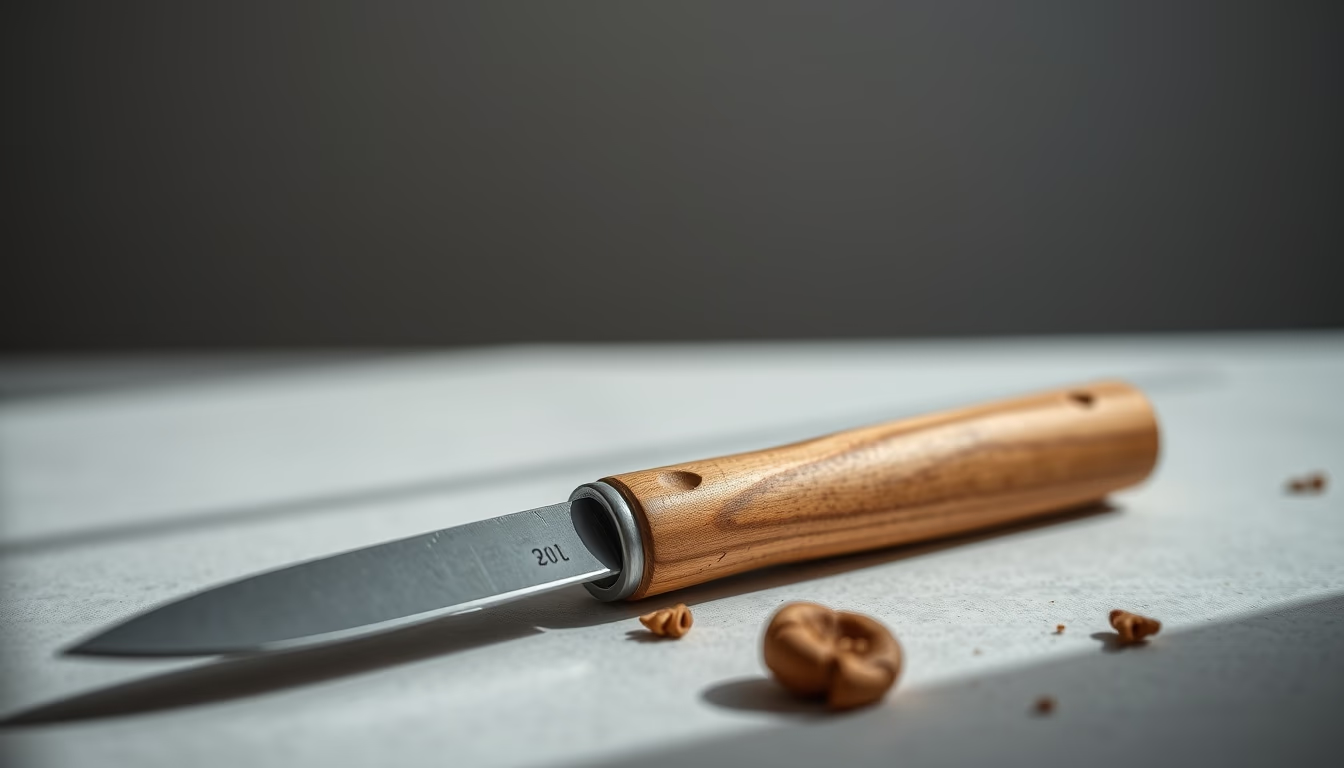
Wood carving knife
1344×768 · AVIF · CC BY 4.0
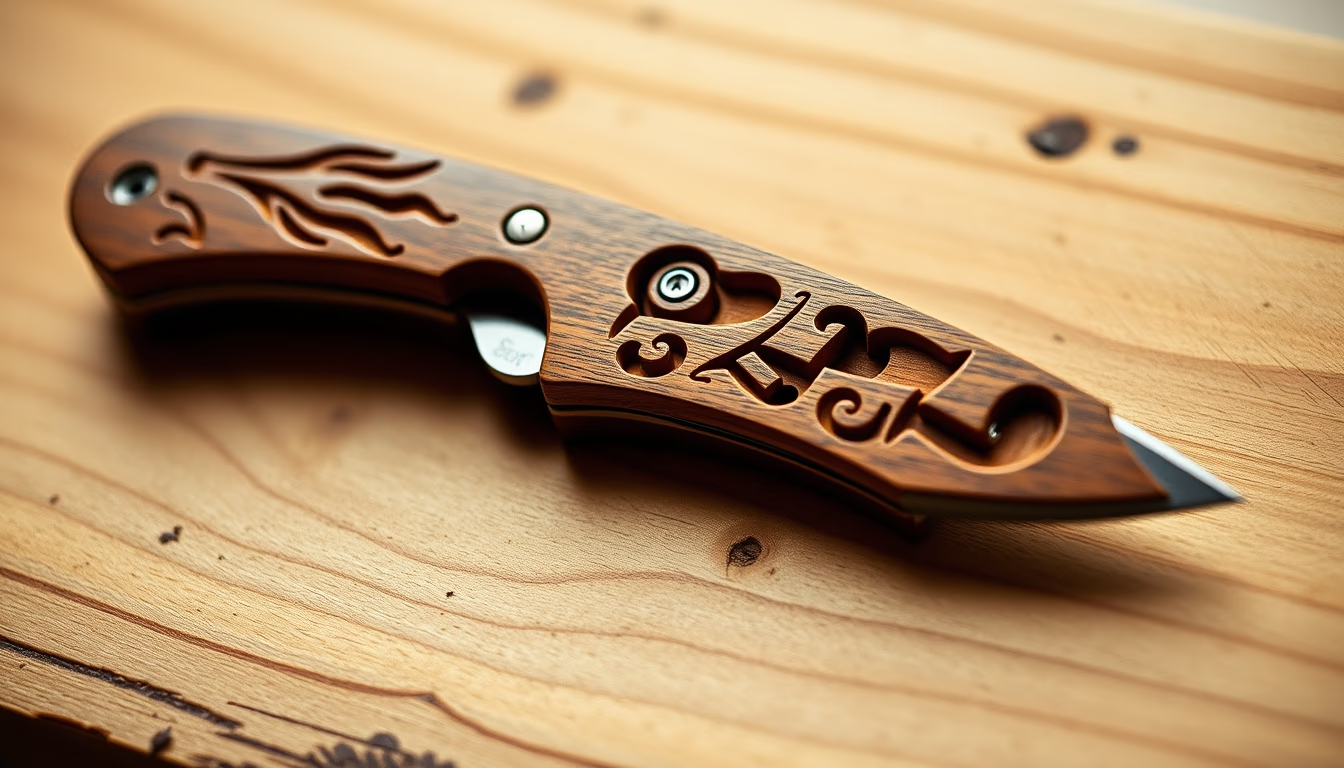
Wood carving knives are hand tools used by sculptors to carve details and shapes in wood, featuring specialized steel blades and ergonomic handles.
About this subject
The wood carving knife is one of the oldest and most essential tools for wood sculpture. It consists of a sharp steel blade, typically made of carbon or stainless steel, attached to a handle of wood or synthetic material. Different blade profiles allow for straight, curved, or V-shaped cuts, suitable for roughing, detailing, and finishing. Common types include the straight knife, hook knife, and chip knife, each with specific applications in carving.
Wood carving dates back thousands of years, with examples found in Egyptian, Chinese, and Indigenous American cultures. In Japan, carving with specialized knives is integral to toolmaking and religious sculpture traditions. In Europe, carving was widely used in the decoration of churches and furniture, with regions like the Loire Valley in France and Tyrol in Austria maintaining centuries-old traditions.
The choice of steel is critical: high-carbon steels (e.g., O1 or 1095) hold an edge longer but may rust; stainless steels (e.g., 440C) are more corrosion-resistant but harder to sharpen. The sharpening angle ranges from 15 to 25 degrees per side, depending on the use: smaller angles for fine cuts, larger for roughing. The handle must provide a firm grip, often carved to fit the artisan's hand.
Interestingly, the carving knife is often confused with a kitchen utility knife, but its geometry is optimized for control and precision, not long cuts. Professional carvers may own dozens of knives with different blade shapes, each for a specific stage of work. The chip carving technique, popular in Central Europe, relies exclusively on carving knives to create geometric relief patterns.
Frequently Asked Questions
What is the difference between a carving knife and a regular knife?
A carving knife has a shorter blade with a specific profile (straight, curved, V-shaped) for controlled cuts and fine details. Regular knives have longer blades and are designed for general cutting.
How to maintain the edge of a carving knife?
Sharpen the blade regularly with whetstones (grit 1000 to 8000) and maintain it with a strop or honing rod. After use, clean and dry the blade to prevent rust, especially on carbon steels.
Which woods are best for beginner carvers?
Softwoods like basswood (linden), cedar, or pine are ideal for beginners as they cut easily and resist splintering. Avoid very hard or resinous woods without experience.
Direct URL
https://pub-c7d6a6ea828543ac903a74a341ccb2e1.r2.dev/imagens/wood-carving-knife-lo-fi-disposable-camera-fresh6.avifHow to credit
Include a visible link back to UtilizAí. Copy one of the snippets below:
<a href="https://xn--utiliza-eza.com/en/midia/imagens/wood-carving-knife-lo-fi-disposable-camera-fresh6">Wood carving knife</a> by <a href="https://xn--utiliza-eza.com">UtilizAí</a>, licensed under <a href="https://creativecommons.org/licenses/by/4.0/">CC BY 4.0</a>.
[Wood carving knife](https://xn--utiliza-eza.com/en/midia/imagens/wood-carving-knife-lo-fi-disposable-camera-fresh6) by [UtilizAí](https://xn--utiliza-eza.com), CC BY 4.0
License: CC-BY-4.0