Wine cellar barrel oak
1344×768 · AVIF · CC BY 4.0
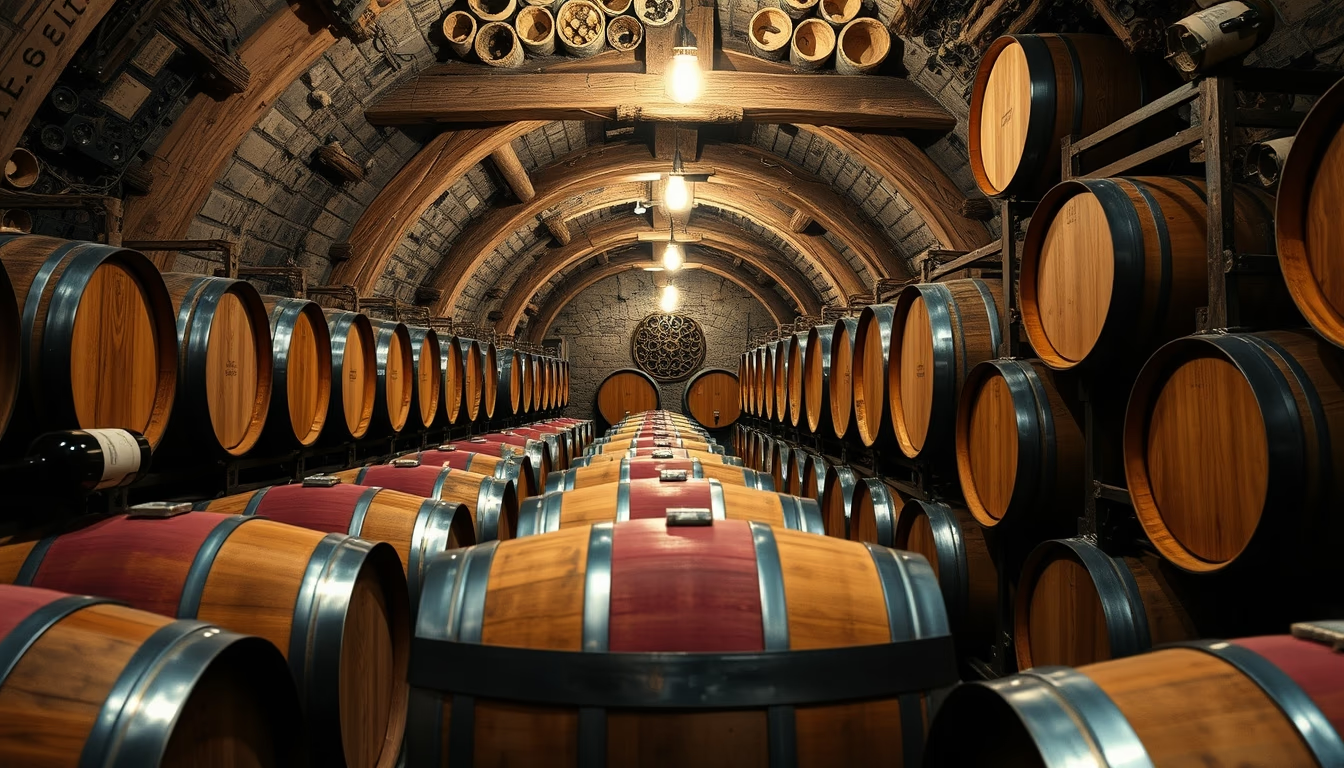
Climate-controlled wine cellar with oak barrels where red and white wines age for months or years, developing tannins and complex aromas.
About this subject
Aging in oak barrels is one of the most important stages in the production of quality wines. During this process, the wine acquires tannins, phenolic compounds that contribute to structure and longevity, as well as aromas such as vanilla, coconut, caramel, and spices. Two main types of oak are used: French oak, which imparts more subtle and elegant flavors, and American oak, which brings stronger notes of vanilla and sweetness. The choice depends on the desired style and the grape characteristics.
The barrel cellar, like the one depicted, requires controlled temperature and humidity conditions to ensure proper wine development. Typically, temperature is kept between 12°C and 16°C, with relative humidity around 70% to 80%, to prevent excessive evaporation and mold growth. These spaces can be underground or built with thermal insulation, often located in traditional wine regions such as Bordeaux, Burgundy, Napa Valley, or in Brazil, the Serra Gaúcha.
In Brazil, wine culture has grown significantly, especially in the Vale dos Vinhedos region in Rio Grande do Sul. Brazilian cellars combine European techniques with local climatic conditions, resulting in internationally awarded wines. The use of Brazilian oak barrels has also been explored, although production is still limited. Barrel aging is not restricted to red wines: some whites, like Chardonnay, and sparkling wines also undergo this stage, gaining complexity and creaminess.
Interestingly, oak is chosen not only for its aromatic qualities but also for its oxygen permeability. The micro-oxygenation that occurs through the wood pores softens tannins and integrates flavors, allowing the wine to reach its full potential. Barrels can be used for several years, but over time they lose aromatic compounds and are then destined for simpler wines or replaced with new ones.
Frequently Asked Questions
What is the difference between French and American oak barrels?
French oak imparts more subtle flavors, with notes of vanilla, spices, and toast, while American oak produces stronger aromas of vanilla, coconut, and sweetness. French oak is more expensive and used in high-end wines; American oak is common in fruity, full-bodied wines.
How long should a wine age in barrel?
There is no fixed rule; it depends on the style. Full-bodied reds may spend 12 to 24 months, while whites and light reds stay for 3 to 6 months. The winemaker decides based on periodic tastings.
Why is oak used for wine barrels?
Oak is chosen for its strength, impermeability, and ability to impart aromas and tannins. Its porous structure allows micro-oxygenation, which softens tannins and integrates flavors, enhancing complexity and aging potential.
Direct URL
https://pub-c7d6a6ea828543ac903a74a341ccb2e1.r2.dev/imagens/wine-cellar-barrel-oak-national-geographic-style-p4.avifHow to credit
Include a visible link back to UtilizAí. Copy one of the snippets below:
<a href="https://xn--utiliza-eza.com/en/midia/imagens/wine-cellar-barrel-oak-national-geographic-style-p4">Wine cellar barrel oak</a> by <a href="https://xn--utiliza-eza.com">UtilizAí</a>, licensed under <a href="https://creativecommons.org/licenses/by/4.0/">CC BY 4.0</a>.
[Wine cellar barrel oak](https://xn--utiliza-eza.com/en/midia/imagens/wine-cellar-barrel-oak-national-geographic-style-p4) by [UtilizAí](https://xn--utiliza-eza.com), CC BY 4.0
License: CC-BY-4.0