White blood cells macro
1344×768 · AVIF · CC BY 4.0
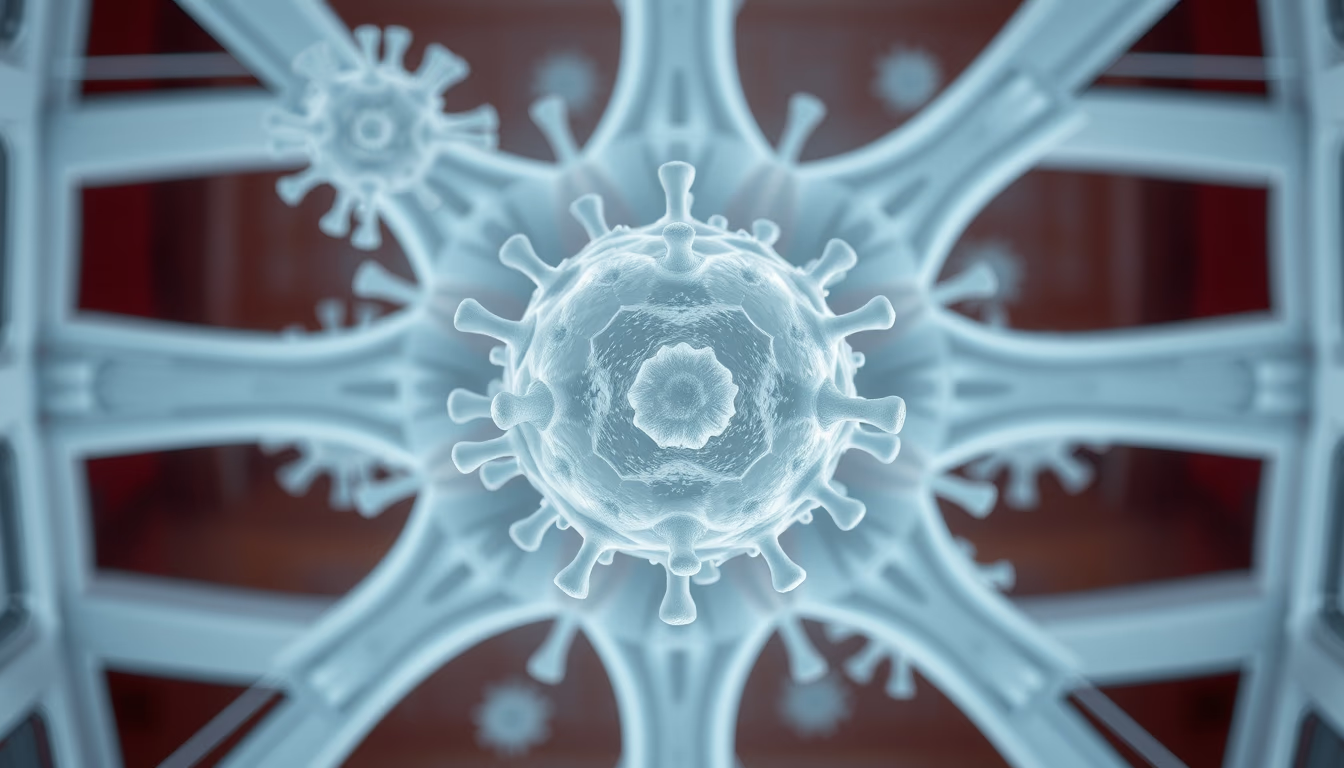
Leukocytes, or white blood cells, are essential immune system cells that protect the body against infections and diseases.
About this subject
Leukocytes, also known as white blood cells, are blood cells produced in the bone marrow and present in blood and lymphatic tissues. They form the body's primary defense against infectious agents such as bacteria, viruses, fungi, and parasites, and also participate in inflammatory responses and elimination of abnormal cells. There are five main types: neutrophils, lymphocytes, monocytes, eosinophils, and basophils, each with specialized functions. Neutrophils are the most abundant and combat bacterial infections, while lymphocytes (T cells and B cells) are responsible for adaptive immunity. Monocytes transform into macrophages in tissues, engulfing pathogens. Eosinophils and basophils are involved in allergic reactions and defense against parasites.
The normal white blood cell count ranges from 4,000 to 11,000 cells per microliter. Abnormal counts may indicate infections, inflammation, autoimmune diseases, or hematological disorders such as leukemia. Leukemia is a cancer characterized by uncontrolled proliferation of immature leukocytes, compromising the production of healthy cells. Conversely, leukopenia (low count) increases the risk of infections. A complete blood count (CBC) tests the quantity and proportion of each leukocyte type, known as the differential count.
Under microscopy, leukocytes are visualized after staining, which highlights their characteristic nuclei and granules. White blood cells are larger than red blood cells and have lobed nuclei (in neutrophils) or round nuclei (in lymphocytes). The complex cellular architecture, with granules and organelles, is often explored in high-resolution scientific photography. This structural beauty, when magnified, can resemble organic constructions, linking to the concept of architectural photography applied to the microcosm.
Frequently Asked Questions
What is the main function of leukocytes?
Leukocytes protect the body against infections and diseases by fighting pathogens such as bacteria, viruses, fungi, and parasites, as well as eliminating damaged or abnormal cells.
How many types of white blood cells are there?
There are five main types: neutrophils, lymphocytes, monocytes, eosinophils, and basophils. Each has specific roles in immune defense.
What does a high white blood cell count mean?
A high count (leukocytosis) usually indicates infection, inflammation, stress, or in more serious cases, leukemia. The interpretation depends on which type of leukocyte is elevated.
Direct URL
https://pub-c7d6a6ea828543ac903a74a341ccb2e1.r2.dev/imagens/white-blood-cells-macro-architectural-photography-p7.avifHow to credit
Include a visible link back to UtilizAí. Copy one of the snippets below:
<a href="https://xn--utiliza-eza.com/en/midia/imagens/white-blood-cells-macro-architectural-photography-p7">White blood cells macro</a> by <a href="https://xn--utiliza-eza.com">UtilizAí</a>, licensed under <a href="https://creativecommons.org/licenses/by/4.0/">CC BY 4.0</a>.
[White blood cells macro](https://xn--utiliza-eza.com/en/midia/imagens/white-blood-cells-macro-architectural-photography-p7) by [UtilizAí](https://xn--utiliza-eza.com), CC BY 4.0
License: CC-BY-4.0