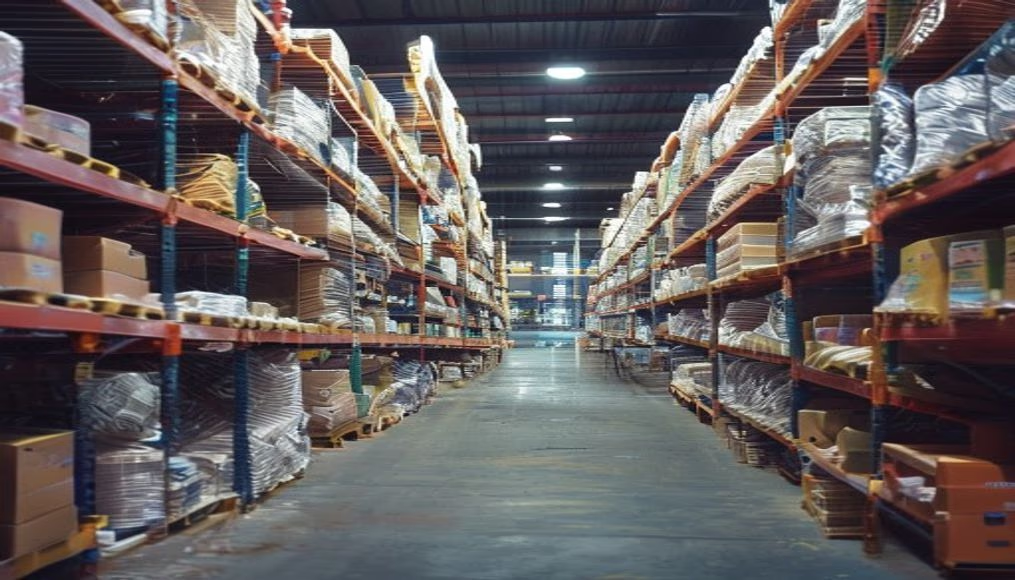
Warehouse shelves stocked products
1344×768 · AVIF · CC BY 4.0

Warehouse shelves packed with organized products showcase the efficiency of logistics and inventory management in modern commerce.
About this subject
Well-stocked warehouse shelves are the heart of the supply chain. Each product placed in its proper location allows companies of all sizes to maintain a steady flow of goods, reducing costs and preventing stockouts. The organization of these spaces follows storage principles such as FIFO (First In, First Out) or LIFO (Last In, First Out), depending on the item's nature. Sectors like retail, pharmaceuticals, and e-commerce rely directly on this structure to meet consumer demand quickly.
In Brazil, the logistics sector moves billions of reais annually. According to the Brazilian Logistics Association (ABRALOG), logistics costs account for about 12% of the national GDP. Modern warehouses use Warehouse Management Systems (WMS) that integrate barcode scanners, RFID, and even drones for inventory. These technologies increase accuracy and speed of operations, minimizing human errors.
The layout of shelves also impacts workplace safety. Wide aisles, proper signage, and equipment like forklifts and pallet jacks are essential to prevent accidents. Regulatory standards, such as NR-11 (Transport, Movement, Storage, and Handling of Materials), establish guidelines for a safe environment. Additionally, ergonomic shelf height is crucial to reduce injuries among workers.
Interestingly, the concept of large-scale storage dates back to ancient civilizations, such as the granaries of Ancient Egypt, which stored grain for times of scarcity. Today, warehouses have evolved into intelligent distribution centers equipped with robots and artificial intelligence. Companies like Amazon and Mercado Livre invest heavily in automation to optimize every available square meter, proving that inventory management is a constantly evolving science.
Frequently Asked Questions
What are the main inventory organization methods in warehouses?
The most common methods are FIFO (First In, First Out) for perishable goods, and LIFO (Last In, First Out) for non-perishable items. The ABC classification system prioritizes items with higher value or turnover.
How does technology impact warehouse management today?
WMS systems, RFID, barcode scanners, and automated robots increase accuracy, reduce errors, and speed up processes. Drones are used for fast inventory, and artificial intelligence optimizes picking routes.
What are the main challenges in organizing warehouse shelves?
Challenges include maximizing vertical space without compromising safety, maintaining correct product rotation, preventing damage, and ensuring ergonomics for workers.
Direct URL
https://pub-c7d6a6ea828543ac903a74a341ccb2e1.r2.dev/imagens/warehouse-shelves-stocked-products-landscape-photography.avifHow to credit
Include a visible link back to UtilizAí. Copy one of the snippets below:
<a href="https://xn--utiliza-eza.com/en/midia/imagens/warehouse-shelves-stocked-products-landscape-photography">Warehouse shelves stocked products</a> by <a href="https://xn--utiliza-eza.com">UtilizAí</a>, licensed under <a href="https://creativecommons.org/licenses/by/4.0/">CC BY 4.0</a>.
[Warehouse shelves stocked products](https://xn--utiliza-eza.com/en/midia/imagens/warehouse-shelves-stocked-products-landscape-photography) by [UtilizAí](https://xn--utiliza-eza.com), CC BY 4.0
License: CC-BY-4.0