Wailing wall jerusalem
1344×768 · AVIF · CC BY 4.0
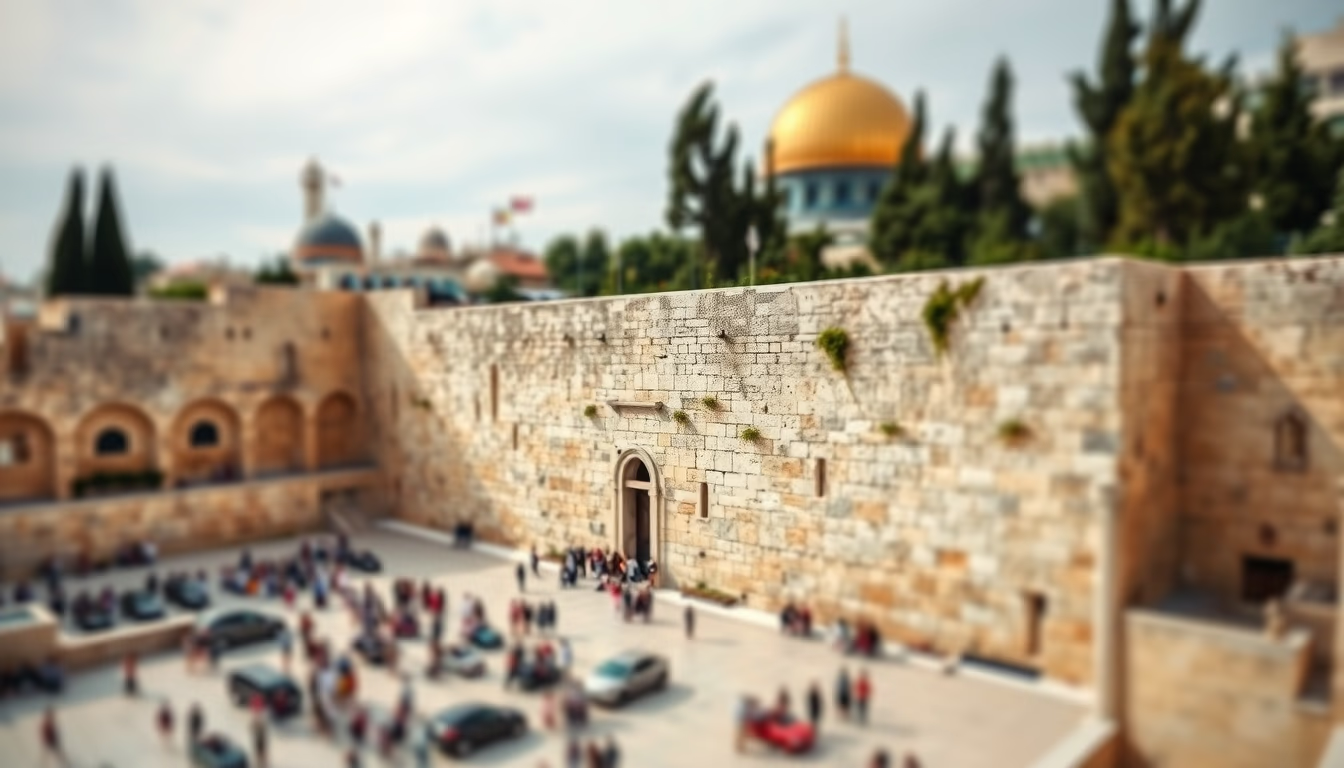
The Western Wall in Jerusalem: Judaism's holiest site, remnant of the Second Temple, destination for pilgrims and prayers.
About this subject
The Western Wall, also known as the Wailing Wall or Kotel, is one of Judaism's holiest sites. Located in the Old City of Jerusalem, it is a retaining wall that formed part of the Second Temple complex, built by Herod the Great around 19 BCE. The Temple was destroyed by the Romans in 70 CE, leaving the wall as the only visible remnant of the original structure. Since then, it has become the primary place of prayer and pilgrimage for Jews worldwide.
The wall stretches approximately 488 meters, but the open prayer area is about 60 meters long. The lower stones are massive, some weighing up to 100 tons, dating from the Herodian period. Upper layers were added later, including contributions from the Ottoman Empire. The tradition of placing prayer notes in the wall's crevices is ancient, symbolizing a direct connection with God.
The site is open 24 hours a day but is divided into male and female sections according to Orthodox practice. Thousands of visitors and worshippers come daily, especially on Friday evenings as Shabbat begins. Beyond its religious significance, the Western Wall is an iconic tourist attraction, drawing people of all faiths to explore Jerusalem's millennia-old history.
A notable fact: the name "Wailing Wall" derives from Jewish lamentation over the Temple's destruction and exile. However, many Jews prefer the term Kotel HaMa'aravi (Western Wall) as it is more neutral and geographically precise. The site also holds significance for Christians and Muslims, as it adjoins the Temple Mount, home to the Dome of the Rock and Al-Aqsa Mosque.
Frequently Asked Questions
What is the origin of the name Wailing Wall?
The name comes from Jewish lamentation over the destruction of the First and Second Temples and the exile. However, many Jews prefer to call it Kotel HaMa'aravi, meaning Western Wall.
Why do people place notes in the Wall?
It is an ancient tradition of placing written prayers and requests in the wall's crevices. The site is considered a gateway to heaven where prayers are heard directly.
Is the Western Wall open to non-Jews?
Yes, it is open to visitors of all faiths 24 hours a day. Modest dress is required, and the gender-separated prayer area must be respected.
Direct URL
https://pub-c7d6a6ea828543ac903a74a341ccb2e1.r2.dev/imagens/wailing-wall-jerusalem-tilt-shift-miniature-p0.avifHow to credit
Include a visible link back to UtilizAí. Copy one of the snippets below:
<a href="https://xn--utiliza-eza.com/en/midia/imagens/wailing-wall-jerusalem-tilt-shift-miniature-p0">Wailing wall jerusalem</a> by <a href="https://xn--utiliza-eza.com">UtilizAí</a>, licensed under <a href="https://creativecommons.org/licenses/by/4.0/">CC BY 4.0</a>.
[Wailing wall jerusalem](https://xn--utiliza-eza.com/en/midia/imagens/wailing-wall-jerusalem-tilt-shift-miniature-p0) by [UtilizAí](https://xn--utiliza-eza.com), CC BY 4.0
License: CC-BY-4.0