Pamukkale terraces turkey
1344×768 · JPG · CC BY 4.0
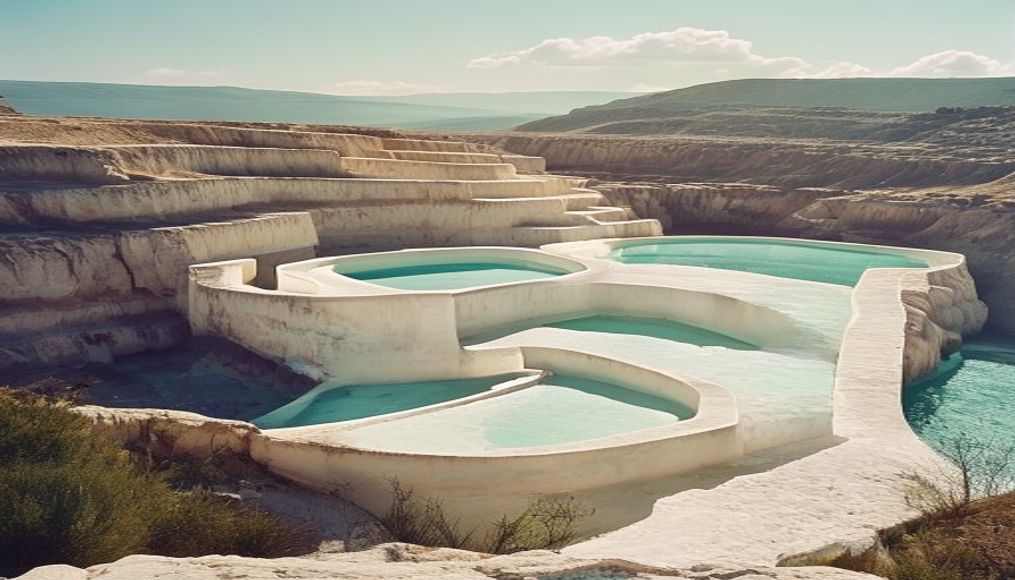
The travertine terraces of Pamukkale in Turkey form one of the most impressive natural monuments in the world, known as the Cotton Castle.
About this subject
Located in Denizli Province in southwestern Turkey, Pamukkale is a unique geological site that attracts millions of visitors every year. The name means Cotton Castle in Turkish, a direct reference to the bright white appearance of the calcium carbonate formations. The terraces were created over millennia by the flow of mineral-rich thermal waters that, upon cooling and evaporating, deposit layers of travertine. This continuous process forms stepped natural pools, some deep enough for bathing.
Beyond its scenic beauty, Pamukkale houses the ruins of the ancient city of Hierapolis, founded around 190 BC by the Kings of Pergamon. The city was a thermal and religious center, with temples, a theater, and an extensive necropolis. The thermal waters were considered healing, and today it is still possible to swim in Cleopatra's ancient pool, where submerged columns and marbles lie at the bottom.
In 1988, Pamukkale and Hierapolis were declared a UNESCO World Heritage Site, protecting both the geological formations and the archaeological findings. Preservation is delicate: past overtourism caused damage, leading to restrictions such as the prohibition of walking on the terraces with shoes and the mandatory use of designated swimming areas. Currently, visitors can walk on wooden walkways and admire the natural spectacle without damaging it.
A curiosity is that the white color of the travertine can vary with sunlight, taking on pinkish hues at dawn and orange at sunset. The thermal water emerges at about 35°C and is rich in calcium bicarbonate, magnesium, and sulfate. For visitors, the experience of seeing the natural pools against the Turkish sky is unforgettable, but it requires respect for environmental rules so that future generations can also enjoy them.
Frequently Asked Questions
What does Pamukkale mean?
Pamukkale means "Cotton Castle" in Turkish, due to the white and soft appearance of the travertine formations.
Can I swim in the pools of Pamukkale?
Yes, but only in designated areas and following strict preservation rules. Wearing shoes on the terraces is prohibited.
Is Pamukkale a World Heritage site?
Yes, since 1988, together with the ancient city of Hierapolis, forming a mixed natural and cultural UNESCO site.
Direct URL
https://pub-c7d6a6ea828543ac903a74a341ccb2e1.r2.dev/imagens/pamukkale-terraces-turkey-film-grain-authentic-p4.jpgHow to credit
Include a visible link back to UtilizAí. Copy one of the snippets below:
<a href="https://xn--utiliza-eza.com/en/midia/imagens/pamukkale-terraces-turkey-film-grain-authentic-p4">Pamukkale terraces turkey</a> by <a href="https://xn--utiliza-eza.com">UtilizAí</a>, licensed under <a href="https://creativecommons.org/licenses/by/4.0/">CC BY 4.0</a>.
[Pamukkale terraces turkey](https://xn--utiliza-eza.com/en/midia/imagens/pamukkale-terraces-turkey-film-grain-authentic-p4) by [UtilizAí](https://xn--utiliza-eza.com), CC BY 4.0
License: CC-BY-4.0