Wailing wall jerusalem
1344×768 · AVIF · CC BY 4.0
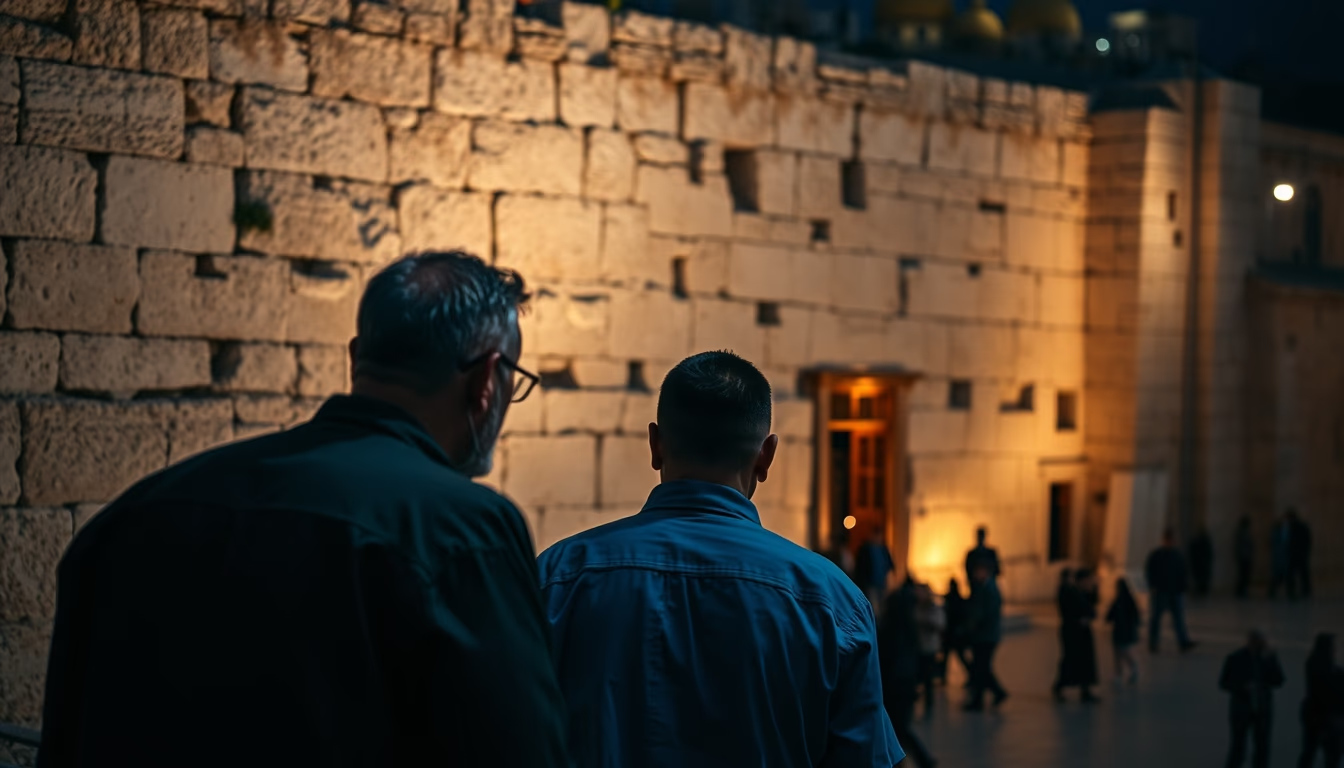
The Wailing Wall, also known as the Western Wall, is the holiest site in Judaism, a remnant of the Second Temple in Jerusalem.
About this subject
The Wailing Wall, known in Hebrew as the Kotel, is one of the most iconic and sacred sites for the Jewish people. Located in the Old City of Jerusalem, it is the remaining retaining wall of the Temple Mount, built by Herod the Great around 19 BCE to expand the platform of the Second Temple. After the Temple's destruction by the Romans in 70 CE, the wall became the primary Jewish pilgrimage site, where worshippers come to pray and mourn the loss of the sanctuary. The cracks between the stones are filled with prayer notes, a tradition symbolizing the connection between the people and God.
Historically, the wall extends approximately 488 meters in length, but the exposed section for public prayer is about 60 meters. The lower stones date from the Herodian era, some weighing up to 100 tons. Over centuries, the site was controlled by various empires, including Byzantine, Muslim, and Ottoman. After the Six-Day War in 1967, Israel took control of the Old City and expanded the prayer area, removing nearby neighborhoods to create the current large plaza. The Wailing Wall is divided into men's and women's sections, following Orthodox Jewish traditions.
Culturally, the wall symbolizes faith and resilience, attracting millions of visitors annually, both Jews and tourists from around the world. Important ceremonies such as bar mitzvahs and national celebrations take place there. The name "Wailing Wall" derives from Jewish lamentations over the Temple's destruction, but many prefer "Western Wall" as it is geographically more accurate. The site is also sacred in Islam, as the Temple Mount houses the Al-Aqsa Mosque and the Dome of the Rock, making the area a point of religious and political tension.
Interestingly, archaeologists have discovered tunnels along the wall revealing historical layers of the city, including an aqueduct and Roman-era streets. The Wailing Wall is not only a religious monument but an archaeological testament to Jerusalem's rich history. Despite conflicts, the site remains a space for prayer and reflection, where people of different faiths can visit respectfully.
Frequently Asked Questions
Why is the Wailing Wall considered sacred?
The Wailing Wall is the holiest site in Judaism because it is the last remaining remnant of the Second Temple, destroyed in 70 CE. It represents the historical and spiritual connection of the Jewish people with God and Jerusalem.
What is the difference between the Wailing Wall and the Western Wall?
The terms are used interchangeably, but 'Western Wall' is a direct translation of 'Kotel HaMa'arav' in Hebrew, while 'Wailing Wall' emphasizes the tradition of lamentation over the Temple's destruction. Many prefer the former as more neutral.
Is it allowed to visit the Wailing Wall? What are the rules?
Yes, it is open to the public free of charge 24/7. Visitors must dress modestly (shoulders and knees covered). Men must wear a skullcap (kippah), provided at the entrance. Photography is prohibited on Saturday (Shabbat) and Jewish holidays.
Direct URL
https://pub-c7d6a6ea828543ac903a74a341ccb2e1.r2.dev/imagens/wailing-wall-jerusalem-fine-art-photography-p7.avifHow to credit
Include a visible link back to UtilizAí. Copy one of the snippets below:
<a href="https://xn--utiliza-eza.com/en/midia/imagens/wailing-wall-jerusalem-fine-art-photography-p7">Wailing wall jerusalem</a> by <a href="https://xn--utiliza-eza.com">UtilizAí</a>, licensed under <a href="https://creativecommons.org/licenses/by/4.0/">CC BY 4.0</a>.
[Wailing wall jerusalem](https://xn--utiliza-eza.com/en/midia/imagens/wailing-wall-jerusalem-fine-art-photography-p7) by [UtilizAí](https://xn--utiliza-eza.com), CC BY 4.0
License: CC-BY-4.0