Virus 3d render covid
1344×768 · AVIF · CC BY 4.0
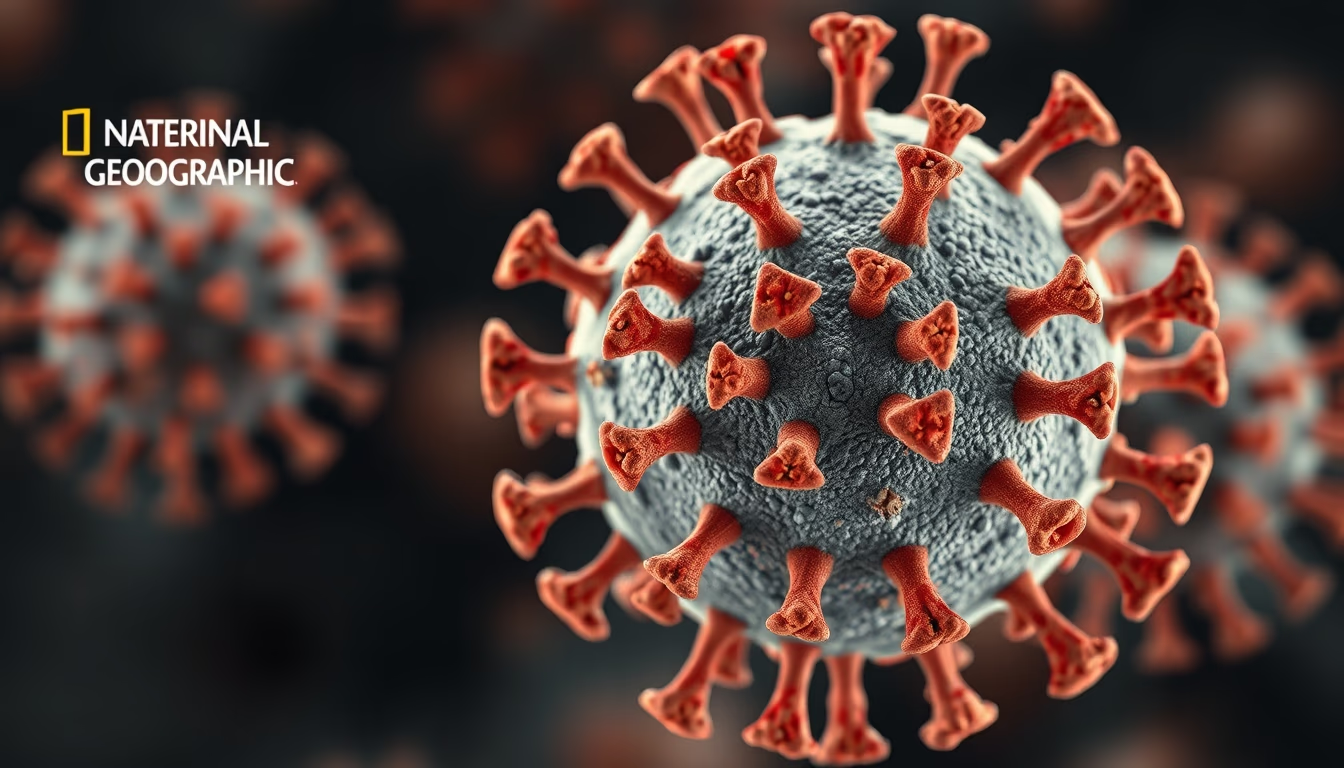
SARS-CoV-2, the coronavirus responsible for the COVID-19 pandemic, measures about 120 nanometers in diameter and features a crown-like spike structure.
About this subject
SARS-CoV-2 is an enveloped, positive-sense single-stranded RNA virus belonging to the family Coronaviridae. Its surface is studded with spike proteins that bind to the ACE2 receptor on human cells, initiating infection. These spikes give the coronavirus its name, as they resemble a crown under an electron microscope. The viral genome is approximately 30,000 base pairs, one of the largest among RNA viruses, enabling it to encode various structural and nonstructural proteins.
First identified in Wuhan, China, in December 2019, SARS-CoV-2 spread globally, leading the World Health Organization to declare a pandemic in March 2020. To date, the virus has infected hundreds of millions of people and caused millions of deaths. Transmission occurs primarily through respiratory droplets and aerosols, but can also happen via contaminated surfaces. Its high mutation rate has generated concerning variants such as Alpha, Delta, and Omicron, which exhibited increased transmissibility or immune escape.
The immune response to SARS-CoV-2 involves neutralizing antibodies and T cells, but the duration of protection varies. Vaccines based on messenger RNA, viral vectors, and recombinant proteins were developed in record time, dramatically reducing severe cases and deaths. However, the virus continues to circulate, and mass vaccination combined with non-pharmaceutical measures remains essential for control. Ongoing study of SARS-CoV-2 biology is crucial to anticipate future viral threats.
Frequently Asked Questions
What is the size of SARS-CoV-2?
SARS-CoV-2 is approximately 120 nanometers in diameter, about 1000 times smaller than a human hair.
How does SARS-CoV-2 infect human cells?
The virus uses its spike proteins to bind to the ACE2 receptor on epithelial cells, mainly in the respiratory tract, fusing with the cell membrane and releasing its RNA.
Why does SARS-CoV-2 mutate so frequently?
As an RNA virus, its replication is error-prone, and high global transmission creates selective pressure. Mutations in the spike gene can confer advantages like increased transmissibility or antibody escape.
Direct URL
https://pub-c7d6a6ea828543ac903a74a341ccb2e1.r2.dev/imagens/virus-3d-render-covid-national-geographic-style-p10.avifHow to credit
Include a visible link back to UtilizAí. Copy one of the snippets below:
<a href="https://xn--utiliza-eza.com/en/midia/imagens/virus-3d-render-covid-national-geographic-style-p10">Virus 3d render covid</a> by <a href="https://xn--utiliza-eza.com">UtilizAí</a>, licensed under <a href="https://creativecommons.org/licenses/by/4.0/">CC BY 4.0</a>.
[Virus 3d render covid](https://xn--utiliza-eza.com/en/midia/imagens/virus-3d-render-covid-national-geographic-style-p10) by [UtilizAí](https://xn--utiliza-eza.com), CC BY 4.0
License: CC-BY-4.0