Disco de vinil em toca-discos closeup
1344×768 · AVIF · CC BY 4.0
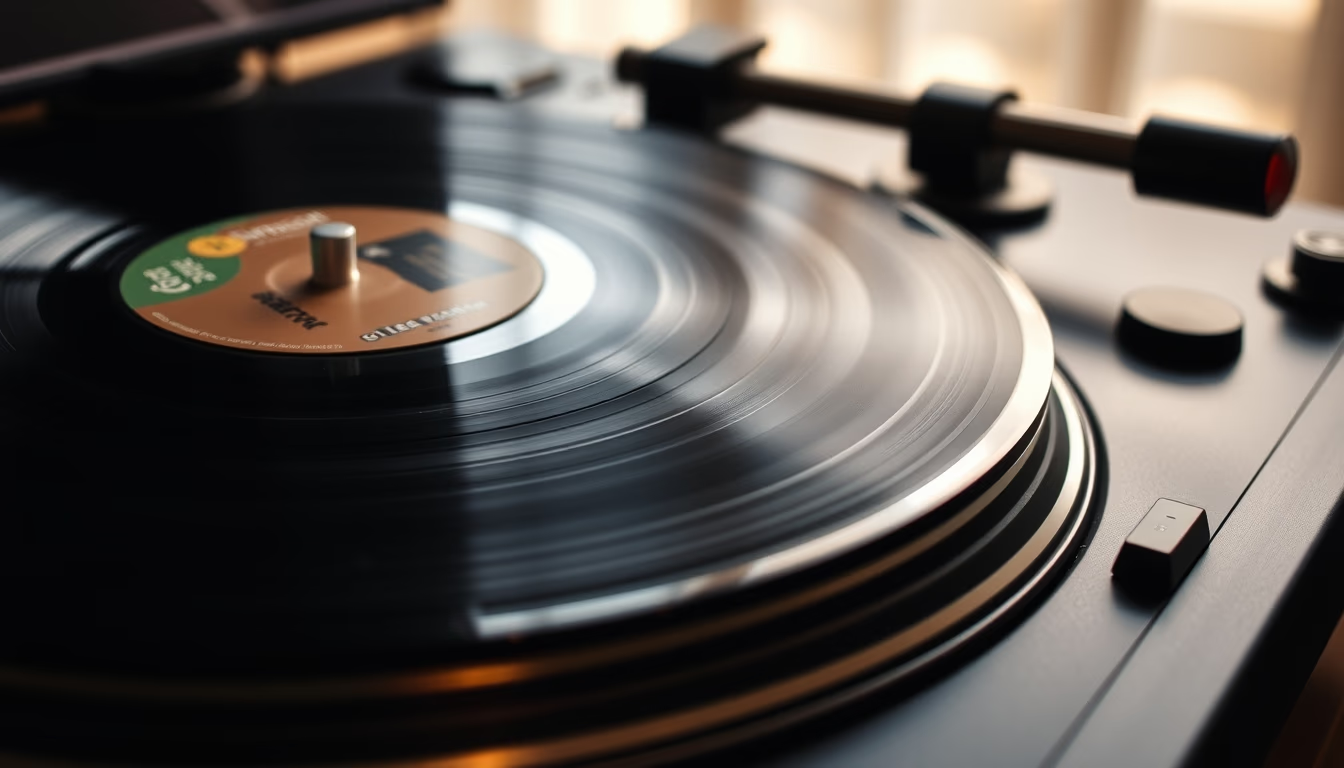
Close-up de um disco de vinil girando em um toca-discos, destacando os sulcos e a agulha, símbolo do ressurgimento do áudio analógico.
Sobre o tema
O disco de vinil é um suporte de gravação de áudio analógico, introduzido comercialmente pela Columbia Records em 1948. Difere dos antigos discos de goma-laca (78 rpm) por ser feito de policloreto de vinila, material que permite maior duração, superfície mais silenciosa e reprodução de frequências mais amplas. Os sulcos em espiral modulam a onda sonora: a agulha (sapphire ou diamante) vibra conforme as irregularidades, gerando sinal elétrico no cartucho magnético. Os formatos mais comuns são 33⅓ rpm (LP, long play) e 45 rpm (single), com o LP comportando até cerca de 22 minutos por lado.
O toca-discos converte essas vibrações mecânicas em som. O prato é girado por motor elétrico, podendo ser de acionamento direto (direto no eixo) ou por correia (belt-drive). O braço (tonearm) sustenta o headshell com o cartucho e a agulha; a correta força de acompanhamento e antiskating são cruciais para evitar desgaste excessivo e distorção. O modelo Technics SL-1200, lançado em 1972, tornou-se referência em DJs pela durabilidade e torque, popularizando o scratch e o mix. Já os toca-discos de alta fidelidade, como os de mesa giratória pesada e braços em S, priorizam a redução de ressonâncias e rumble.
Desde meados dos anos 2000 o vinil vive um renascimento consistente. Em 2020, nos Estados Unidos, a receita de vendas de LPs superou a de CDs pela primeira vez desde os anos 1980. Fãs citam a sonoridade "quente", a experiência tátil de manusear a capa e o encarte, e a impossibilidade de pular faixas aleatoriamente como fatores de engajamento. A produção de vinil, contudo, é mais cara e lenta que a de CDs, e o PVC usado levanta questões ambientais. Mesmo assim, selos independentes e grandes gravadoras seguem lançando edições especiais, coloridas ou picture discs.
A arte do álbum ganha destaque no formato 12 polegadas: capas duplas, encartes com letras e fotos. O ritual de limpar o disco, posicionar a agulha e ouvir uma face inteira contrasta com o streaming. O vinil, portanto, não é apenas um meio de áudio, mas um objeto cultural que conecta passado e presente, som e imagem, tradição e inovação.
Perguntas frequentes
O que faz o som do vinil ser diferente do digital?
O vinil reproduz som analógico contínuo, sem os cortes de amostragem do digital. Os sulcos registram a forma de onda completa, o que pode gerar uma sonoridade mais 'quente' e rica em harmônicos, embora suscetível a ruídos de superfície e distorção. Muitos ouvintes relatam uma sensação de naturalidade e profundidade que falta em algumas gravações digitais muito comprimidas.
Como cuidar adequadamente de discos de vinil?
Guarde os discos na vertical, dentro de capas protetoras antiestáticas, em ambiente fresco e seco. Use um pano de microfibras ou escova de fibra de carbono para remover poeira antes de tocar. Nunca toque na superfície com os dedos; segure pelas bordas e pelo selo central. Limpe com solução apropriada e evite solventes agressivos.
O vinil realmente voltou a ser popular nos anos 2020?
Sim. O vinil vive um renascimento desde meados dos anos 2000, com crescimento contínuo de vendas. Em 2020, nos EUA, os LPs superaram os CDs em receita. O formato atrai tanto colecionadores nostálgicos quanto novos ouvintes, impulsionado por edições limitadas, discos coloridos e a experiência tangível em contraste com o streaming.
URL direta
https://pub-c7d6a6ea828543ac903a74a341ccb2e1.r2.dev/imagens/vinyl-record-on-turntable-closeup-documentary-photography-p0.avifComo creditar
Inclua um link visível de volta pro UtilizAí. Copie um dos snippets abaixo:
<a href="https://xn--utiliza-eza.com/midia/imagens/vinyl-record-on-turntable-closeup-documentary-photography-p0">Disco de vinil em toca-discos closeup</a> by <a href="https://xn--utiliza-eza.com">UtilizAí</a>, licensed under <a href="https://creativecommons.org/licenses/by/4.0/">CC BY 4.0</a>.
[Disco de vinil em toca-discos closeup](https://xn--utiliza-eza.com/midia/imagens/vinyl-record-on-turntable-closeup-documentary-photography-p0) by [UtilizAí](https://xn--utiliza-eza.com), CC BY 4.0
Licença: CC-BY-4.0