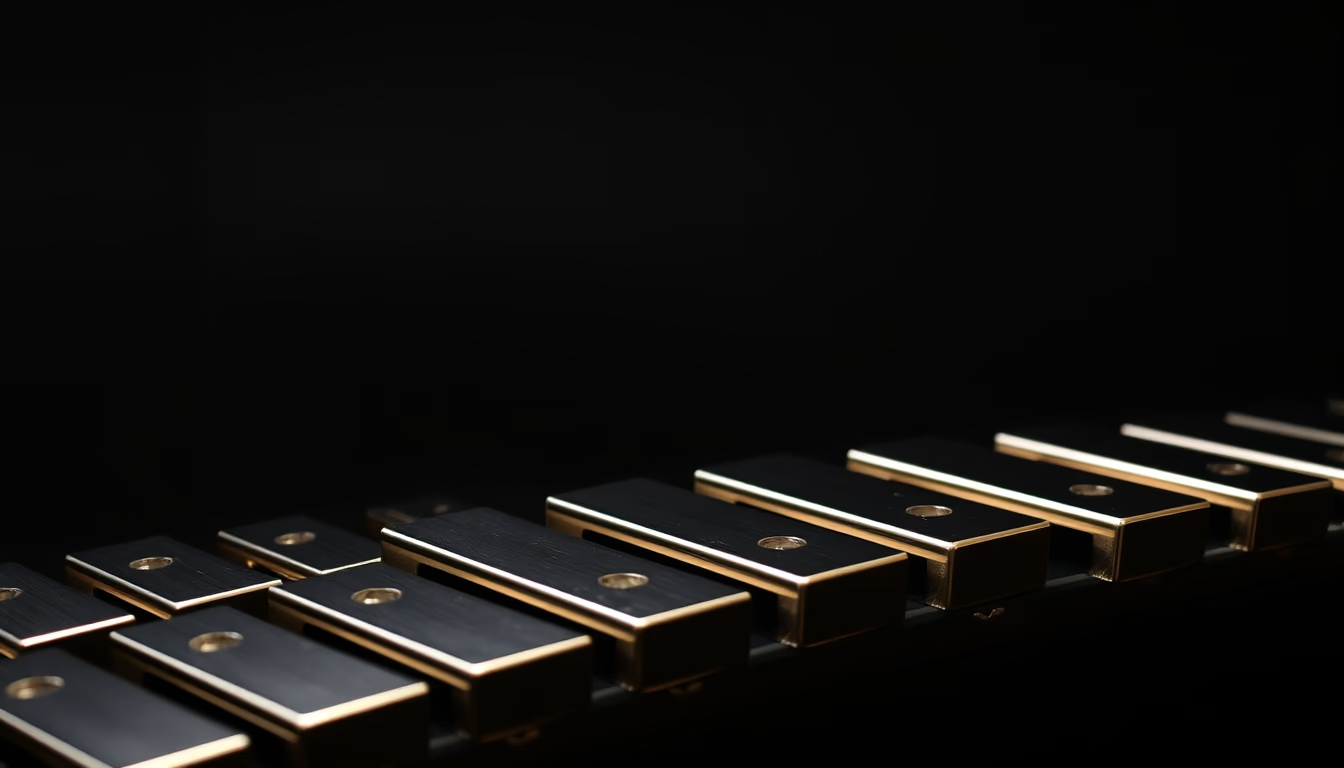
Vibraphone metallic bars
1344×768 · AVIF · CC BY 4.0

The metallic bars of the vibraphone produce a crystalline, sustained timbre, characteristic of jazz and contemporary classical music.
About this subject
The vibraphone is a melodic percussion instrument belonging to the idiophone family, where sound is produced by the vibration of the material itself. Its bars are made of aluminum alloy, precisely tuned and arranged chromatically like a keyboard. Beneath each bar is a resonator tube, and a motorized vibrato mechanism opens and closes the tubes, creating an oscillating volume effect, hence the name "vibraphone." The bars range from 20 to 40 centimeters in length and are struck with mallets covered in wool or rubber.
Developed in the 1920s by American percussion instrument manufacturer Henry Schluter, the vibraphone quickly became popular in jazz through musicians such as Lionel Hampton and Milt Jackson. Its soft, sustained sound allows for long notes, making it ideal for melodic solos and complex harmonies. The instrument also appears in 20th-century classical music, in works by composers like Olivier Messiaen and Pierre Boulez, as well as film and video game soundtracks.
A technical curiosity: bar tuning is done by cutting and sanding the ends, shortening the bar raises pitch, while widening or thinning it alters timbre. The typical aluminum alloy includes magnesium and silicon for strength and thermal stability. The vibrato motor, originally a small electric fan, now uses electronic systems with speed control, enabling effects from a subtle tremolo to faster waves.
In an orchestral setting, the vibraphone is usually played with two to four mallets, and its part is written in treble clef, sounding an octave higher than written. Because it blends well with other metallic timbres, such as celesta and glockenspiel, it is often used in ethereal passages. The instrument requires careful maintenance: bars should be cleaned with soft cloths and resonators periodically adjusted to prevent detuning.
Frequently Asked Questions
What is the difference between a vibraphone and a marimba?
The vibraphone has aluminum bars, sustained sound, and a motorized vibrato, while the marimba has wooden bars, a shorter decay, and no vibrato. Marimba resonators are open tubes without a vibration mechanism.
How many octaves does a standard vibraphone have?
A professional vibraphone covers three octaves, from F3 to F6. Student models may have two and a half octaves.
What mallets are used on the vibraphone?
Mallets with heads wrapped in wool, rubber, or yarn are common. Softer mallets give more sustain and volume; harder mallets provide precise articulation.
Direct URL
https://pub-c7d6a6ea828543ac903a74a341ccb2e1.r2.dev/imagens/vibraphone-metallic-bars-national-geographic-style-p7.avifHow to credit
Include a visible link back to UtilizAí. Copy one of the snippets below:
<a href="https://xn--utiliza-eza.com/en/midia/imagens/vibraphone-metallic-bars-national-geographic-style-p7">Vibraphone metallic bars</a> by <a href="https://xn--utiliza-eza.com">UtilizAí</a>, licensed under <a href="https://creativecommons.org/licenses/by/4.0/">CC BY 4.0</a>.
[Vibraphone metallic bars](https://xn--utiliza-eza.com/en/midia/imagens/vibraphone-metallic-bars-national-geographic-style-p7) by [UtilizAí](https://xn--utiliza-eza.com), CC BY 4.0
License: CC-BY-4.0