Tube amplifier glowing
1344×768 · AVIF · CC BY 4.0
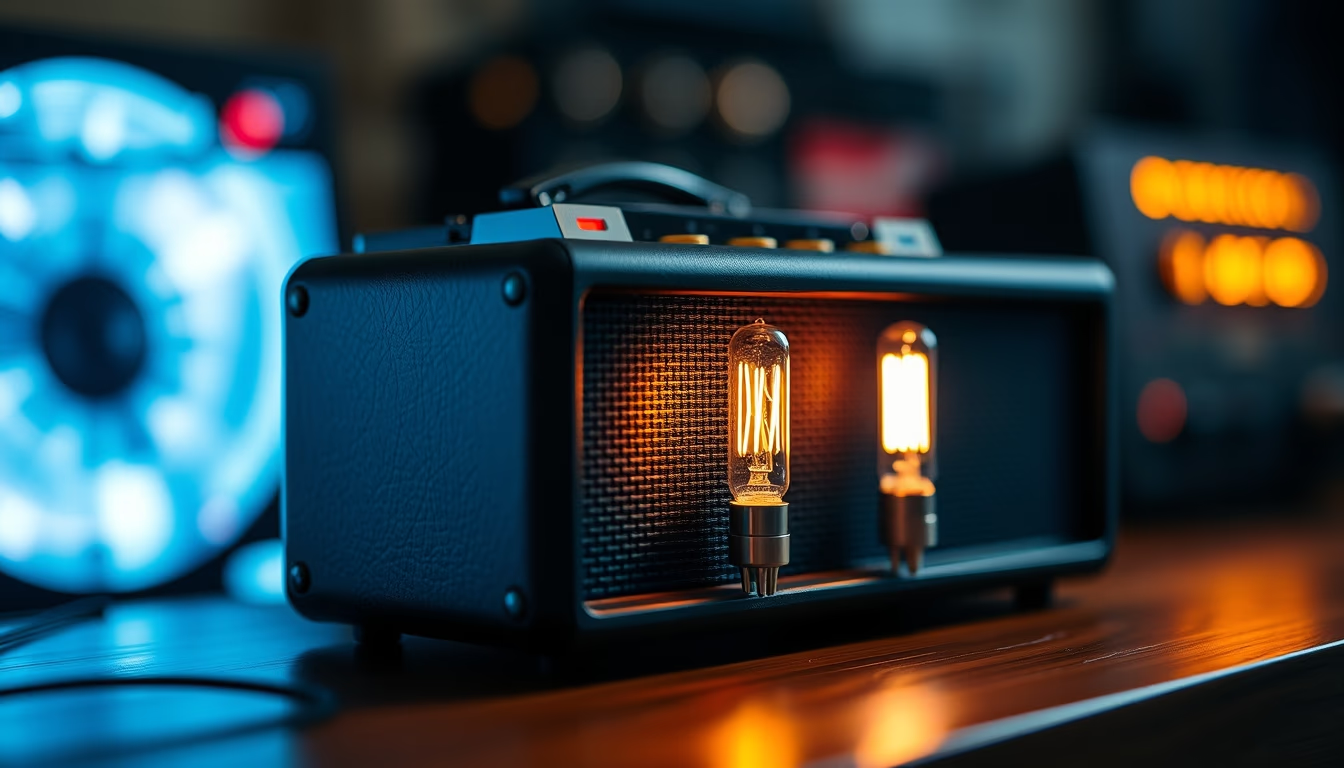
Tube amplifiers, like the one in the image, are renowned for their warm sound and pleasant harmonic distortion, making them icons of vintage audio.
About this subject
Tube amplifiers, also known as valve amplifiers, use thermionic valves (vacuum tubes) to amplify electrical signals. Unlike transistor amplifiers, tubes operate at high voltages and produce a characteristic distortion rich in even-order harmonics, which many audiophiles consider more musical and pleasing to the ear. This sound quality is often described as "warm," "organic," or "analog."
The history of tube amplifiers dates back to the early 20th century, with the development of the first triode tube by Lee De Forest in 1906. From the 1920s through the 1960s, they were the dominant technology in radios, phonographs, and professional sound systems. With the advent of transistors in the 1960s, tube amplifiers fell out of favor for most commercial applications, but retained a loyal following in high-fidelity audio and among guitar musicians, who value the natural saturation of tubes.
Culturally, tube amplifiers are symbols of vintage audio and classic rock. Models like the Fender Twin Reverb, Marshall JTM45, and Vox AC30 are legendary for their role in shaping the guitar sound of bands such as The Beatles, Jimi Hendrix, and Led Zeppelin. In high fidelity, brands like McIntosh, Audio Research, and Manley Laboratories continue producing high-end tube amplifiers, appreciated for their retro aesthetics and sonic performance.
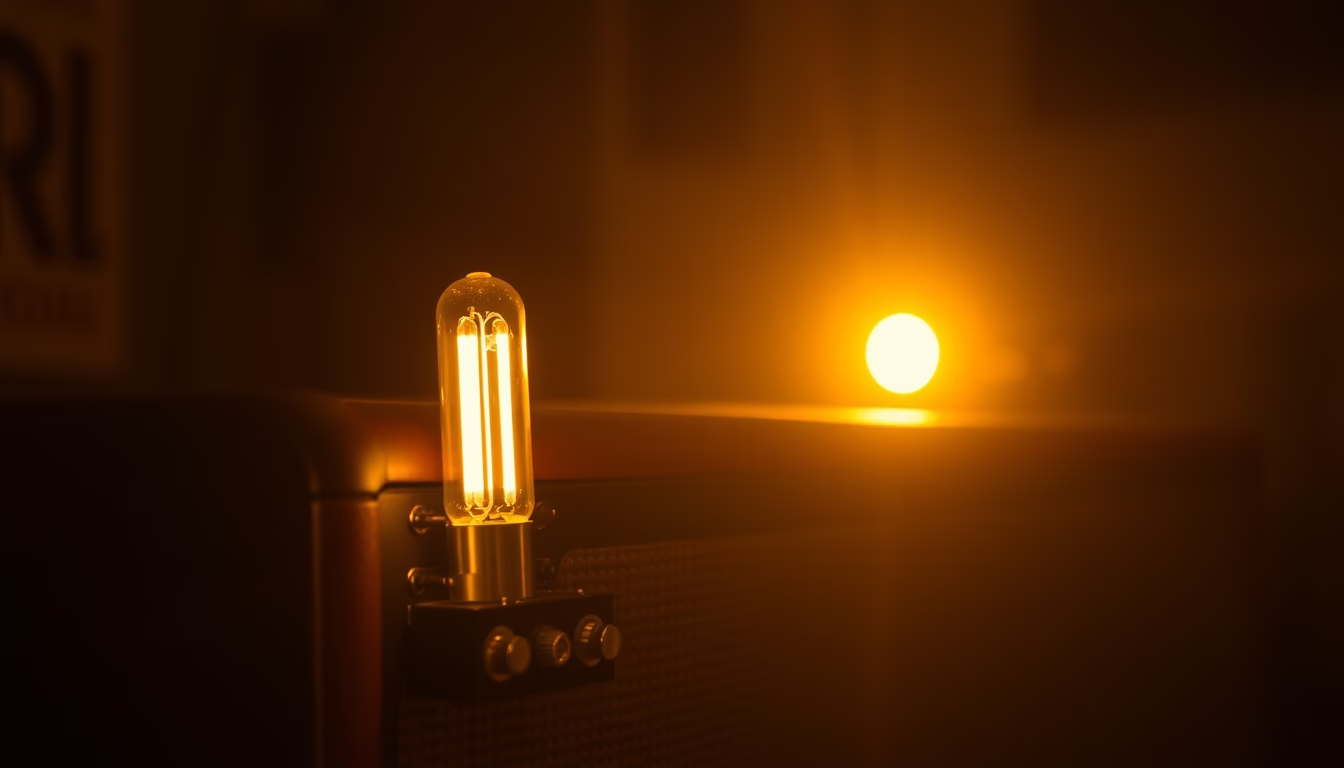
Today, there is a resurgence of interest in tubes, with new designs and factories reopening to meet the demand of enthusiasts. Despite being less efficient and more fragile than transistors, tubes offer a listening experience that many consider irreplaceable. The warm orange glow of heated tubes, as seen in the image, has become a visual icon of vintage audio, often associated with high-quality sound and nostalgia.
Frequently Asked Questions
What makes the sound of a tube amplifier different from a transistor one?
Tube amplifiers produce even-order harmonic distortion, considered more musical, and have a smoother frequency response. Transistors tend to generate odd-order distortion, which can sound harsher.
What are the main tubes used in audio amplifiers?
Common tubes include the 12AX7 (preamp), EL34, 6L6, and KT88 (power). Each has distinct sonic characteristics, influencing the amplifier's tone and power.
Are tube amplifiers still manufactured today?
Yes, many companies produce new tube amplifiers for both guitar and high-fidelity use. Brands like Fender, Marshall, Vox, McIntosh, and Audio Research maintain active lines.
Direct URL
https://pub-c7d6a6ea828543ac903a74a341ccb2e1.r2.dev/imagens/tube-amplifier-glowing-tilt-shift-miniature-fresh15.avifHow to credit
Include a visible link back to UtilizAí. Copy one of the snippets below:
<a href="https://xn--utiliza-eza.com/en/midia/imagens/tube-amplifier-glowing-tilt-shift-miniature-fresh15">Tube amplifier glowing</a> by <a href="https://xn--utiliza-eza.com">UtilizAí</a>, licensed under <a href="https://creativecommons.org/licenses/by/4.0/">CC BY 4.0</a>.
[Tube amplifier glowing](https://xn--utiliza-eza.com/en/midia/imagens/tube-amplifier-glowing-tilt-shift-miniature-fresh15) by [UtilizAí](https://xn--utiliza-eza.com), CC BY 4.0
License: CC-BY-4.0