Tuba large brass
1344×768 · AVIF · CC BY 4.0
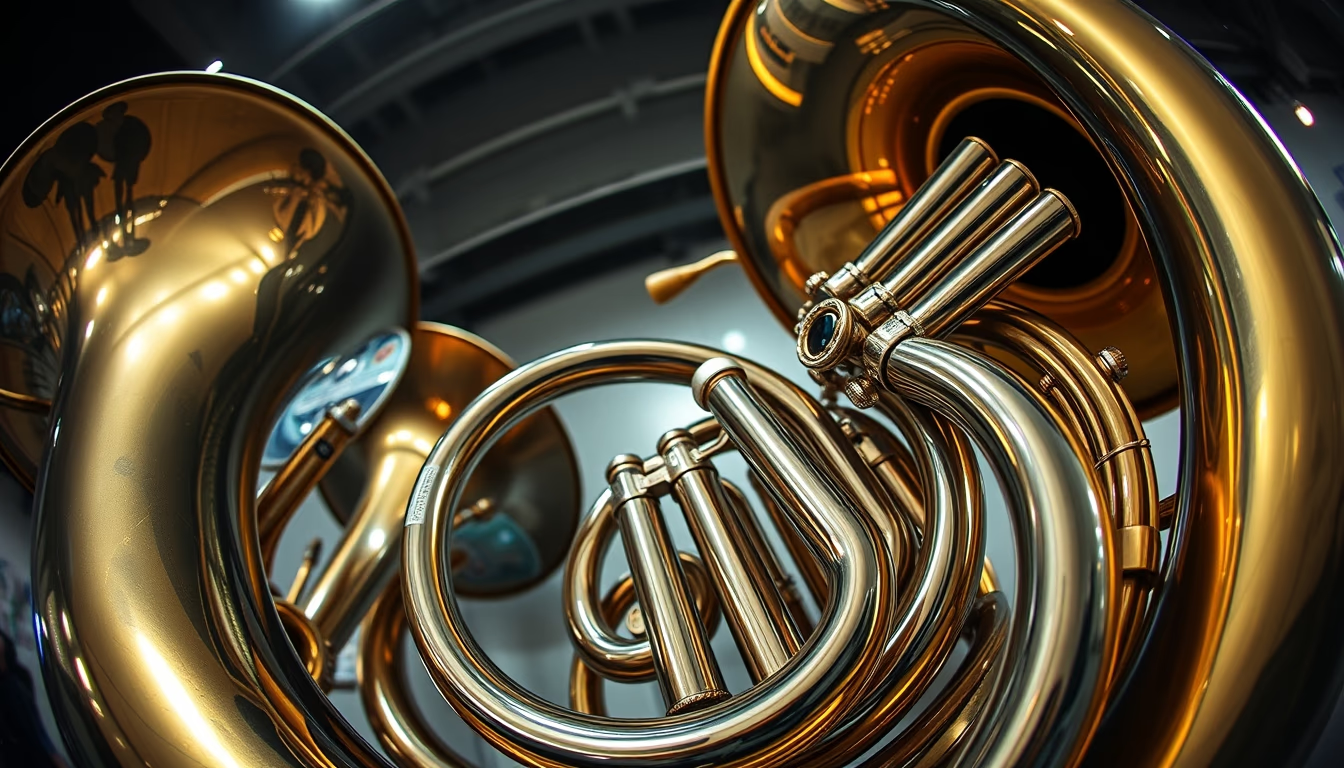
The tuba is the largest and lowest-pitched brass instrument, essential in orchestras and marching bands.
About this subject
The tuba is the largest and lowest-pitched instrument in the brass family, known for its deep and resonant sound. Its tubing, if fully extended, can exceed 5 meters in length. Typically made of brass, it features a mouthpiece shaped like a cup, where the player vibrates their lips to produce sound. Common tunings are in B♭ or C, depending on the model.
Invented in Germany by Wilhelm Wieprecht and Johann Gottfried Moritz in 1835, the tuba evolved from earlier instruments like the ophicleide and the serpent. It quickly became a cornerstone of symphony orchestras, military bands, jazz ensembles, and popular music. In orchestral settings, the tuba provides harmonic and rhythmic foundation, often doubling the double bass line. Composers such as Richard Wagner, Gustav Mahler, and John Williams have written iconic parts for the instrument.
In Brazil, the tuba is widely used in marching bands and wind bands (bandas de música), especially in regions like the Northeast. It also appears in genres like frevo, choro, and samba, lending its powerful sound to support the ensemble. Variations include the concert tuba (bell-up) and the marching tuba (bell-front), common in military bands. A tuba can weigh up to 15 kg, requiring significant physical endurance from the player.
Frequently Asked Questions
What is the difference between a tuba and a sousaphone?
The sousaphone is a type of tuba coiled in a circular shape around the player's body, with a forward-facing bell, designed for easier carrying in marching bands. The traditional concert tuba has an upward-facing bell and is more common in orchestras.
Is the tuba difficult to learn?
Yes, due to its size and the need for breath control and lip vibration control. However, many beginners start on smaller brass instruments and later switch to the tuba.
What are the most common types of tuba?
The most common types are the B♭ tuba (popular in bands) and the C tuba (standard in American symphony orchestras). Other variants include the E♭ and F tubas, used in smaller ensembles.
Direct URL
https://pub-c7d6a6ea828543ac903a74a341ccb2e1.r2.dev/imagens/tuba-large-brass-fish-eye-wide-angle-p8.avifHow to credit
Include a visible link back to UtilizAí. Copy one of the snippets below:
<a href="https://xn--utiliza-eza.com/en/midia/imagens/tuba-large-brass-fish-eye-wide-angle-p8">Tuba large brass</a> by <a href="https://xn--utiliza-eza.com">UtilizAí</a>, licensed under <a href="https://creativecommons.org/licenses/by/4.0/">CC BY 4.0</a>.
[Tuba large brass](https://xn--utiliza-eza.com/en/midia/imagens/tuba-large-brass-fish-eye-wide-angle-p8) by [UtilizAí](https://xn--utiliza-eza.com), CC BY 4.0
License: CC-BY-4.0