Tuba large brass
1344×768 · AVIF · CC BY 4.0
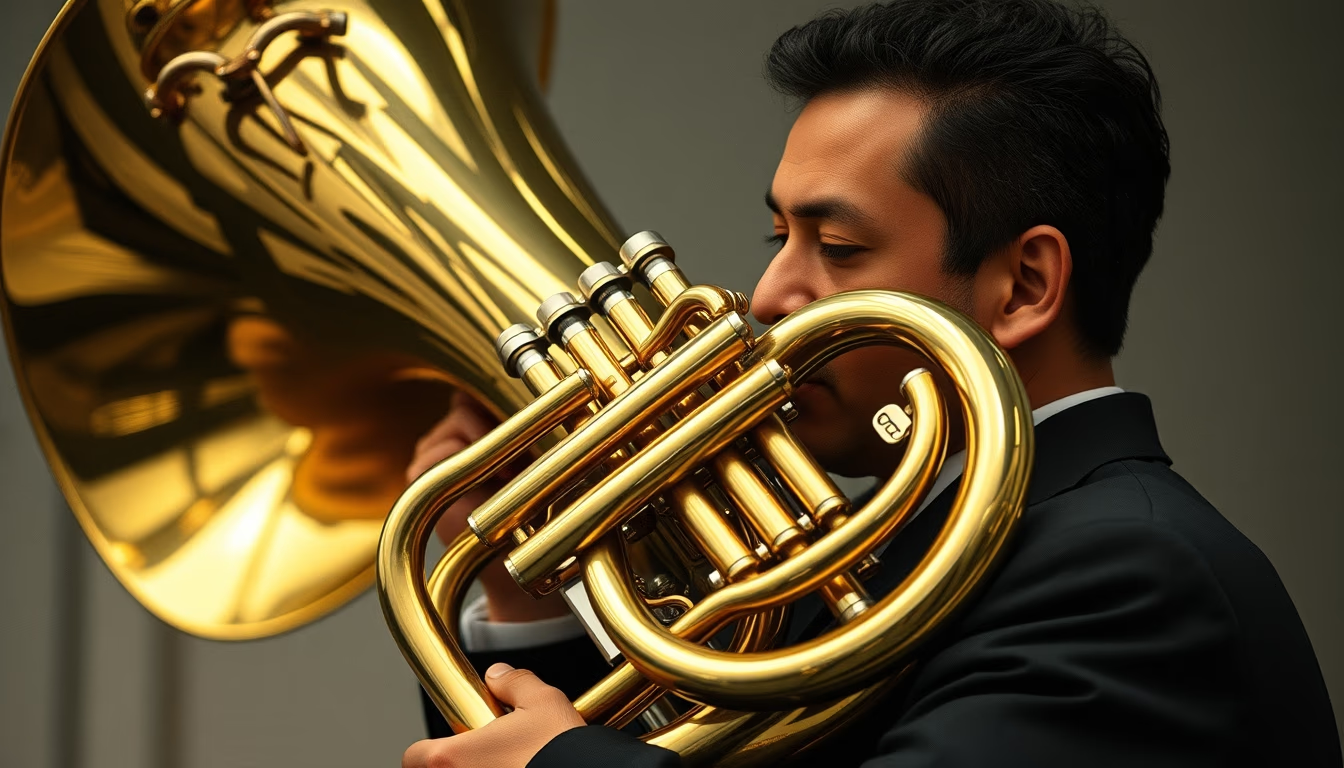
A tuba é o maior e mais grave dos instrumentos de sopro da família dos metais, essencial em orquestras e bandas.
Sobre o tema
A tuba, membro mais grave da família dos metais, possui um som profundo e ressonante que serve como alicerce harmônico em conjuntos musicais. Sua invenção data do século XIX, patenteada em 1835 por Wilhelm Friedrich Wieprecht e Johann Gottfried Moritz, na Alemanha. Diferente de seus antecessores, como o oficleide e a serpentão, a tuba foi projetada com um sistema de válvulas que permite maior flexibilidade e extensão de notas.
Existem diversos tamanhos e afinações de tuba: a tuba em F, em Mi bemol, em Dó e em Si bemol, sendo esta última a mais comum em orquestras sinfônicas. O instrumento é construído com metal, geralmente latão, e possui um tubo cônico que se alarga progressivamente até o pavilhão. O músico vibra os lábios contra o bocal, gerando ondas sonoras que percorrem o tubo. A tuba moderna pode medir até 5,5 metros de tubo quando desenrolada.
Na orquestra, a tuba frequentemente dobra a linha do contrabaixo ou dos trombones, fornecendo suporte rítmico e harmônico. Em bandas de música, ela é peça fundamental na seção de metais graves. Compositores como Richard Wagner, Gustav Mahler e John Williams exploraram seu potencial expressivo, desde passagens majestosas até momentos cômicos. Curiosamente, a tuba também é usada em jazz, bandas de marcha e até mesmo em música popular, como no funk e no rock.
O termo "tuba" vem do latim e significa "trombeta" ou "trompa", mas o instrumento moderno é bem diferente. A tuba sousafone, criada por John Philip Sousa, tem formato circular que envolve o corpo do músico, facilitando o transporte em desfiles. Outra variante é a tuba wagneriana, desenvolvida por Wagner para suas óperas, com um som mais suave e metalúrgico. A manutenção do instrumento requer limpeza regular e lubrificação das válvulas, além de cuidados com o pavilhão para evitar amassados.
Perguntas frequentes
Qual é a diferença entre uma tuba e um sousafone?
O sousafone é uma variação da tuba projetada para ser usada em desfiles e bandas de marcha. Ele tem um formato circular que envolve o corpo do músico e um grande pavilhão direcionado para frente, facilitando o transporte e a projeção do som. Já a tuba orquestral tradicional tem um formato mais vertical e é usada principalmente em concertos.
Quanto tempo de estudo é necessário para aprender a tocar tuba?
Aprender tuba requer dedicação e prática regular. Um iniciante pode levar de seis meses a um ano para desenvolver um som consistente e tocar melodias simples. Para alcançar um nível profissional, são necessários vários anos de estudo com um professor qualificado e prática diária.
Quais são os principais compositores que escreveram para tuba?
Grandes compositores como Richard Wagner, Gustav Mahler, Richard Strauss e Dmitri Shostakovich escreveram partes importantes para tuba em suas obras sinfônicas. Mais recentemente, John Williams e compositores de bandas filarmônicas também exploraram o instrumento. Existem ainda concertos solo para tuba, como os de Ralph Vaughan Williams e John Williams.
URL direta
https://pub-c7d6a6ea828543ac903a74a341ccb2e1.r2.dev/imagens/tuba-large-brass-film-grain-authentic-p3.avifComo creditar
Inclua um link visível de volta pro UtilizAí. Copie um dos snippets abaixo:
<a href="https://xn--utiliza-eza.com/midia/imagens/tuba-large-brass-film-grain-authentic-p3">Tuba large brass</a> by <a href="https://xn--utiliza-eza.com">UtilizAí</a>, licensed under <a href="https://creativecommons.org/licenses/by/4.0/">CC BY 4.0</a>.
[Tuba large brass](https://xn--utiliza-eza.com/midia/imagens/tuba-large-brass-film-grain-authentic-p3) by [UtilizAí](https://xn--utiliza-eza.com), CC BY 4.0
Licença: CC-BY-4.0