Tuba large brass
1344×768 · AVIF · CC BY 4.0
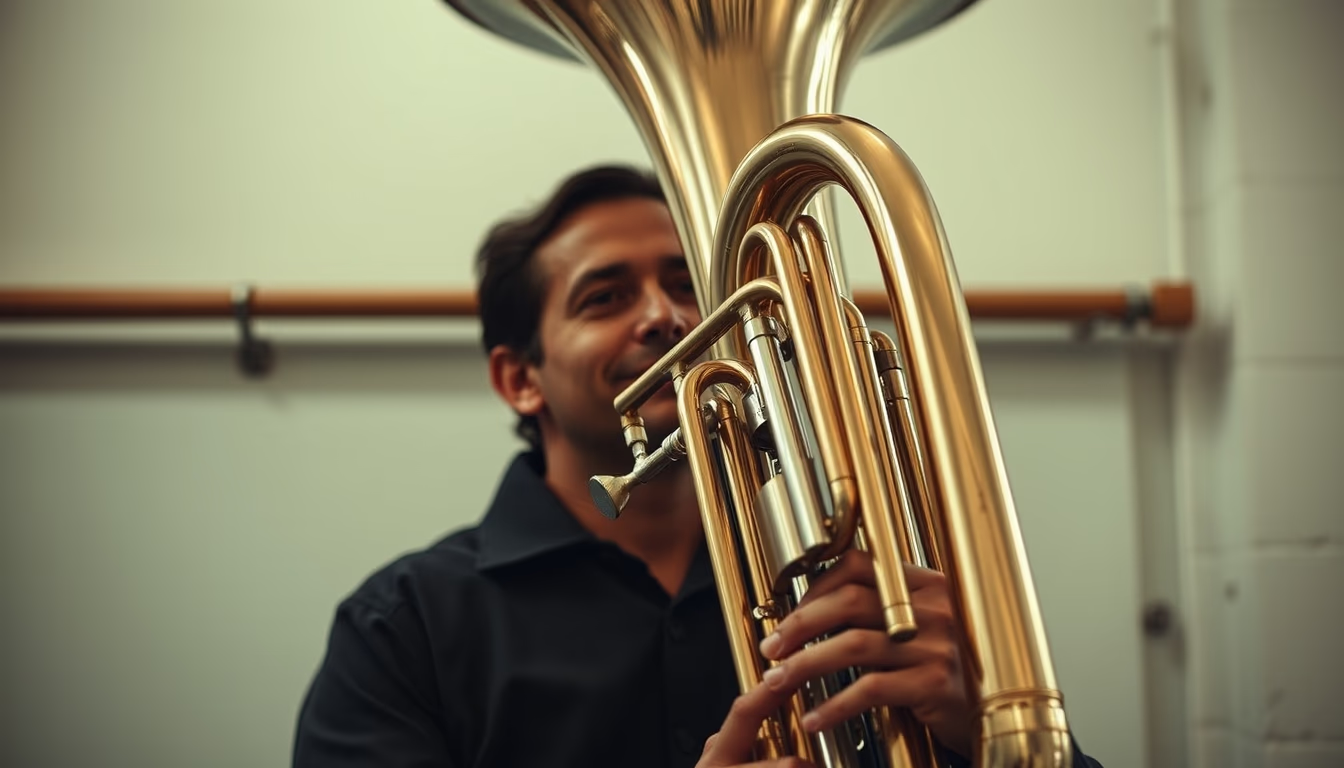
The tuba, the largest and lowest-pitched brass instrument, is a fundamental piece in orchestras and symphonic bands.
About this subject
The tuba is the largest and lowest-pitched brass instrument, producing a powerful, deep sound that provides harmonic foundation in musical ensembles. Invented by Wilhelm Friedrich Wieprecht and Johann Gottfried Moritz in 1835 in Prussia, the tuba was created to replace the serpent and ophicleide with more consistent bass notes. Since then, it has become essential in symphony orchestras, marching bands, jazz bands, and even popular music groups.
Modern tubas typically have three to six valves that control airflow and alter pitch. The bell (the wide opening where sound emerges) is large in diameter, contributing to the distinctive timbre. The instrument is pitched in C, B-flat, F, or E-flat, and its range spans from low contrabass (approximately 29 Hz) to middle notes. The contrabass tuba, even larger, is used for extremely low pitches.
In the orchestra, the tuba often doubles the double bass and bassoon lines, reinforcing the bass section. Pieces like Paul Dukas' "The Sorcerer's Apprentice" and symphonies by Gustav Mahler and Richard Strauss feature the tuba. In jazz, artists like Charles Mingus and tubist Howard Johnson explored its melodic potential. The sousaphone, a variation that wraps around the musician's body, is common in marching bands and was created by John Philip Sousa in the 1890s.
Interestingly, the tuba is one of the most versatile instruments, appearing in styles from classical to funk. Manufacturers like Conn, Yamaha, and Besson produce models weighing between 10 and 18 kilograms, requiring good physical endurance from the player. Despite its size, the tuba can express both gentle melodic lines and explosive bursts of sound.
Frequently Asked Questions
What is the difference between a tuba and a sousaphone?
The sousaphone is a variation of the tuba that wraps around the musician, with a larger bell facing forward. It was designed for marching bands because it is more portable and projects sound forward. The traditional orchestral tuba has a more vertical shape and is mainly used in symphonic ensembles.
How many valves does a tuba have?
Most tubas have 3 to 5 valves, though professional models may have 6. Rotary valves are common in orchestral tubas, while piston valves are frequent in sousaphones and band tubas.
What is the role of the tuba in an orchestra?
The tuba provides the low harmonic foundation, often doubling the double basses and bassoons. It plays the bass line and reinforces the root notes of chords, making it crucial for the full sound of the orchestra.
Direct URL
https://pub-c7d6a6ea828543ac903a74a341ccb2e1.r2.dev/imagens/tuba-large-brass-documentary-photography-p10.avifHow to credit
Include a visible link back to UtilizAí. Copy one of the snippets below:
<a href="https://xn--utiliza-eza.com/en/midia/imagens/tuba-large-brass-documentary-photography-p10">Tuba large brass</a> by <a href="https://xn--utiliza-eza.com">UtilizAí</a>, licensed under <a href="https://creativecommons.org/licenses/by/4.0/">CC BY 4.0</a>.
[Tuba large brass](https://xn--utiliza-eza.com/en/midia/imagens/tuba-large-brass-documentary-photography-p10) by [UtilizAí](https://xn--utiliza-eza.com), CC BY 4.0
License: CC-BY-4.0