Trumpet golden detail
1344×768 · AVIF · CC BY 4.0
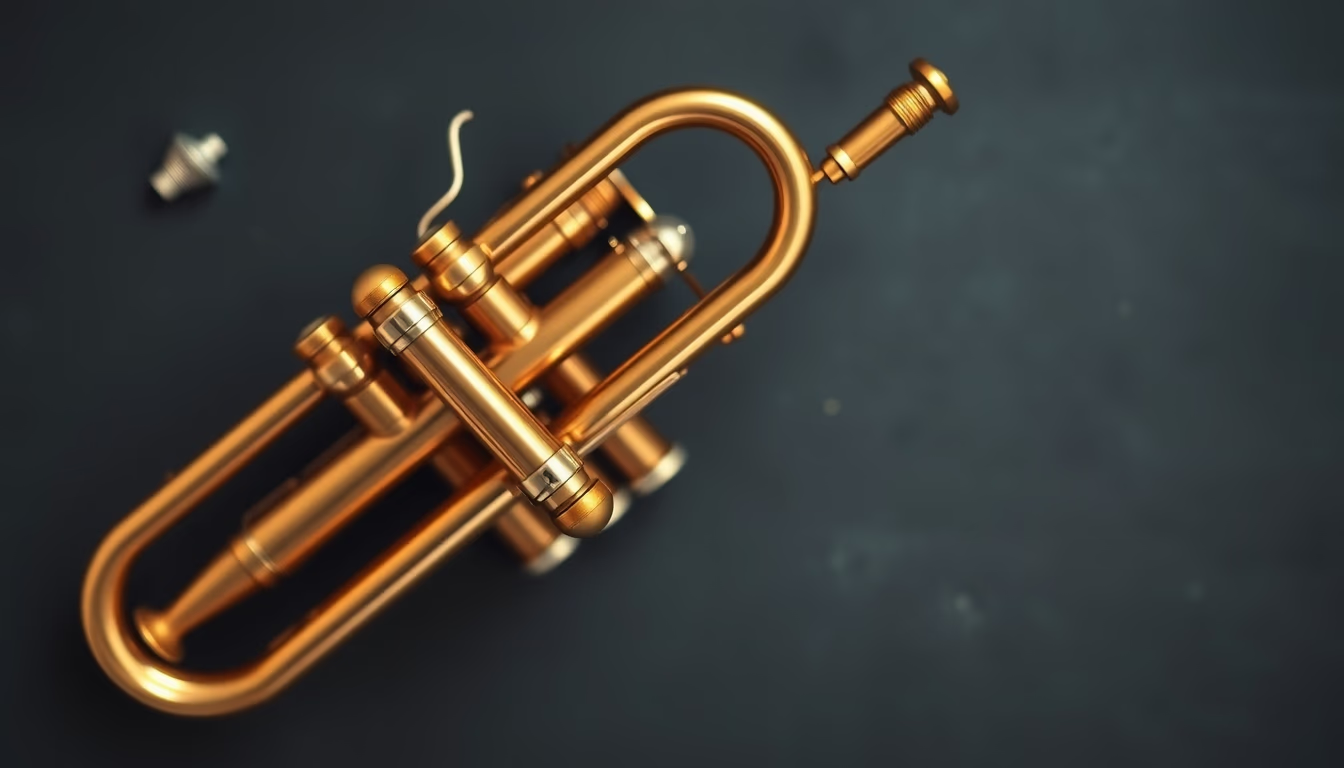
Golden details of a trumpet reveal the artisan sophistication and precise acoustics of this classic brass instrument.
About this subject
The trumpet is one of the oldest brass instruments, with origins in ancient civilizations such as Egypt and Rome. Its modern form, equipped with valves (pistons), was patented in the 19th century by Heinrich Stölzel and Friedrich Blühmel, enabling greater melodic flexibility. The golden detail found on many trumpets is not merely aesthetic: the application of gold or polished brass influences sound projection and corrosion resistance. Professional trumpets often feature 24-karat gold finishes that enhance timbre brightness and provide durability.
In Brazil, the trumpet is prominent in diverse musical genres, from samba and choro to frevo and jazz. Musicians like Silvério Pontes and Márcio Montarroyos elevated the instrument to new technical and expressive levels. Crafting a trumpet involves over 300 manual steps, including metal casting, tube soldering, and careful polishing. The golden detail is often applied to bells, lead pipes, or water keys, creating a visual contrast with traditional yellow brass.
Interestingly, the gold color is not merely decorative: it helps reflect heat and moisture generated by the player's breath, contributing to instrument stability during long performances. Additionally, gold is hypoallergenic, ideal for musicians sensitive to nickel found in common alloys. Maintaining this finish requires special care with soft cloths and non-abrasive products to avoid scratches.
The golden trumpet is frequently associated with symphony orchestras, marching bands, and brass ensembles. Its versatility allows for both lyrical solos and energetic rhythmic passages. Manufacturing techniques have evolved to include laser welding and wall thickness control, but the charm of the golden detail remains a tribute to artisanal tradition.
Frequently Asked Questions
What is the difference between a brass trumpet and a golden trumpet?
A golden trumpet has a gold plating over brass, which gives it a brighter timbre and slightly different sound projection. Gold is also more corrosion-resistant and hypoallergenic.
How to clean a trumpet with golden details?
Use a soft, dry cloth to gently polish. Avoid abrasive chemicals. For stains, a slightly damp cloth with mild soap and water can be used, drying immediately afterward.
Why do some trumpets have golden details while others do not?
The golden detail is both aesthetic and functional. Professional musicians often choose gold finishes for improved sound response and durability, as well as a sophisticated look.
Direct URL
https://pub-c7d6a6ea828543ac903a74a341ccb2e1.r2.dev/imagens/trumpet-golden-detail-isometric-flat-lay-p8.avifHow to credit
Include a visible link back to UtilizAí. Copy one of the snippets below:
<a href="https://xn--utiliza-eza.com/en/midia/imagens/trumpet-golden-detail-isometric-flat-lay-p8">Trumpet golden detail</a> by <a href="https://xn--utiliza-eza.com">UtilizAí</a>, licensed under <a href="https://creativecommons.org/licenses/by/4.0/">CC BY 4.0</a>.
[Trumpet golden detail](https://xn--utiliza-eza.com/en/midia/imagens/trumpet-golden-detail-isometric-flat-lay-p8) by [UtilizAí](https://xn--utiliza-eza.com), CC BY 4.0
License: CC-BY-4.0