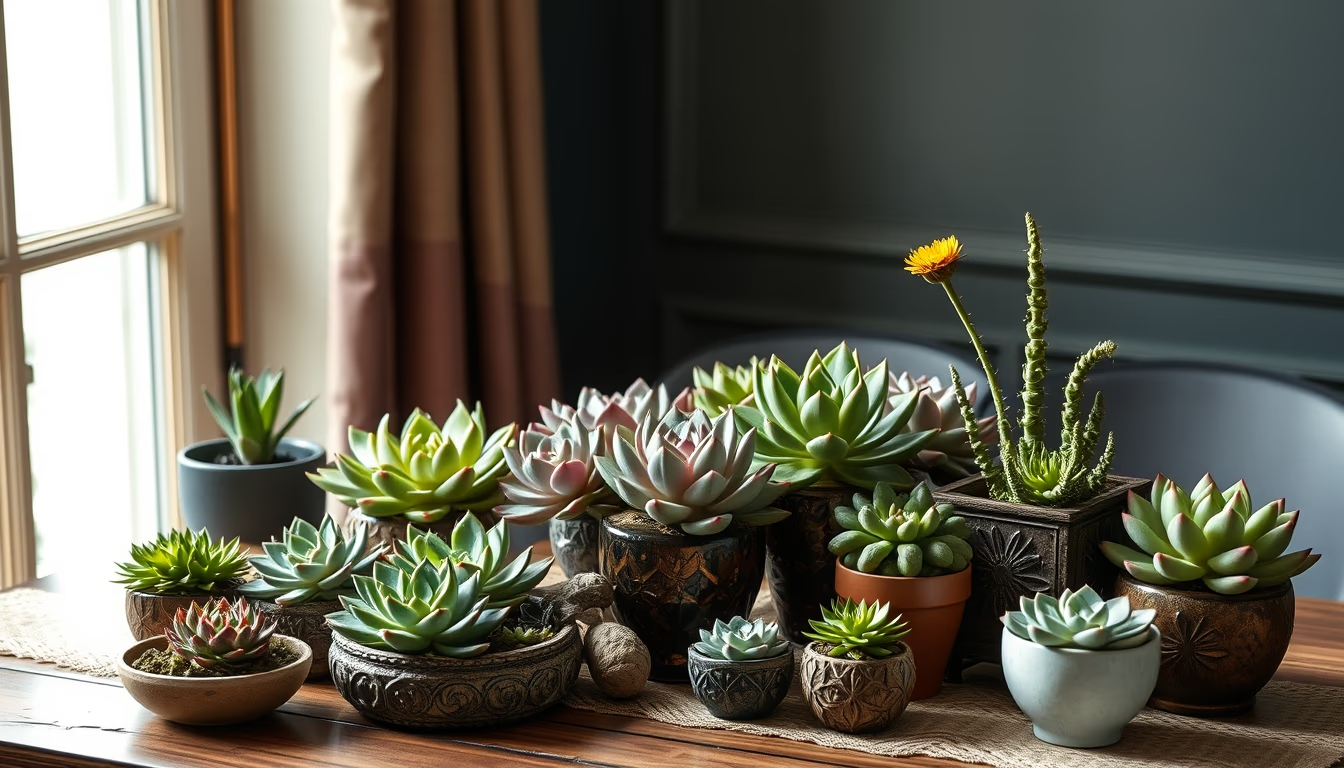
Tropical greenhouse misty
1344×768 · AVIF · CC BY 4.0

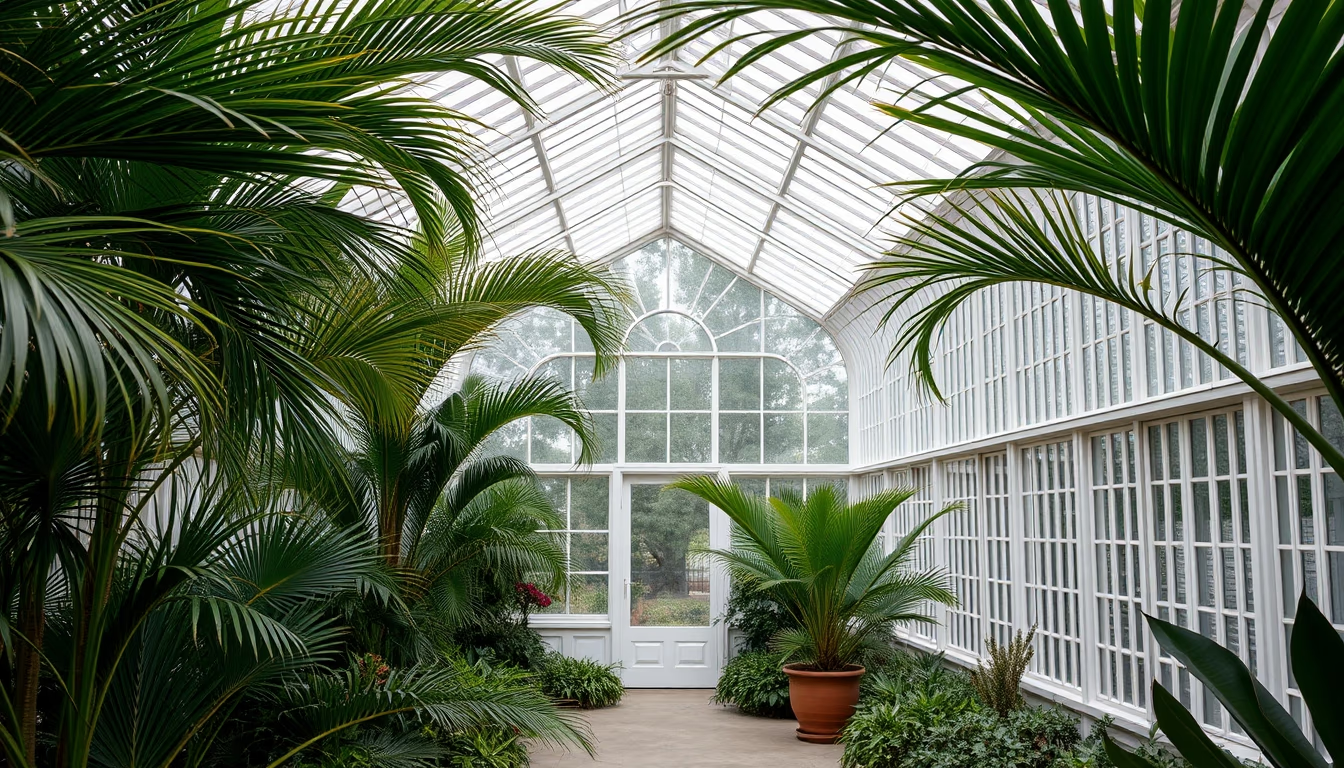
Tropical greenhouses use misting systems to maintain ideal humidity, essential for cultivating exotic species and agricultural research.
About this subject
Tropical greenhouses are structures designed to replicate the hot and humid conditions of equatorial regions, enabling the cultivation of plants that require high humidity and stable temperatures. These controlled environments are essential for conserving endangered species, producing orchid seedlings, and acclimatizing ornamental plants. The misting system, which releases micro-droplets of water, is a key technology to maintain relative humidity above 80%, simulating the natural tropical rainfall cycle.
The use of tropical greenhouses has expanded globally, especially in temperate countries, where botanical institutions and zoos employ them to showcase flora from biomes such as the Amazon and the Atlantic Forest. Notable examples include the Eden Project in the United Kingdom and the Jardim Botânico de Curitiba in Brazil, which feature tropical domes with automated irrigation and misting systems. The long exposure photography in the referenced image highlights the dynamics of moving mist, emphasizing the interaction between light and water vapor.
Technically, greenhouse misting is controlled by humidity sensors and timers, preventing excess water that could promote fungal growth. The water used passes through reverse osmosis filters to prevent mineral salt accumulation on leaves. Beyond climate control, mist contributes to photosynthesis by lowering leaf temperature and increasing CO2 absorption rates. Recent research indicates that prolonged mist exposure can improve water efficiency in plants such as ferns and bromeliads.
The popularity of tropical greenhouses also stems from educational tourism and botanical photography. Visitors can observe rare species in a faithfully recreated habitat, while photographers explore the effects of mist on light diffusion. The long exposure technique used in the image softens the motion of mist, creating an ethereal effect that highlights greenery. Such images are often used in promotional materials for botanical gardens and in scientific outreach about protected cultivation systems.
Frequently Asked Questions
What is the ideal temperature inside a tropical greenhouse?
The ideal temperature ranges from 20°C to 30°C, depending on the plant species. Orchids and bromeliads prefer averages around 25°C. Ventilation and misting systems help avoid temperature spikes.
How does a greenhouse misting system work?
The system pumps water under high pressure through special nozzles that create micro-droplets. Evaporation of these droplets cools the air and increases humidity. Sensors automate the process to maintain stable conditions.
Which plants are most common in tropical greenhouses?
Common plants include tropical understory species such as ferns, anthuriums, calatheas, orchids, and bromeliads. Many are epiphytes that rely on atmospheric humidity. Greenhouses also cultivate Amazon tree seedlings for reforestation.
Direct URL
https://pub-c7d6a6ea828543ac903a74a341ccb2e1.r2.dev/imagens/tropical-greenhouse-misty-long-exposure-fresh10.avifHow to credit
Include a visible link back to UtilizAí. Copy one of the snippets below:
<a href="https://xn--utiliza-eza.com/en/midia/imagens/tropical-greenhouse-misty-long-exposure-fresh10">Tropical greenhouse misty</a> by <a href="https://xn--utiliza-eza.com">UtilizAí</a>, licensed under <a href="https://creativecommons.org/licenses/by/4.0/">CC BY 4.0</a>.
[Tropical greenhouse misty](https://xn--utiliza-eza.com/en/midia/imagens/tropical-greenhouse-misty-long-exposure-fresh10) by [UtilizAí](https://xn--utiliza-eza.com), CC BY 4.0
License: CC-BY-4.0