Tropical beach with palm trees aerial
1344×768 · AVIF · CC BY 4.0
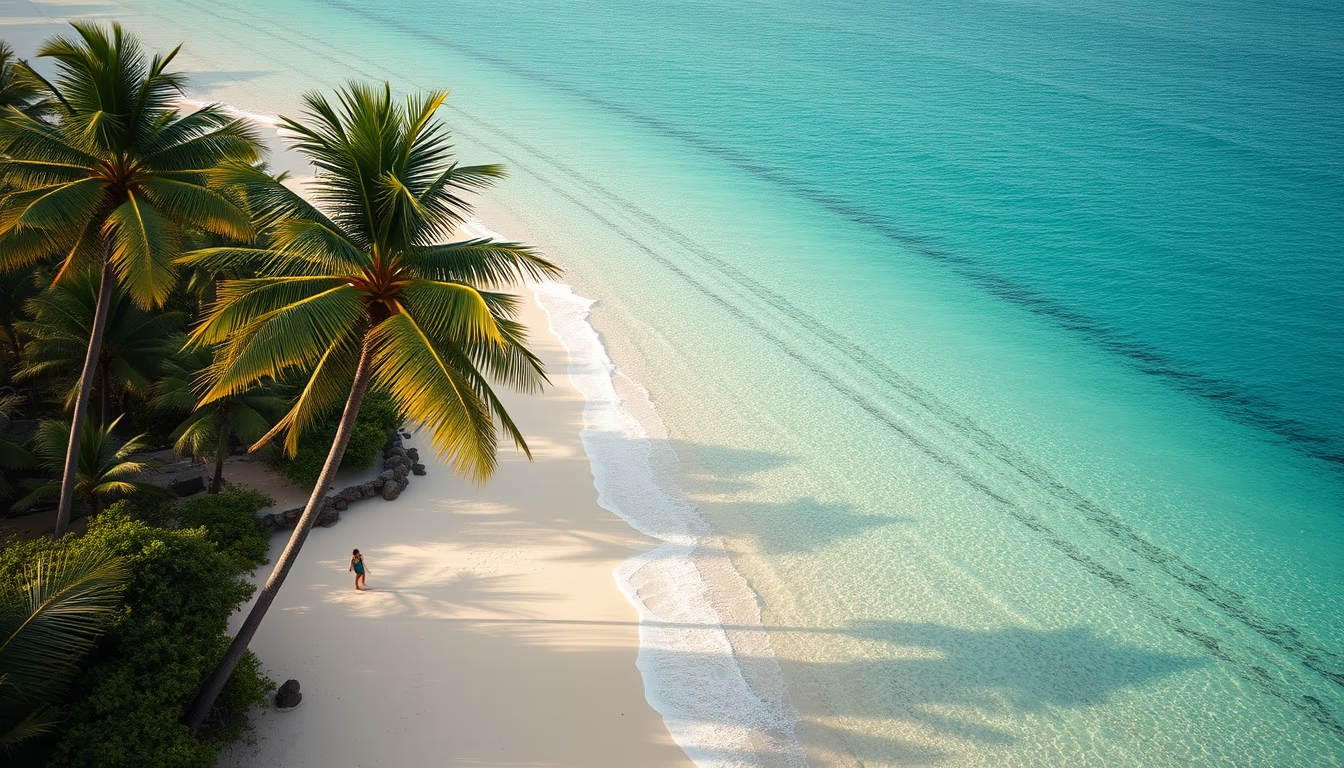
Aerial view of a tropical beach with palm trees lined up on the sand and emerald sea, one of the postcards of the northeastern coast.
About this subject
The northeastern coast of Brazil is home to some of the country's most iconic beaches, characterized by light sand, dense coconut groves, and warm, crystal-clear waters. The aerial image reveals the natural symmetry between restinga vegetation and the sea, a typical formation in areas such as Porto de Galinhas (PE), Praia do Forte (BA), or the Costa do Dendê (BA). These coconut palms, often of the species Cocos nucifera, were introduced to Brazil during the colonial period and perfectly adapted to the tropical climate, becoming a visual symbol of the Northeast.
The greenish hue of the sea results from a combination of light sandy bottom, shallow depth, and high sunlight incidence, a common phenomenon in beaches with coral or sandstone reefs, such as those in Maragogi (AL) and São Miguel dos Milagres (AL). The wide, flat sand strip is shaped by the constant action of tides and trade winds, which have modeled the coast over centuries. On windy days, these coconut palms act as natural windbreaks, protecting inland vegetation and nearby constructions.
From a tourist perspective, beaches with this configuration attract visitors seeking swimming, water sports, and relaxation. The aerial view is especially popular among travelers who rent drones or take panoramic flights, as it reveals the geometric beauty of the coastline. The contrast between the green of the palms, the white sand, and the blue-green sea forms a palette that inspired artists like painter Di Cavalcanti and contemporary photographers.
Interestingly, the arrangement of coconut palms in straight or curved lines often follows old access paths to the beach or property boundaries. In some regions, such as the coast of Rio Grande do Norte, coconut groves are cultivated for coconut production, generating income for local communities. Preserving these areas is essential to maintain the restinga ecosystem, which hosts species like the uçá crab and migratory birds.
Frequently Asked Questions
Why does the sea appear greenish in this type of beach?
The greenish color occurs due to the light sandy bottom, shallow depth, and high sunlight incidence, a common phenomenon in beaches with coral or sandstone reefs.
Are coconut palms native to Brazil?
No. The coconut palm (Cocos nucifera) was introduced to Brazil during the colonial period, probably from Asia or Africa, and adapted very well to the tropical climate of the Northeast.
What is the ecological importance of coconut groves on the beach?
Coconut groves act as natural windbreaks, protect the restinga ecosystem, and shelter fauna such as the uçá crab. Their preservation is vital for the coastal ecosystem.
Direct URL
https://pub-c7d6a6ea828543ac903a74a341ccb2e1.r2.dev/imagens/tropical-beach-with-palm-trees-aerial-studio-editorial-portrait-v3.avifHow to credit
Include a visible link back to UtilizAí. Copy one of the snippets below:
<a href="https://xn--utiliza-eza.com/en/midia/imagens/tropical-beach-with-palm-trees-aerial-studio-editorial-portrait-v3">Tropical beach with palm trees aerial</a> by <a href="https://xn--utiliza-eza.com">UtilizAí</a>, licensed under <a href="https://creativecommons.org/licenses/by/4.0/">CC BY 4.0</a>.
[Tropical beach with palm trees aerial](https://xn--utiliza-eza.com/en/midia/imagens/tropical-beach-with-palm-trees-aerial-studio-editorial-portrait-v3) by [UtilizAí](https://xn--utiliza-eza.com), CC BY 4.0
License: CC-BY-4.0