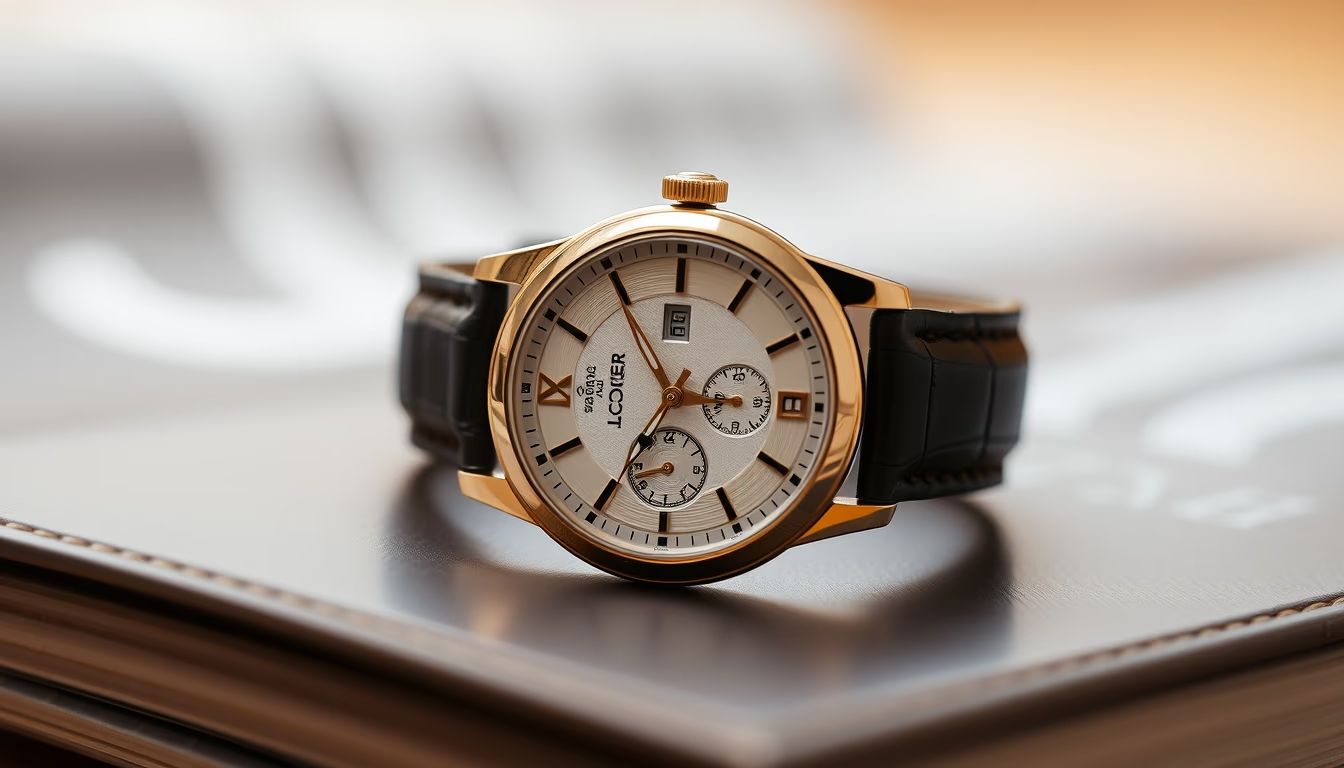
Tourbillon watch detail
1344×768 · AVIF · CC BY 4.0
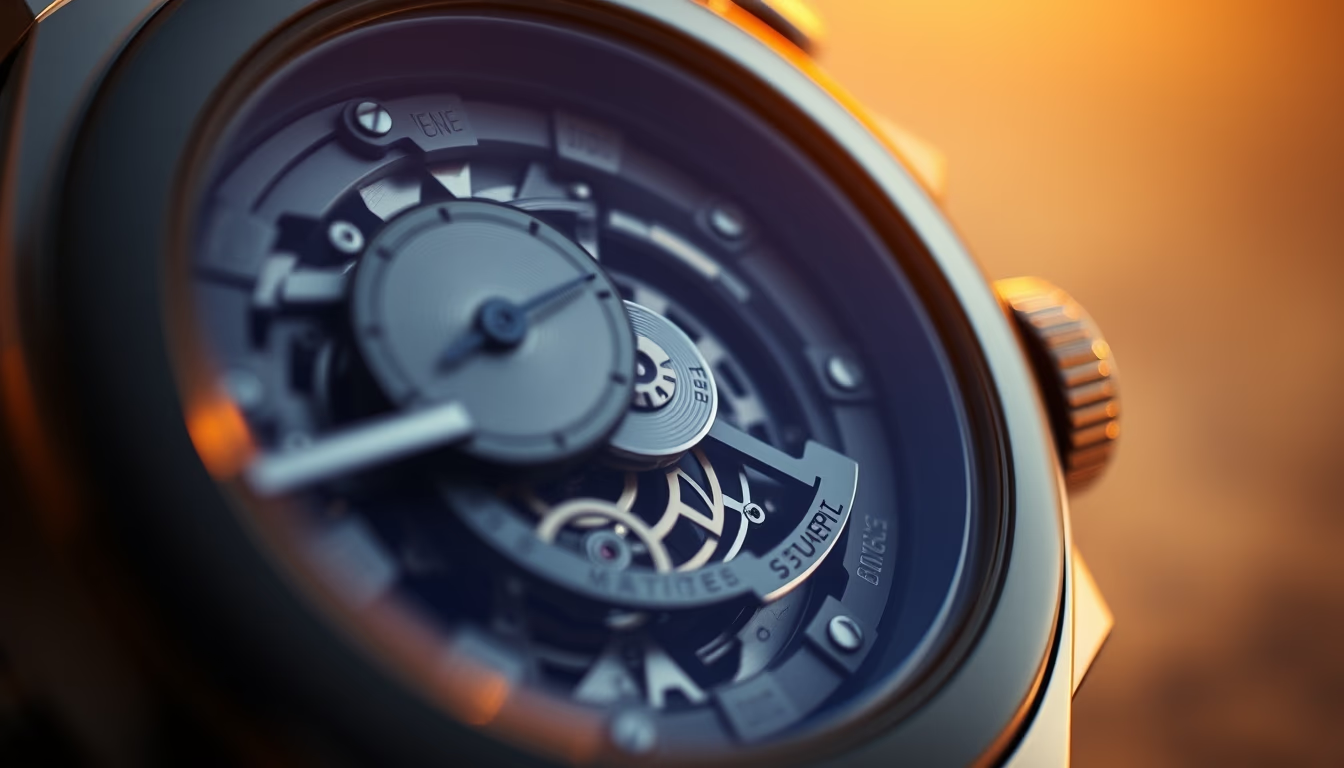
The tourbillon is a watchmaking mechanism that compensates for gravity's effects on the balance, invented by Abraham-Louis Breguet in 1801.
About this subject
The tourbillon was patented by master Swiss watchmaker Abraham-Louis Breguet on June 26, 1801. Its original purpose was to improve the accuracy of pocket watches, which were often kept in a vertical position, subject to gravitational influence. The mechanism consists of a rotating cage that houses the balance wheel and hairspring, completing one rotation per minute (or faster in modern designs) to average out positional errors. Although modern wristwatches have advancements such as the lever escapement and silicon springs, the tourbillon remains a symbol of high horology and artisan skill.
Manufacturers like Patek Philippe, Audemars Piguet, and Jaeger-LeCoultre produce complex tourbillons, often combined with other complications like a chronograph or minute repeater. The flying tourbillon, developed by Alfred Helwig in 1920, eliminates the upper bridge, providing a clear view of the mechanism. Nowadays, brands like TAG Heuer and even independent watchmakers create multi-axis tourbillons that rotate in multiple planes to further correct gravitational effects. The price of a tourbillon watch can range from thousands to millions of dollars, depending on complexity and finishing.
Despite its original function being surpassed by other innovations, the tourbillon continues to fascinate collectors and enthusiasts. It is a testament to mechanical engineering and aesthetic watchmaking, often displayed through open dials or sapphire casebacks. In 2023, Swiss brand Greubel Forsey launched the Tourbillon 24 Secondes, which rotates every 24 seconds, showcasing continuous innovation. The tourbillon also appears in luxury sports watches, such as the Richard Mille RM 27-03, which uses a tourbillon to withstand tennis impacts.
Interestingly, the term "tourbillon" comes from French and means "whirlwind," referring to the rotating motion of the mechanism. While many believe all tourbillons are visible, some models have closed dials hiding the internal complexity. The tourbillon remains one of the most coveted complications in watchmaking, representing the pinnacle of both art and science in horology.
Frequently Asked Questions
What is the main function of a tourbillon in a watch?
The main function of a tourbillon is to improve watch accuracy by compensating for gravity's effects on the balance, averaging out positional errors. Originally designed for pocket watches, it is now more a symbol of watchmaking skill.
Who invented the tourbillon and when?
The tourbillon was invented by Swiss watchmaker Abraham-Louis Breguet, who patented the mechanism on June 26, 1801.
Are tourbillon watches more accurate than regular ones?
In modern wristwatches, the practical accuracy difference is minimal due to other advancements. However, the tourbillon is highly valued for its technical and artisanal complexity, and it does not necessarily guarantee superior daily precision.
Direct URL
https://pub-c7d6a6ea828543ac903a74a341ccb2e1.r2.dev/imagens/tourbillon-watch-detail-cinematic-wide-shot-fresh7.avifHow to credit
Include a visible link back to UtilizAí. Copy one of the snippets below:
<a href="https://xn--utiliza-eza.com/en/midia/imagens/tourbillon-watch-detail-cinematic-wide-shot-fresh7">Tourbillon watch detail</a> by <a href="https://xn--utiliza-eza.com">UtilizAí</a>, licensed under <a href="https://creativecommons.org/licenses/by/4.0/">CC BY 4.0</a>.
[Tourbillon watch detail](https://xn--utiliza-eza.com/en/midia/imagens/tourbillon-watch-detail-cinematic-wide-shot-fresh7) by [UtilizAí](https://xn--utiliza-eza.com), CC BY 4.0
License: CC-BY-4.0