Tissue culture biology lab
1344×768 · AVIF · CC BY 4.0
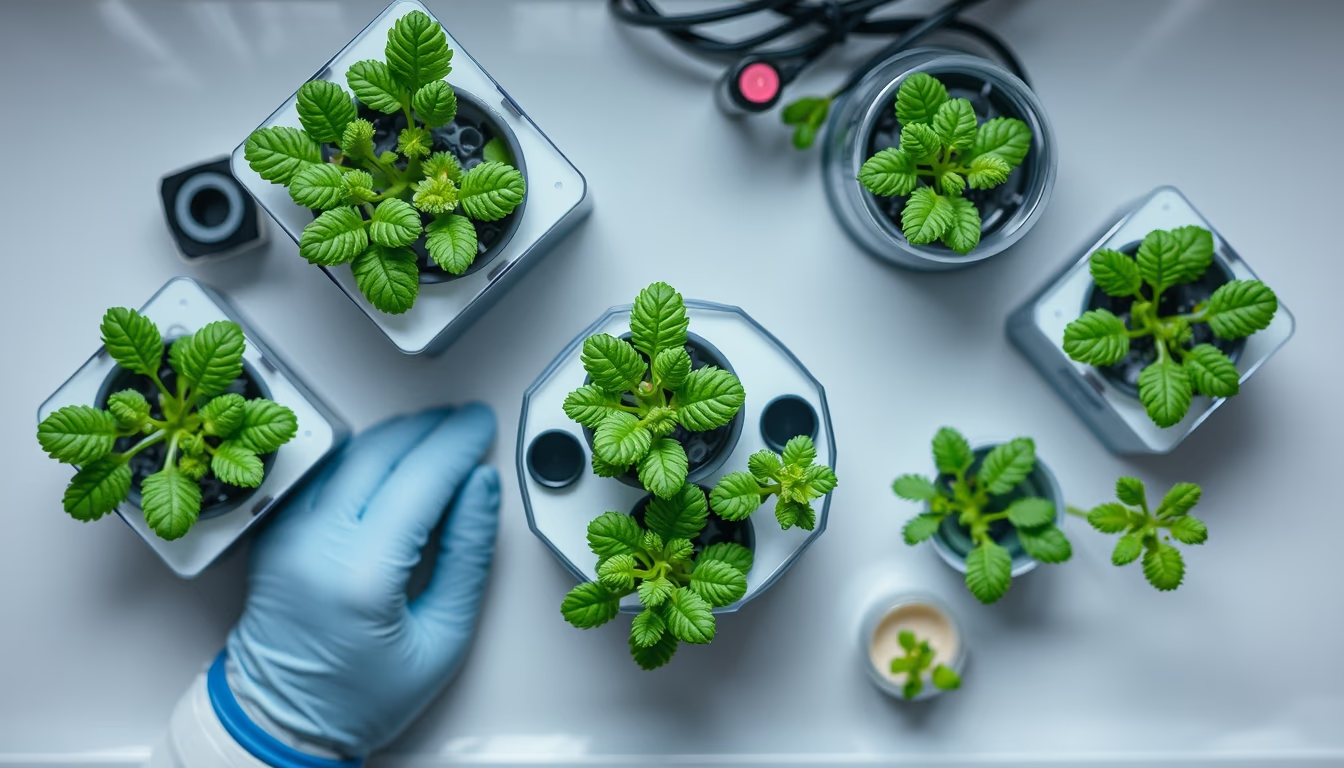
Laboratório de cultura de tecidos é essencial para pesquisas em biotecnologia, medicina regenerativa e agricultura, permitindo o crescimento controlado de células.
Sobre o tema
A cultura de tecidos é uma técnica que envolve o crescimento de células, tecidos ou órgãos em um ambiente controlado e estéril, fora do organismo original. Em um laboratório de cultura de tecidos, as condições como temperatura, pH, umidade e nutrientes são rigorosamente monitoradas para garantir o desenvolvimento adequado das amostras. Equipamentos como capela de fluxo laminar, incubadora de CO2, microscópio invertido e autoclave são fundamentais para manter a esterilidade e promover o crescimento celular.
Na área da saúde, a cultura de tecidos é utilizada para testes de drogas, estudos de toxicidade e produção de vacinas. Por exemplo, células HeLa são amplamente empregadas em pesquisas sobre câncer e virologia. Já na agricultura, a micropropagação de plantas por cultura de tecidos permite a produção em larga escala de mudas livres de doenças, contribuindo para a segurança alimentar. Instituições brasileiras como a Embrapa e universidades utilizam essa técnica para melhoramento genético e conservação de espécies ameaçadas.
Além disso, a cultura de tecidos é base para terapias celulares e engenharia de tecidos, onde células são cultivadas para substituir tecidos danificados. Há também aplicações na produção de metabólitos secundários de plantas, como compostos farmacológicos. A técnica exige treinamento especializado e protocolos rigorosos para evitar contaminação, sendo um pilar da biotecnologia moderna.
Perguntas frequentes
O que é cultura de tecidos?
Cultura de tecidos é um conjunto de técnicas para cultivar células, tecidos ou órgãos em condições estéreis e controladas, fora do organismo de origem. É amplamente usada em pesquisa biológica, medicina e agricultura.
Quais as principais aplicações da cultura de tecidos?
Na medicina, inclui testes de medicamentos, produção de vacinas e terapias celulares. Na agricultura, permite micropropagação de plantas, melhoramento genético e conservação de espécies. Também é usada na produção de metabólitos e estudos de desenvolvimento.
Quais equipamentos são essenciais em um laboratório de cultura de tecidos?
Capela de fluxo laminar, incubadora de CO2, microscópio invertido, autoclave, centrífuga e freezer de ultrabalxa temperatura. Todos são necessários para manter esterilidade e controlar as condições de crescimento celular.
URL direta
https://pub-c7d6a6ea828543ac903a74a341ccb2e1.r2.dev/imagens/tissue-culture-biology-lab-isometric-flat-lay-p4.avifComo creditar
Inclua um link visível de volta pro UtilizAí. Copie um dos snippets abaixo:
<a href="https://xn--utiliza-eza.com/midia/imagens/tissue-culture-biology-lab-isometric-flat-lay-p4">Tissue culture biology lab</a> by <a href="https://xn--utiliza-eza.com">UtilizAí</a>, licensed under <a href="https://creativecommons.org/licenses/by/4.0/">CC BY 4.0</a>.
[Tissue culture biology lab](https://xn--utiliza-eza.com/midia/imagens/tissue-culture-biology-lab-isometric-flat-lay-p4) by [UtilizAí](https://xn--utiliza-eza.com), CC BY 4.0
Licença: CC-BY-4.0