Telegraph machine ticker
1344×768 · AVIF · CC BY 4.0

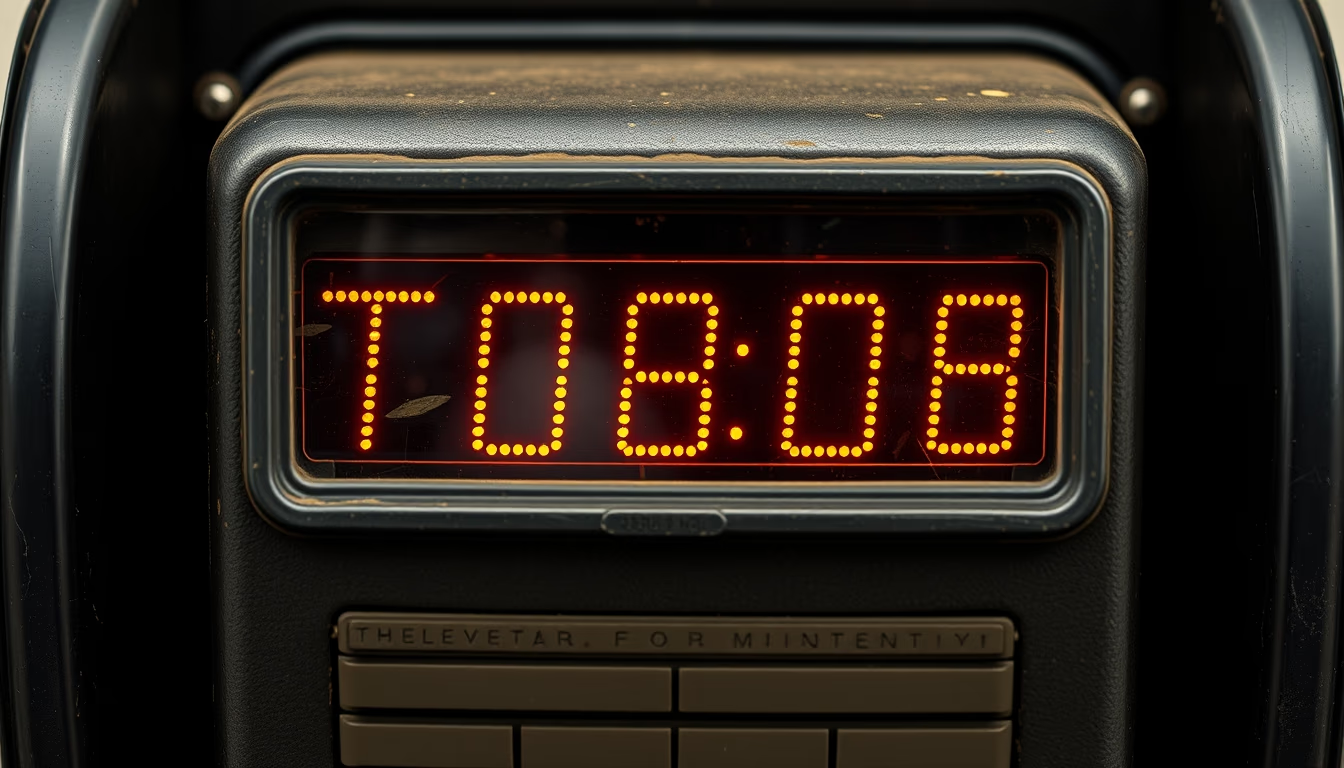
The telegraph ticker, also known as a telegraph machine, was a crucial device for instant communication in the 19th century.
About this subject
The telegraph ticker, a device popularized in the late 19th century, revolutionized information transmission by enabling messages to be sent and received in real time via electrical signals encoded in Morse code. These devices consisted of a transmitter (telegraph key) and a receiver that printed or emitted sounds corresponding to the dots and dashes of the code.
The invention of the electric telegraph is credited to Samuel Morse, who developed the first practical system in 1837. The ticker became essential for railways, newspapers, and financial markets. In the United States, the first commercial telegraph line connected Baltimore and Washington, D.C. in 1844. Skilled operators could transmit about 30 words per minute.
Culturally, the telegraph ticker marked the first form of rapid long-distance communication, shrinking distances and transforming business and personal relationships. The term "ticker" comes from the distinctive ticking sound made by the printing mechanism. Although obsolete due to the telephone and the internet, the telegraph ticker is a milestone in the history of information technology.
Interestingly, the term "ticker" also gave rise to "ticker tape," the paper strips printed with stock quotes that were thrown during parades. Today, telegraph tickers are preserved in museums and appreciated by vintage communication enthusiasts.
Frequently Asked Questions
How did a telegraph ticker work?
A telegraph ticker used a transmitter (telegraph key) to send electrical pulses encoded in Morse code. The receiver converted these pulses into sounds or marks on a paper tape, allowing the message to be read.
What was the impact of the telegraph on 19th-century society?
The telegraph shortened distances and accelerated communication, benefiting railways, newspapers, and financial markets. It enabled instant news transmission and coordinated commercial and governmental operations globally.
What does the term 'ticker' mean and how is it related to stocks?
The term 'ticker' comes from the ticking sound of the printing mechanism. The paper strips printed with stock quotes were called 'ticker tape', and later the term came to denote the symbol used to identify stocks on exchanges.
Direct URL
https://pub-c7d6a6ea828543ac903a74a341ccb2e1.r2.dev/imagens/telegraph-machine-ticker-lo-fi-disposable-camera-fresh1.avifHow to credit
Include a visible link back to UtilizAí. Copy one of the snippets below:
<a href="https://xn--utiliza-eza.com/en/midia/imagens/telegraph-machine-ticker-lo-fi-disposable-camera-fresh1">Telegraph machine ticker</a> by <a href="https://xn--utiliza-eza.com">UtilizAí</a>, licensed under <a href="https://creativecommons.org/licenses/by/4.0/">CC BY 4.0</a>.
[Telegraph machine ticker](https://xn--utiliza-eza.com/en/midia/imagens/telegraph-machine-ticker-lo-fi-disposable-camera-fresh1) by [UtilizAí](https://xn--utiliza-eza.com), CC BY 4.0
License: CC-BY-4.0