Telegraph machine ticker
1344×768 · AVIF · CC BY 4.0
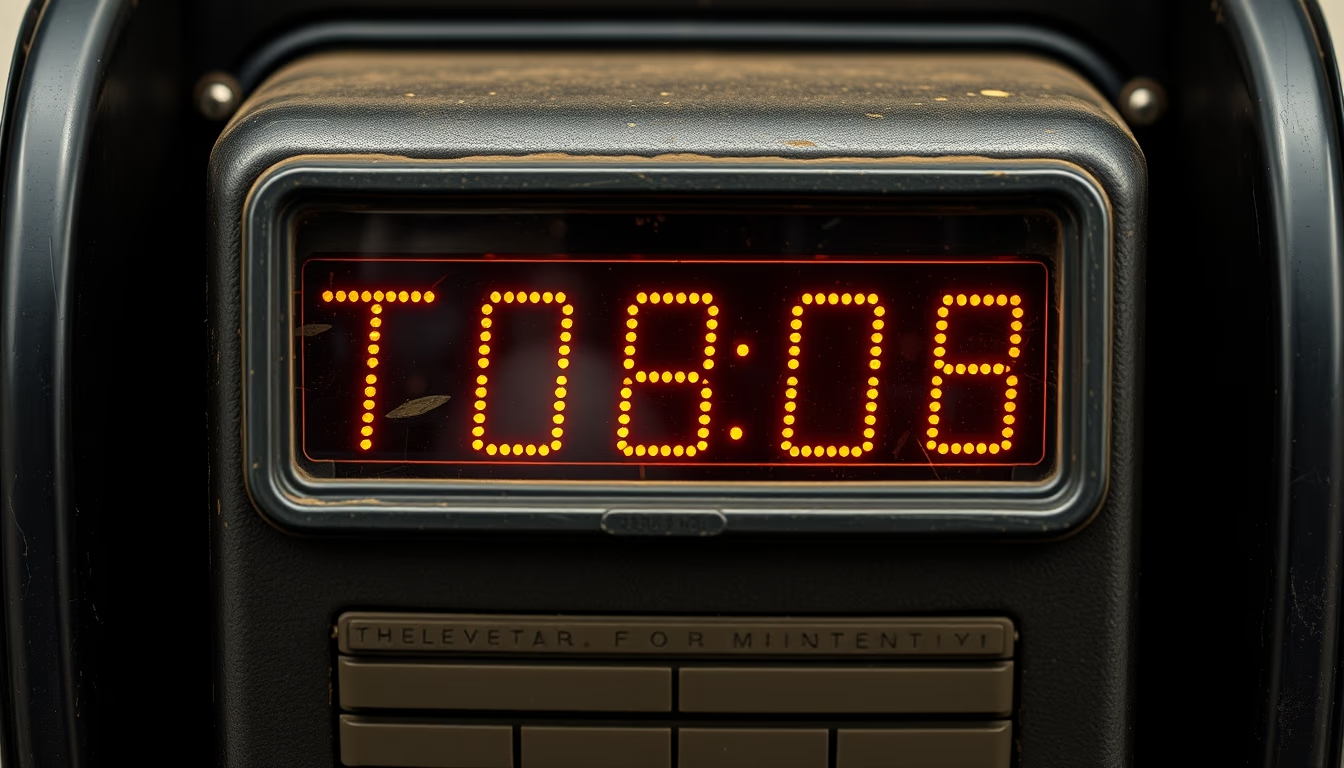
The telegraph ticker revolutionized financial communication in the 19th century by printing real-time stock quotes.
About this subject
The telegraph ticker, invented by Edward A. Calahan in 1867, was a milestone in the history of telecommunications and financial markets. This device received electrical signals from a telegraph network and converted them into letters and numbers printed on a paper strip, known as ticker tape. Before its invention, stock quotes were transmitted by messengers or mail, a slow and error-prone process. With the ticker, information arrived in minutes, allowing investors and brokers to make faster decisions.
The first installation took place at the New York Stock Exchange (NYSE), and the system quickly spread to other exchanges worldwide. The term 'ticker' derives from the sound the machine made while printing, a characteristic 'tick-tock'. Ticker tapes were narrow and continuous; when cut into small pieces, they began to be used in celebrations, such as the ticker tape parades in New York, still a symbol of public festivities today.
From a technical standpoint, the ticker worked with a rotor that spun under a paper strip while hammers struck movable type to print characters. Transmission speed was about one word per second, requiring trained operators to read quickly. The Edison Ticker Machine (1870) improved efficiency by using a punching mechanism instead of printing. The advent of radio and computers rendered tickers obsolete, but their legacy lives on in the expression 'ticker symbol' used to identify stocks.
Interestingly, the telegraph ticker was one of the first examples of real-time 'big data', processing thousands of quotes daily. Today, digital versions called stock tickers still display information on screens, but the original principle of data transmission via wires and paper strips marked the beginning of the instant information era.
Frequently Asked Questions
Who invented the telegraph ticker?
Edward A. Calahan, an engineer at the American Telegraph Company, invented the ticker in 1867. Thomas Edison later improved the design with the Edison Ticker Machine.
How did the ticker tape work?
The ticker tape was a continuous paper strip printed with letters and numbers via electrical signals. The printing made a 'tick-tock' sound, giving the device its name.
What are ticker tape parades?
Ticker tape parades in New York began when office workers threw shredded ticker tape out of windows during celebrations, such as the fall of the Berlin Wall or sports victories.
Direct URL
https://pub-c7d6a6ea828543ac903a74a341ccb2e1.r2.dev/imagens/telegraph-machine-ticker-documentary-nature-style-fresh17.avifHow to credit
Include a visible link back to UtilizAí. Copy one of the snippets below:
<a href="https://xn--utiliza-eza.com/en/midia/imagens/telegraph-machine-ticker-documentary-nature-style-fresh17">Telegraph machine ticker</a> by <a href="https://xn--utiliza-eza.com">UtilizAí</a>, licensed under <a href="https://creativecommons.org/licenses/by/4.0/">CC BY 4.0</a>.
[Telegraph machine ticker](https://xn--utiliza-eza.com/en/midia/imagens/telegraph-machine-ticker-documentary-nature-style-fresh17) by [UtilizAí](https://xn--utiliza-eza.com), CC BY 4.0
License: CC-BY-4.0