Tea room tatami
1344×768 · AVIF · CC BY 4.0
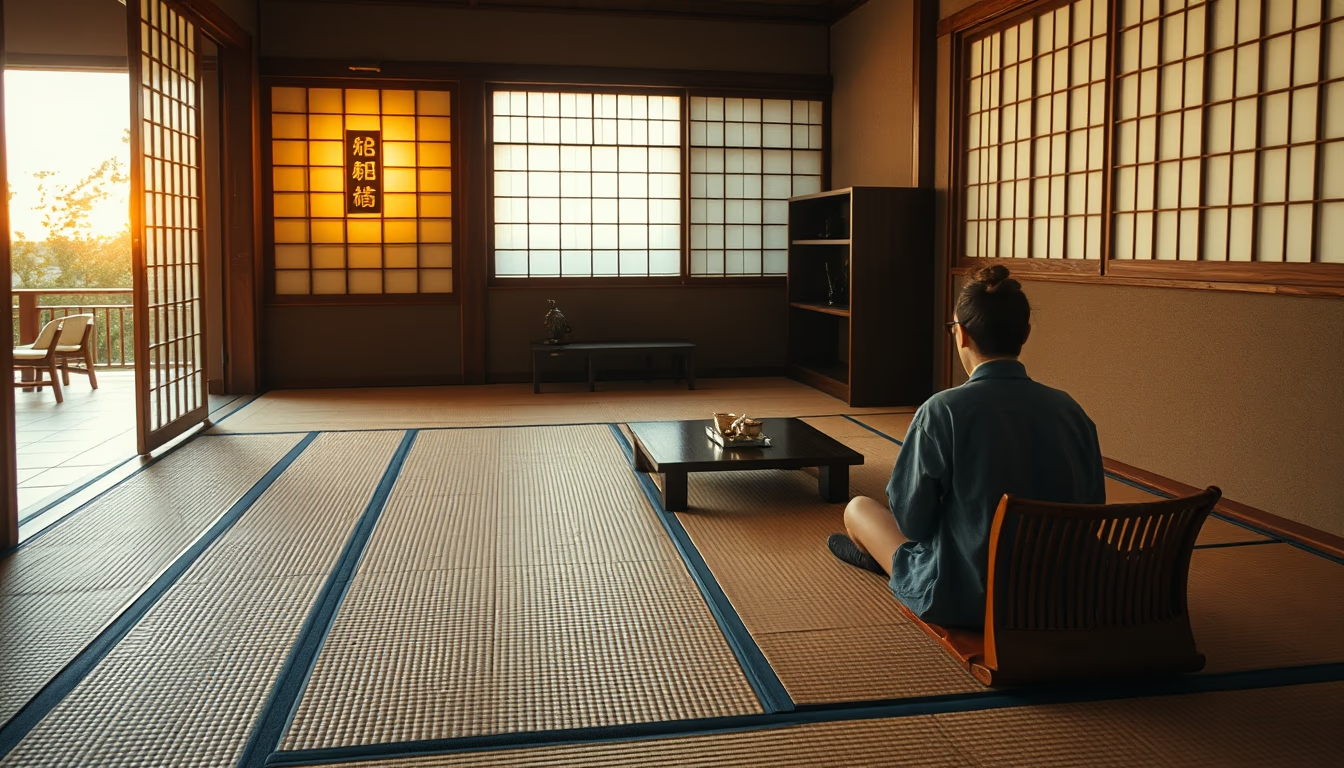
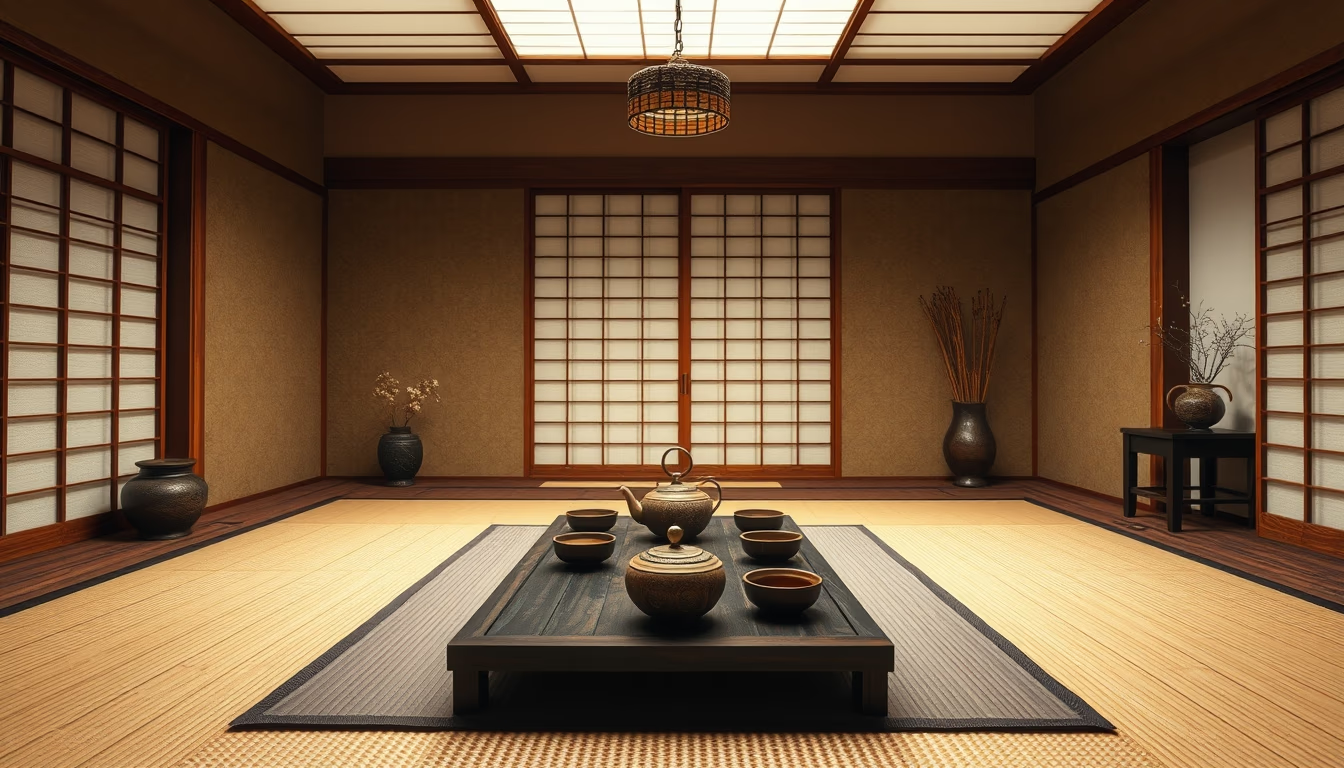
Tatami, the traditional Japanese rice straw mat, is the essential flooring of an authentic tea room, defining the atmosphere for centuries-old ceremonies.
About this subject
Tatami is a fundamental element of Japanese architecture, especially in tea rooms (chashitsu). Made from compressed rice straw and covered with soft rush grass (igusa), its standard size is approximately 0.91m by 1.82m, varying by region in Japan. In Kyoto, tatami is slightly larger than in Tokyo, a subtle difference reflecting local traditions.
The tea room is designed around the tatami, whose placement determines the flow of the ceremony. The number of tatami mats (usually 4.5, creating an area of about 7.4 m²) defines the intimate space needed for the tea ritual, called chanoyu. The flooring influences acoustics, participants’ posture, and even room temperature, as the straw provides natural insulation.
Interestingly, tatami is not just flooring. Its color and texture change over time, and maintenance includes airing and periodic replacement of the rush covering, typically every three to five years. In Japanese culture, walking on tatami requires care: shoes are forbidden, and contact with the straw is done barefoot or with special socks (tabi).
During the tea ceremony, every detail matters. The tatami houses the sunken hearth (furo) in winter for heating water, and its soft surface cushions the host’s precise movements. The choice of tatami can indicate the season: in summer, cooler rush mats; in winter, thicker versions that retain heat. The wabi-sabi aesthetic values imperfections and natural aging of the mats, celebrating transience.
Frequently Asked Questions
What is a tatami and what is it made of?
Tatami is a traditional Japanese mat used as flooring, made from a base of compressed rice straw and covered with a layer of soft rush grass (igusa). The edges are often bordered with cloth (heri).
How many tatami mats does a typical tea room have?
A traditional tea room (chashitsu) typically has 4.5 tatami mats, which equates to about 7.4 m². This size is considered ideal for the tea ceremony, providing intimacy and functionality.
What is the importance of tatami in the tea ceremony?
Tatami defines the sacred space of the ceremony, influencing posture, acoustics, and aesthetics. It houses the hearth for heating water, and its natural materials evoke the simplicity valued in wabi-sabi.
Direct URL
https://pub-c7d6a6ea828543ac903a74a341ccb2e1.r2.dev/imagens/tea-room-tatami-cinematic-wide-shot-fresh5.avifHow to credit
Include a visible link back to UtilizAí. Copy one of the snippets below:
<a href="https://xn--utiliza-eza.com/en/midia/imagens/tea-room-tatami-cinematic-wide-shot-fresh5">Tea room tatami</a> by <a href="https://xn--utiliza-eza.com">UtilizAí</a>, licensed under <a href="https://creativecommons.org/licenses/by/4.0/">CC BY 4.0</a>.
[Tea room tatami](https://xn--utiliza-eza.com/en/midia/imagens/tea-room-tatami-cinematic-wide-shot-fresh5) by [UtilizAí](https://xn--utiliza-eza.com), CC BY 4.0
License: CC-BY-4.0