Tea bricks china
1344×768 · AVIF · CC BY 4.0
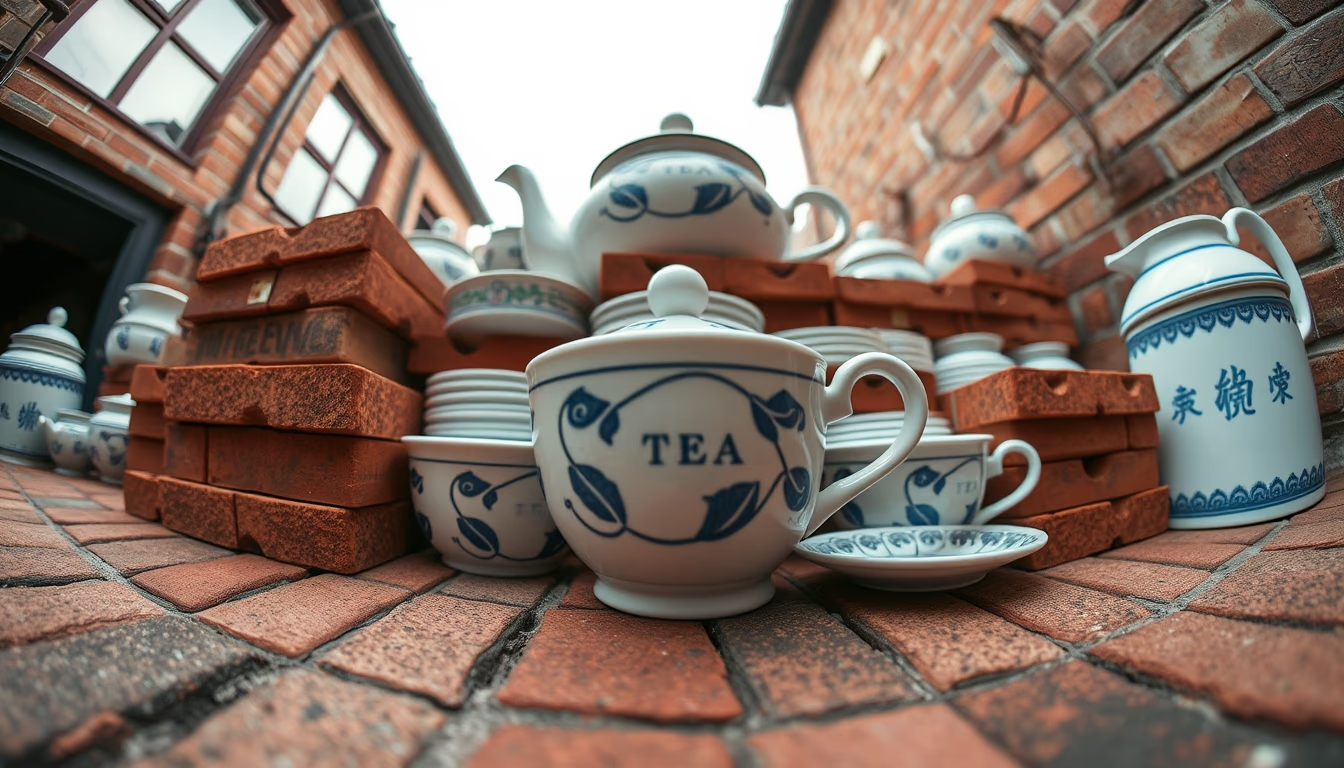
Chinese tea bricks were an innovative way to transport and trade tea, serving as currency and barter item across Asia for centuries.
About this subject
Tea bricks are compacted blocks of tea leaves, usually black or green tea, that emerged in China during the Tang and Song dynasties, around the 7th to 10th centuries. Their production involved steaming the leaves, pressing them into molds, and drying, resulting in durable, easy-to-store blocks. This form simplified long-distance transportation, especially along the Silk Road and Tea Road, where tea was carried to regions like Tibet, Mongolia, and Central Asia.
Beyond consumption, tea bricks served as currency and barter items in areas where metal money was scarce. Among nomadic peoples, they were used to purchase horses, furs, and other goods. In imperial China, the government controlled brick production and distribution, and they were also used for tax payments and salaries. The brick form allowed tea to be shaved and boiled for brewing, preserving its flavor and properties for years.
Traditional production involved varieties like Pu'er tea, which ages and improves over time, and Fujian black tea. Even today, tea bricks are prized by collectors and connoisseurs, especially older ones that can fetch high prices at auctions. The practice also influenced neighboring cultures, such as tea brick production in Tibet and Mongolia, where butter tea is a national drink.
Although their use as currency has declined, tea bricks continue to be produced for consumption and collection. They represent a fascinating chapter in China's economic and cultural history, demonstrating how an agricultural product can shape entire commercial and social systems.
Frequently Asked Questions
What are Chinese tea bricks?
They are compacted blocks of tea leaves, created to facilitate transport and storage. They were made by steaming and pressing the leaves, and could also be used as currency.
How were tea bricks used as money?
In parts of Asia, especially among nomads, tea bricks replaced coinage. They were accepted for buying horses, furs, and other goods, and even for paying taxes in imperial China.
Are tea bricks still produced today?
Yes, especially Pu'er tea, which ages well. They are sold for consumption and collection, and some old bricks fetch high prices at auctions.
Direct URL
https://pub-c7d6a6ea828543ac903a74a341ccb2e1.r2.dev/imagens/tea-bricks-china-fish-eye-wide-angle-fresh3.avifHow to credit
Include a visible link back to UtilizAí. Copy one of the snippets below:
<a href="https://xn--utiliza-eza.com/en/midia/imagens/tea-bricks-china-fish-eye-wide-angle-fresh3">Tea bricks china</a> by <a href="https://xn--utiliza-eza.com">UtilizAí</a>, licensed under <a href="https://creativecommons.org/licenses/by/4.0/">CC BY 4.0</a>.
[Tea bricks china](https://xn--utiliza-eza.com/en/midia/imagens/tea-bricks-china-fish-eye-wide-angle-fresh3) by [UtilizAí](https://xn--utiliza-eza.com), CC BY 4.0
License: CC-BY-4.0