Amber baltic trade
1344×768 · AVIF · CC BY 4.0
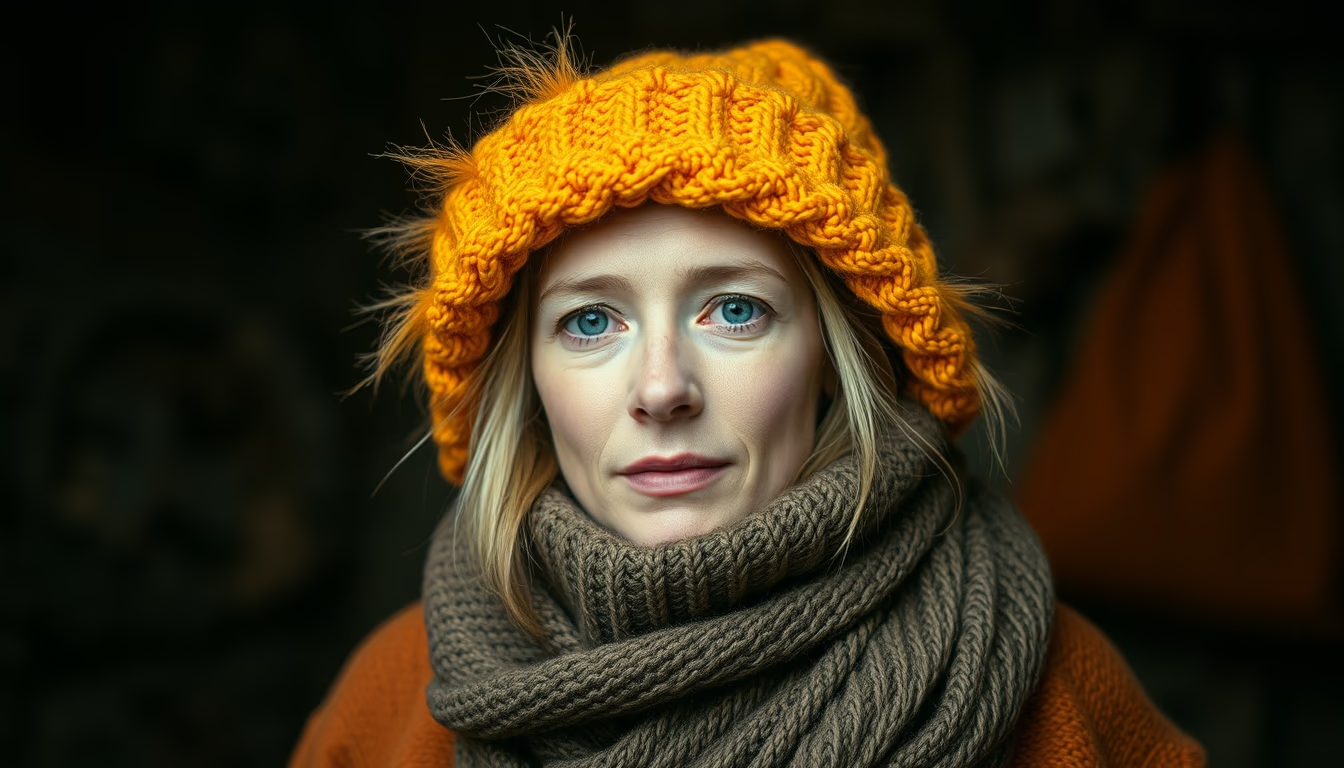
Baltic amber, fossilized resin from prehistoric pines, is one of the most valued and traded organic gems since antiquity.
About this subject
Baltic amber is a fossilized resin from conifers that lived about 40 to 50 million years ago, during the Eocene epoch. Its primary source is the Baltic Sea coast, especially the Sambia Peninsula in Russia, along with deposits in Poland, Lithuania, Latvia, and Sweden. It is estimated that 80% of the world's amber comes from this region, known as succinite amber because it contains succinic acid (3% to 8%).
Trade in Baltic amber dates back to the Neolithic, but it expanded significantly under the Roman Empire, which imported it via the Amber Road, connecting the Baltic Sea to the Adriatic Sea. Pliny the Elder described its use in jewelry and amulets, believing it cured diseases. Amber was also burned as incense. During the Middle Ages, the Teutonic Order controlled production and trade, and the Kaliningrad region still hosts the world's largest open-pit amber mine, accounting for up to 90% of global production.
Beyond its ornamental value, Baltic amber is famous for preserving inclusions such as insects, leaves, and even small vertebrates, offering a unique window into past ecosystems. These inclusions can dramatically increase its scientific and commercial value. Amber is also used in alternative medicine and in the production of varnishes, such as those for musical instruments. Color ranges from light yellow to dark brown, with rare green and blue varieties (blue amber from the Dominican Republic is a different origin). Authentication involves testing for blue fluorescence under UV light and flotation in saltwater.
Frequently Asked Questions
What is Baltic amber?
It is fossilized resin from prehistoric conifers, about 40 to 50 million years old, mainly found in the Baltic Sea region. It is known for its inclusions and succinic acid content.
How was Baltic amber traded in ancient times?
It was transported via the Amber Road, a network of trade routes linking the Baltic to the Mediterranean. Romans used it as jewelry and medicinal amulets. The Teutonic Order monopolized trade in the Middle Ages.
What determines the value of Baltic amber?
Color, transparency, and inclusions (insects, plants) are key factors. Pieces with well-preserved inclusions can be worth thousands of dollars. Authenticity is verified by UV fluorescence and saltwater flotation.
Direct URL
https://pub-c7d6a6ea828543ac903a74a341ccb2e1.r2.dev/imagens/amber-baltic-trade-lo-fi-disposable-camera-fresh17.avifHow to credit
Include a visible link back to UtilizAí. Copy one of the snippets below:
<a href="https://xn--utiliza-eza.com/en/midia/imagens/amber-baltic-trade-lo-fi-disposable-camera-fresh17">Amber baltic trade</a> by <a href="https://xn--utiliza-eza.com">UtilizAí</a>, licensed under <a href="https://creativecommons.org/licenses/by/4.0/">CC BY 4.0</a>.
[Amber baltic trade](https://xn--utiliza-eza.com/en/midia/imagens/amber-baltic-trade-lo-fi-disposable-camera-fresh17) by [UtilizAí](https://xn--utiliza-eza.com), CC BY 4.0
License: CC-BY-4.0