Taj mahal symmetric reflection
1344×768 · AVIF · CC BY 4.0
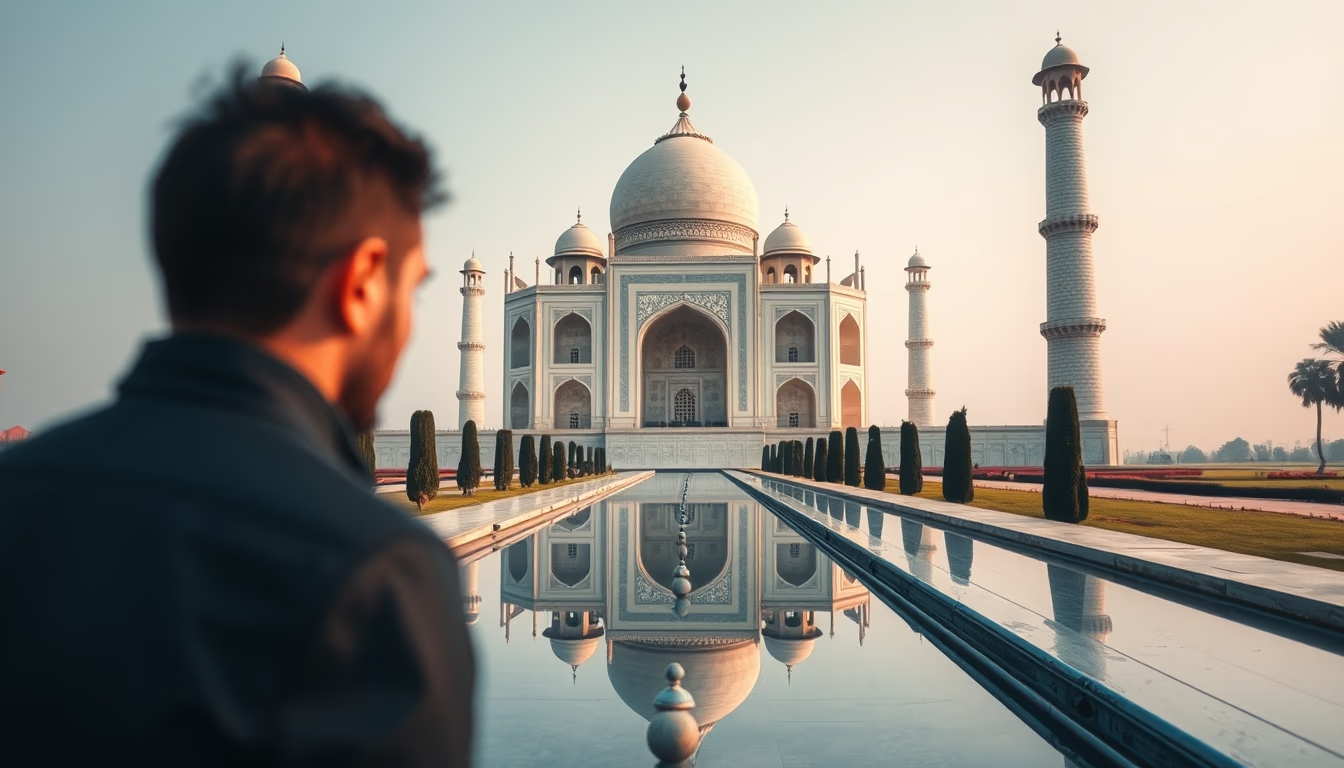
The Taj Mahal in Agra, India, is a white marble mausoleum built by Emperor Shah Jahan in memory of his wife Mumtaz Mahal, an enduring symbol of love and a UNESCO World Heritage Site since 1983.
About this subject
The Taj Mahal is located on the banks of the Yamuna River in Agra, Uttar Pradesh, India. Construction began in 1632 and was completed in 1653, employing around 20,000 artisans and workers. The complex is a prime example of Mughal architecture, blending Persian, Islamic, and Indian elements. The central mausoleum is built of translucent white marble, inlaid with semi-precious stones such as jade, crystal, lapis lazuli, and turquoise, forming arabesques and floral motifs. The main dome is 35 meters high, surrounded by four minarets of 40 meters, each slightly tilted outward to protect the tomb in case of collapse.
The perfect symmetry of the Taj Mahal is one of its most striking features. The building reflects itself in the water channels of the formal garden, creating an illusion of floating. The garden, known as Charbagh, is divided into four quadrants by water channels, representing the four rivers of Paradise in the Quran. The tomb of Mumtaz Mahal lies at the center, flanked by the tomb of Shah Jahan, built later. The intentional asymmetry (Shah Jahan's tomb is larger and off-center) contrasts with the overall symmetry, sparking debate among historians.
The Taj Mahal attracts 7 to 8 million visitors annually, making it one of the most visited monuments in the world. Its color changes throughout the day: pinkish at dawn, milky white in the evening, and golden under the full moon. Due to air pollution, the marble facade has been yellowing, prompting the Indian government to implement traffic and industrial restrictions in the area. In 2018, a cleaning with multani mitti clay began, an ancient technique that removes impurities without damaging the stone.
Beyond its architectural significance, the Taj Mahal is a global cultural icon, featured in countless artworks, films, and literature. It was declared a UNESCO World Heritage Site in 1983 and is also one of the New Seven Wonders of the World, elected by popular vote in 2007. Often described as “a teardrop on the face of time” by poet Rabindranath Tagore, the monument continues to inspire devotion and admiration worldwide.
Frequently Asked Questions
Why was the Taj Mahal built?
It was built by Mughal Emperor Shah Jahan in memory of his beloved wife Mumtaz Mahal, who died while giving birth to their 14th child in 1631.
Is the Taj Mahal truly symmetrical?
Yes, the complex is almost perfectly symmetrical, except for Shah Jahan's tomb, which was added later and is off-center from the main axis.
What is the best time to visit the Taj Mahal?
October to March offers pleasant weather. Visiting at sunrise provides fewer crowds and a stunning view of the marble's color changes.
Direct URL
https://pub-c7d6a6ea828543ac903a74a341ccb2e1.r2.dev/imagens/taj-mahal-symmetric-reflection-documentary-photography-p0.avifHow to credit
Include a visible link back to UtilizAí. Copy one of the snippets below:
<a href="https://xn--utiliza-eza.com/en/midia/imagens/taj-mahal-symmetric-reflection-documentary-photography-p0">Taj mahal symmetric reflection</a> by <a href="https://xn--utiliza-eza.com">UtilizAí</a>, licensed under <a href="https://creativecommons.org/licenses/by/4.0/">CC BY 4.0</a>.
[Taj mahal symmetric reflection](https://xn--utiliza-eza.com/en/midia/imagens/taj-mahal-symmetric-reflection-documentary-photography-p0) by [UtilizAí](https://xn--utiliza-eza.com), CC BY 4.0
License: CC-BY-4.0