Sushi platter on slate elegant
1344×768 · AVIF · CC BY 4.0
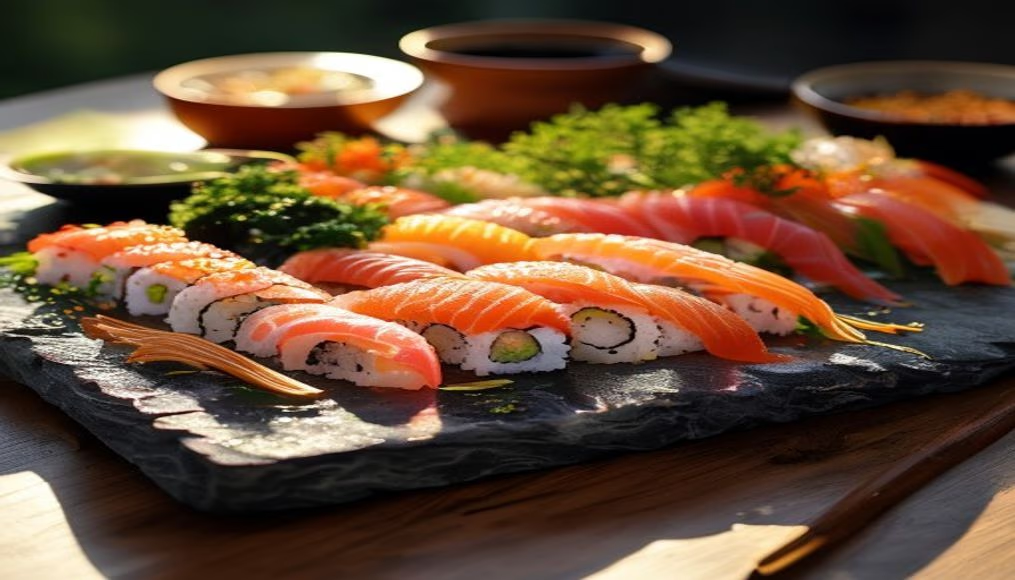
The sushi platter on slate combines Japanese tradition with minimalist aesthetics, highlighting the freshness of ingredients and the chef's skill.
About this subject
Sushi, an iconic Japanese dish, originated in Southeast Asia around the 8th century as a method of fermenting fish with rice for preservation. In Japan, it evolved into Edomae style in 19th-century Tokyo, featuring fresh fish over seasoned rice. The presentation on slate, common in contemporary restaurants, is not traditional but reflects Western minimalist design influence. Slate, a metamorphic rock, is chosen for its smooth surface and dark color, which contrasts with the vibrant hues of salmon, tuna, and tamago, enhancing the dish's aesthetic.
Sushi quality depends on fish selection, rice preparation (shari) with rice vinegar, sugar, and salt, and shaping techniques (nigiri, maki, sashimi). In Brazil, sushi adaptations include uramaki with cream cheese and temaki, influenced by local cuisine. Specialty restaurants use slate platters for assortments, allowing each piece to be appreciated individually. The plate's temperature is crucial: cold slate keeps the fish in optimal condition.
Intriguingly, slate is also used for cheese and wine boards due to its chemical inertness and ease of cleaning. In Japan, ceramic and wood are more traditional, but slate has gained ground in fusion restaurants. The visual contrast between the black stone and the white rice, red salmon, and green wasabi creates a photogenic composition, prized by chefs and food stylists.
Serving sushi on slate platters is also a trend in events and catering, as it facilitates handling and symmetrical arrangement of pieces. The choice of vessel reflects the Japanese philosophy that food should please both palate and eyes, known as shoku no tsurumai. Although slate is not traditional Japanese material, its global adoption demonstrates the adaptability of Japanese cuisine.
Frequently Asked Questions
Why do some restaurants serve sushi on slate stone?
Slate provides a cold, smooth surface that maintains fish temperature and creates a visual contrast that enhances sushi colors. It is an aesthetic and functional choice, common in fusion and contemporary restaurants.
What is the difference between nigiri, maki, and sashimi?
Nigiri is a rice ball topped with a slice of raw fish. Maki is a roll of rice and fish wrapped in seaweed. Sashimi are thin slices of raw fish served without rice.
Is sushi a healthy food?
Sushi can be healthy due to fish rich in omega-3 and low-fat rice. However, fried versions or those with cream cheese increase calories. Moderate consumption is recommended.
Direct URL
https://pub-c7d6a6ea828543ac903a74a341ccb2e1.r2.dev/imagens/sushi-platter-on-slate-elegant-travel-photography-v10.avifHow to credit
Include a visible link back to UtilizAí. Copy one of the snippets below:
<a href="https://xn--utiliza-eza.com/en/midia/imagens/sushi-platter-on-slate-elegant-travel-photography-v10">Sushi platter on slate elegant</a> by <a href="https://xn--utiliza-eza.com">UtilizAí</a>, licensed under <a href="https://creativecommons.org/licenses/by/4.0/">CC BY 4.0</a>.
[Sushi platter on slate elegant](https://xn--utiliza-eza.com/en/midia/imagens/sushi-platter-on-slate-elegant-travel-photography-v10) by [UtilizAí](https://xn--utiliza-eza.com), CC BY 4.0
License: CC-BY-4.0