Fresh croissants on linen
1344×768 · AVIF · CC BY 4.0
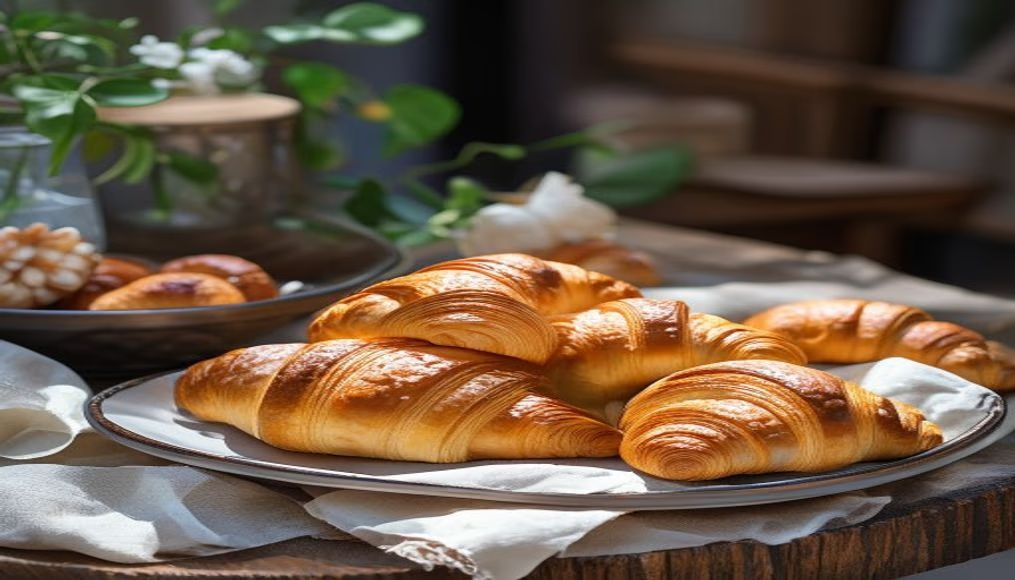
Fresh croissants on linen: a classic French viennoiserie captured in detail, showcasing the golden texture and delicacy of laminated dough.
About this subject
Croissants are an icon of French baking, but their origins trace back to 17th-century Austria, where the 'kipferl' (a crescent-shaped bread) was popular. Only in the 19th century, with the introduction of butter-laminated dough in France, did the modern croissant take shape. The flaky layers, achieved through repeated folding and chilling, give the croissant its crispy exterior and soft, airy interior.
In Brazil, croissants are found in bakeries and patisseries, with variations including fillings like dulce de leche, guava paste, or cheese. However, the classic version, plain or with butter, is favored by purists. Preparation requires skill, as the dough must be kept cold to prevent the butter from melting before baking. Linen, traditionally used to cover the dough during resting, also appears as a liner, enhancing the rustic and artisanal aesthetic.
The choice of linen is not merely visual: it absorbs excess moisture, helping maintain the ideal texture. Fresh croissants are enjoyed for breakfast or afternoon tea, often paired with coffee or hot chocolate. Interestingly, August 1st is celebrated as National Croissant Day in some countries, but artisanal production faces challenges from industrialization. Nevertheless, demand for quality baked goods grows, with consumers seeking ingredients like AOC butter or specialty flours.
Frequently Asked Questions
What's the difference between a croissant and French bread?
Croissants are made with laminated dough (layers of dough and butter), resulting in a flaky, crispy texture. French bread (baguette) uses simple dough, denser, crispy outside, soft inside.
Should croissants be eaten the same day?
Yes, fresh croissants have the best texture on the day of purchase. To reheat, use an oven at 180°C for 5 minutes. Avoid microwaves, which soften the crust.
Why is linen cloth used in baking?
Linen absorbs moisture without shedding lint, keeping the dough surface dry and preventing sticking. It also helps form a crisper crust during resting.
Direct URL
https://pub-c7d6a6ea828543ac903a74a341ccb2e1.r2.dev/imagens/fresh-croissants-on-linen-street-photography-v11.avifHow to credit
Include a visible link back to UtilizAí. Copy one of the snippets below:
<a href="https://xn--utiliza-eza.com/en/midia/imagens/fresh-croissants-on-linen-street-photography-v11">Fresh croissants on linen</a> by <a href="https://xn--utiliza-eza.com">UtilizAí</a>, licensed under <a href="https://creativecommons.org/licenses/by/4.0/">CC BY 4.0</a>.
[Fresh croissants on linen](https://xn--utiliza-eza.com/en/midia/imagens/fresh-croissants-on-linen-street-photography-v11) by [UtilizAí](https://xn--utiliza-eza.com), CC BY 4.0
License: CC-BY-4.0