Stonehenge england
1344×768 · AVIF · CC BY 4.0
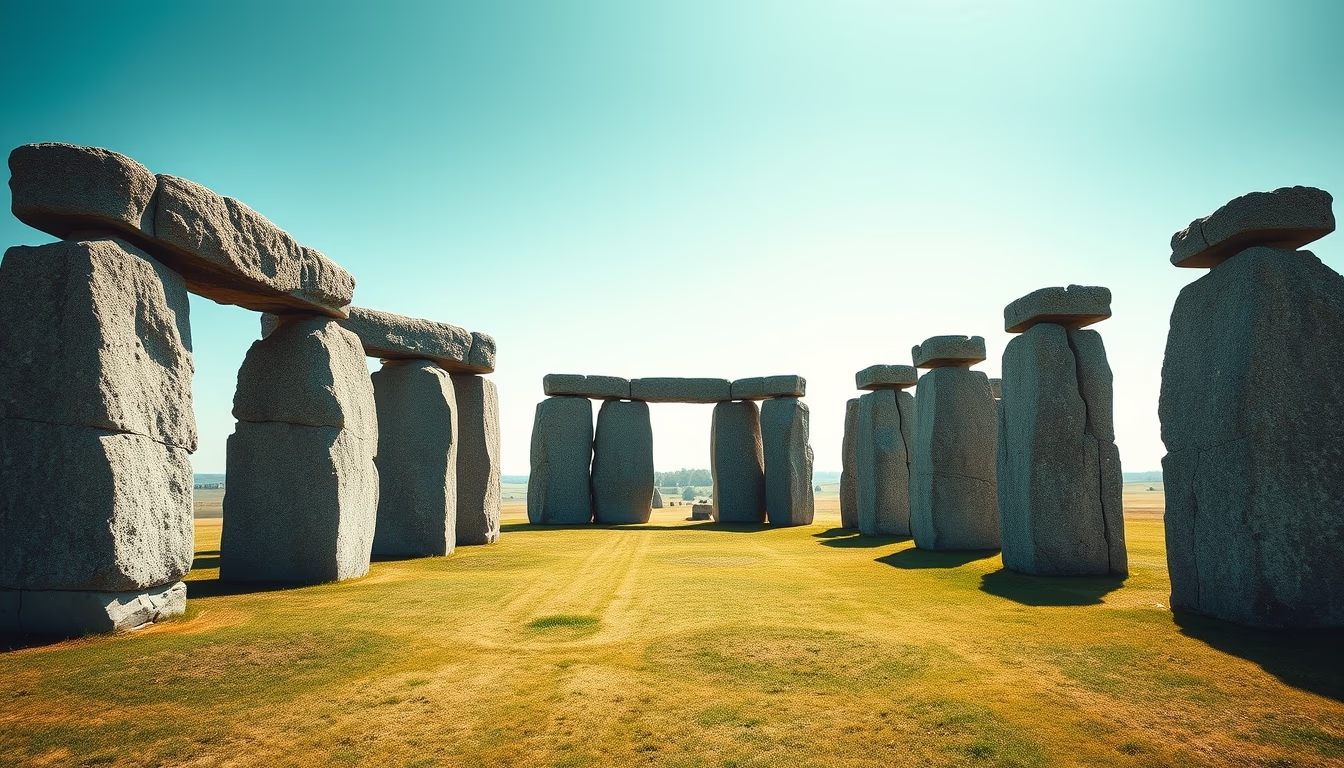
Stonehenge is a prehistoric monument composed of a circle of standing stones, located on Salisbury Plain, England. Dating back to 3000 BCE, it is a UNESCO World Heritage Site.
About this subject
Stonehenge, on Salisbury Plain in England, is one of the world's most famous prehistoric monuments. Its construction took place in multiple phases between 3000 BCE and 2000 BCE, beginning with a circular ditch and bank of chalk, followed by the arrangement of bluestones from Wales and massive sarsen stones of local origin. The bluestones, some weighing up to four tons, were transported about 240 kilometers, an impressive engineering feat for the time.
The purpose of Stonehenge remains a mystery, but archaeological evidence indicates it served as a ceremonial site and burial ground. Analysis of burials suggests ritual use. The monument's alignment with the sunrise at the summer solstice and sunset at the winter solstice points to a deep astronomical understanding. Excavations have revealed animal remains and artifacts hinting at large seasonal festivals.
Remarkably, the outer sarsen stones weigh up to 25 tons and were erected with precise tongue-and-groove joints. The origin of the bluestones from the Preseli Hills in Wales has sparked theories of overland and sea transport routes. Recent DNA studies suggest the builders were local Neolithic farmers, not migrants.
Today, Stonehenge is a UNESCO World Heritage Site and attracts millions of visitors annually. It is managed by English Heritage, with restricted access to the inner circle. During the summer solstice, modern celebrations take place on site, keeping alive the tradition of reverence for the solar cycle.
Frequently Asked Questions
Why was Stonehenge built?
It remains uncertain, but it is believed to have served as a ceremonial site, burial ground, and astronomical observatory, aligned with the solstices.
How were the stones of Stonehenge transported?
The bluestones came from Wales, possibly by sea and land routes. The sarsens were dragged on wooden sleds over log rails and then raised using ramps and levers.
What is the significance of the solstice at Stonehenge?
The monument aligns with the sunrise at the summer solstice and sunset at the winter solstice, indicating its use to mark important seasonal dates.
Direct URL
https://pub-c7d6a6ea828543ac903a74a341ccb2e1.r2.dev/imagens/stonehenge-england-architectural-photography-p9.avifHow to credit
Include a visible link back to UtilizAí. Copy one of the snippets below:
<a href="https://xn--utiliza-eza.com/en/midia/imagens/stonehenge-england-architectural-photography-p9">Stonehenge england</a> by <a href="https://xn--utiliza-eza.com">UtilizAí</a>, licensed under <a href="https://creativecommons.org/licenses/by/4.0/">CC BY 4.0</a>.
[Stonehenge england](https://xn--utiliza-eza.com/en/midia/imagens/stonehenge-england-architectural-photography-p9) by [UtilizAí](https://xn--utiliza-eza.com), CC BY 4.0
License: CC-BY-4.0