Stonehenge england
1344×768 · AVIF · CC BY 4.0
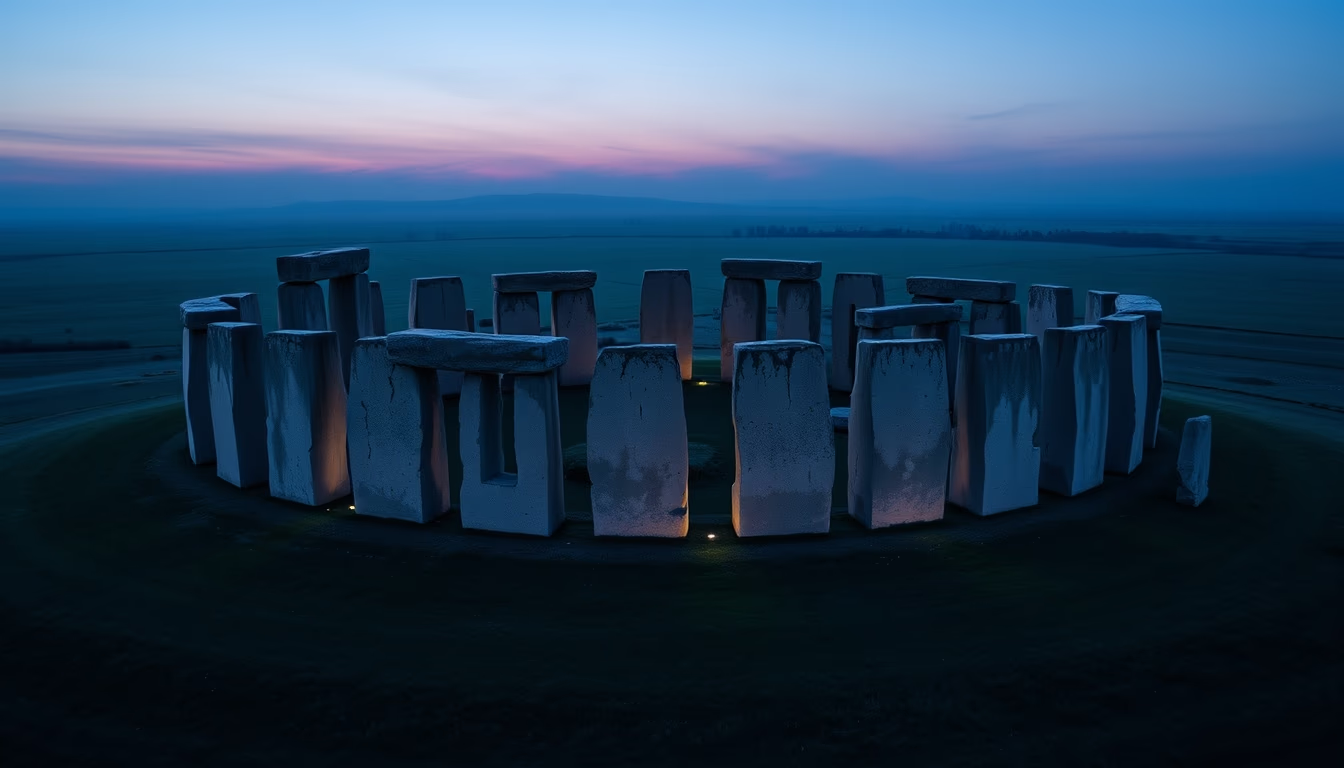
Stonehenge é um monumento pré-histórico na Inglaterra, famoso por seu círculo de pedras erguidas há mais de 5 mil anos.
Sobre o tema
Stonehenge, localizado na planície de Salisbury, Wiltshire, Inglaterra, é um dos monumentos mais enigmáticos do mundo. Construído entre 3000 a.C. e 2000 a.C., o círculo de pedras faz parte de um complexo de câmaras funerárias, aterros e buracos rituais. As maiores pedras, os sarsens, chegam a pesar 25 toneladas cada e foram transportadas de Marlborough Downs, a cerca de 30 quilômetros de distância. Já as pedras azuis menores, com até 4 toneladas, vieram das montanhas Preseli, no atual País de Gales, a mais de 200 quilômetros. Como esses blocos foram movidos sem tecnologia moderna é um mistério que fascina arqueólogos e engenheiros.
A função exata de Stonehenge ainda é debatida. Evidências arqueológicas sugerem que o local era usado para rituais religiosos, observações astronômicas e como cemitério. Durante o solstício de verão, o sol nasce alinhado com a Pedra do Calcanhar, indicando um possível calendário solar. Escavações revelaram restos cremados de centenas de pessoas, indicando que Stonehenge foi um importante local de sepultamento por séculos. Em 1986, foi declarado Patrimônio Mundial pela UNESCO, atraindo mais de um milhão de visitantes por ano.
Atualmente, o monumento está sob gestão do English Heritage. Acesso ao círculo interno é restrito, mas visitantes podem contorná-lo por uma trilha. Medidas de conservação incluem monitoramento de erosão e replantio de grama. Apesar do avanço das pesquisas, Stonehenge mantém seu ar de mistério, gerando teorias que vão de druidas a alienígenas. A verdade, porém, está na engenharia neolítica e na complexidade social de uma civilização que conseguiu erguer tal estrutura.
Perguntas frequentes
Quem construiu Stonehenge?
Stonehenge foi construído por povos neolíticos da Grã-Bretanha, ao longo de várias fases. Não há registros escritos, mas evidências arqueológicas indicam que diferentes grupos contribuíram entre 3000 a.C. e 2000 a.C.
Qual era o propósito de Stonehenge?
Acredita-se que Stonehenge servia como um templo religioso, um observatório astronômico e um cemitério. O alinhamento com o solstício de verão sugere uso calendário, e os restos cremados indicam práticas funerárias.
Como as pedras foram transportadas?
Os sarsens (25 toneladas) foram arrastados por trenós e rolos de madeira de Marlborough Downs, a 30 km. As pedras azuis (4 toneladas) vieram do País de Gales, possivelmente por via marítima ou terrestre, usando trenós e barcos.
URL direta
https://pub-c7d6a6ea828543ac903a74a341ccb2e1.r2.dev/imagens/stonehenge-england-aerial-drone-shot-p0.avifComo creditar
Inclua um link visível de volta pro UtilizAí. Copie um dos snippets abaixo:
<a href="https://xn--utiliza-eza.com/midia/imagens/stonehenge-england-aerial-drone-shot-p0">Stonehenge england</a> by <a href="https://xn--utiliza-eza.com">UtilizAí</a>, licensed under <a href="https://creativecommons.org/licenses/by/4.0/">CC BY 4.0</a>.
[Stonehenge england](https://xn--utiliza-eza.com/midia/imagens/stonehenge-england-aerial-drone-shot-p0) by [UtilizAí](https://xn--utiliza-eza.com), CC BY 4.0
Licença: CC-BY-4.0