Stem cells petri dish
1344×768 · AVIF · CC BY 4.0
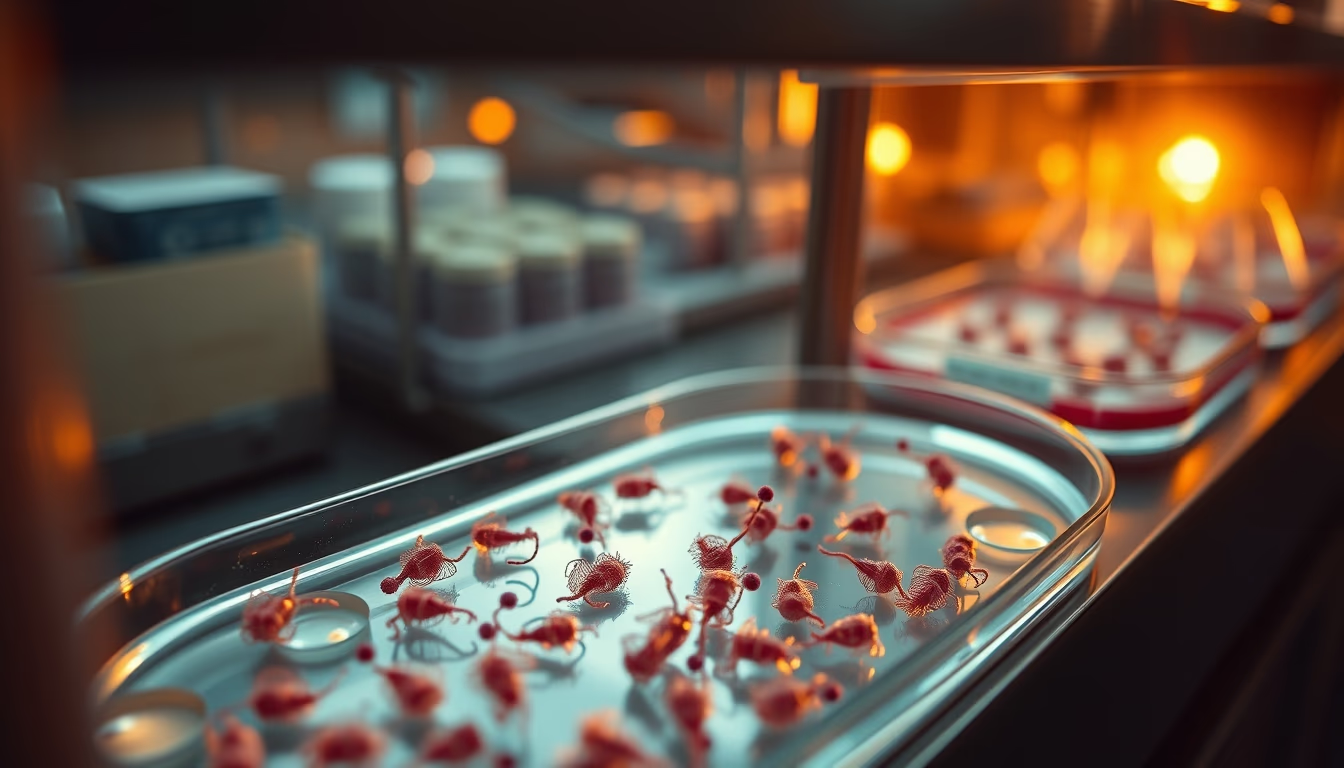
Stem cells are undifferentiated cells capable of self-renewal and differentiation into various cell types, playing a key role in regenerative medicine.
About this subject
Stem cells are primitive cells that have not yet specialized into specific functions, maintaining the ability to divide indefinitely and transform into different cell types. This plasticity makes them a promising tool for regenerative therapies, such as treating degenerative diseases, spinal cord injuries, and heart conditions. There are two main types: embryonic stem cells, derived from the blastocyst and pluripotent, and adult or somatic stem cells, found in tissues like bone marrow and adipose tissue, which are multipotent. The discovery of induced pluripotent stem cells (iPS) in 2006 by Shinya Yamanaka allowed the reprogramming of adult cells to an embryonic state, bypassing ethical issues associated with embryo use.
Culturing stem cells in Petri dishes requires strict sterile conditions and specific culture media, with growth factors and substrates that mimic the extracellular matrix. These studies are conducted in biosafety level 2 laboratories, and researchers constantly monitor cell morphology and gene expression to ensure cells remain undifferentiated. The use of dyes and fluorescent markers enables identification of pluripotency markers such as Oct4 and Nanog. Despite advances, challenges such as controlled directed differentiation and risk of teratoma (tumor) formation limit immediate clinical application.
In Brazil, stem cell research is regulated by the Biosafety Law (Law No. 11,105/2005), which permits the use of embryonic cells obtained from non-viable embryos or those frozen for over three years, with parental consent. The country has reference centers such as the Human Genome Study Center at USP and the National Institute of Science and Technology in Stem Cells. Internationally, hematopoietic stem cell therapy (bone marrow transplant) is already a standard procedure for leukemias, while clinical trials advance for conditions like Parkinson's, type 1 diabetes, and macular degeneration. It is expected that in the coming decades, personalized stem cell medicine will become a reality, albeit with high costs and need for regulatory validation.
Frequently Asked Questions
What are stem cells and what are they used for?
Stem cells are undifferentiated cells that can renew themselves and differentiate into various cell types. They are used in research to understand diseases, test drugs, and develop regenerative therapies, such as for spinal cord injuries and heart diseases.
What is the difference between embryonic and adult stem cells?
Embryonic stem cells are pluripotent and can form any tissue, but their use raises ethical issues. Adult stem cells are multipotent, found in tissues like bone marrow, with more limited differentiation capacity but without ethical controversies.
Are stem cells already used in treatments in Brazil?
Yes, hematopoietic stem cell (bone marrow) transplantation is standard for leukemias. Other applications are still experimental, with clinical trials regulated by ANVISA.
Direct URL
https://pub-c7d6a6ea828543ac903a74a341ccb2e1.r2.dev/imagens/stem-cells-petri-dish-cinematic-wide-shot-p9.avifHow to credit
Include a visible link back to UtilizAí. Copy one of the snippets below:
<a href="https://xn--utiliza-eza.com/en/midia/imagens/stem-cells-petri-dish-cinematic-wide-shot-p9">Stem cells petri dish</a> by <a href="https://xn--utiliza-eza.com">UtilizAí</a>, licensed under <a href="https://creativecommons.org/licenses/by/4.0/">CC BY 4.0</a>.
[Stem cells petri dish](https://xn--utiliza-eza.com/en/midia/imagens/stem-cells-petri-dish-cinematic-wide-shot-p9) by [UtilizAí](https://xn--utiliza-eza.com), CC BY 4.0
License: CC-BY-4.0