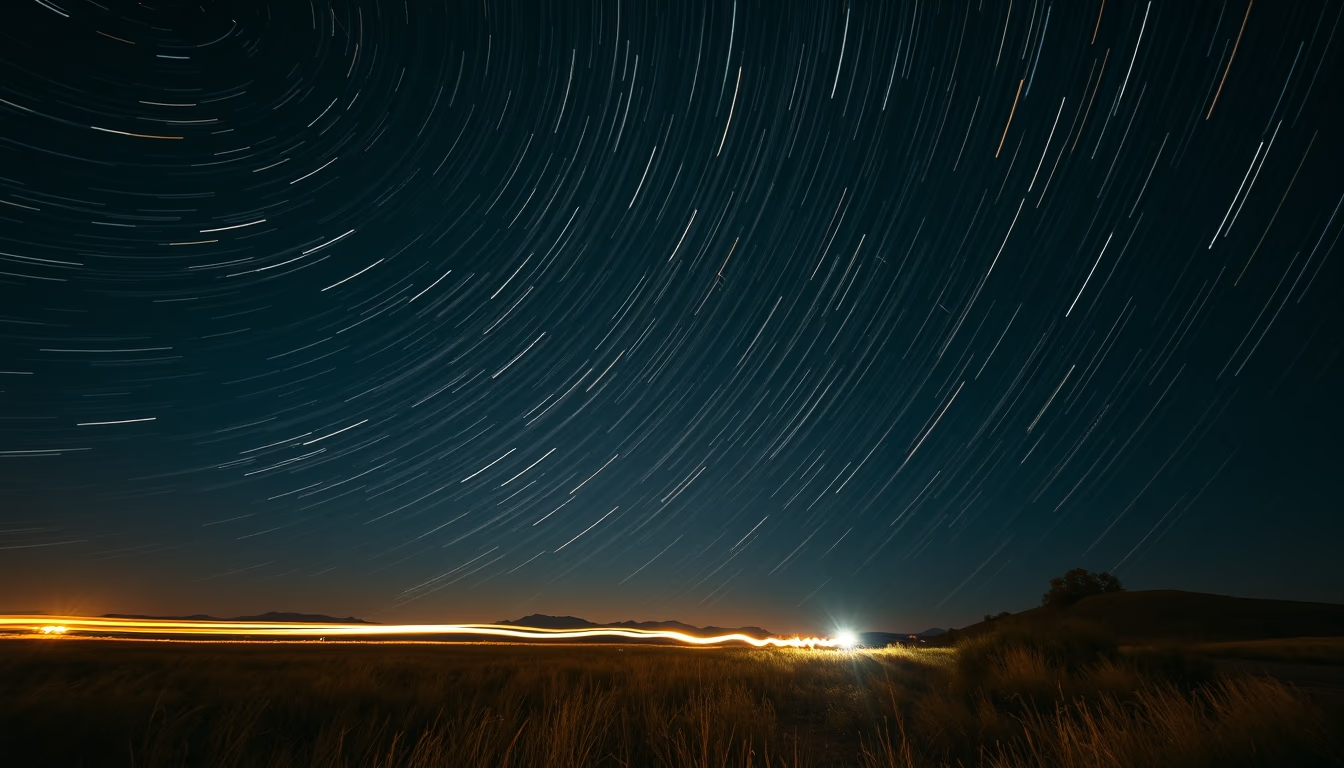
Star trails long exposure
1344×768 · AVIF · CC BY 4.0
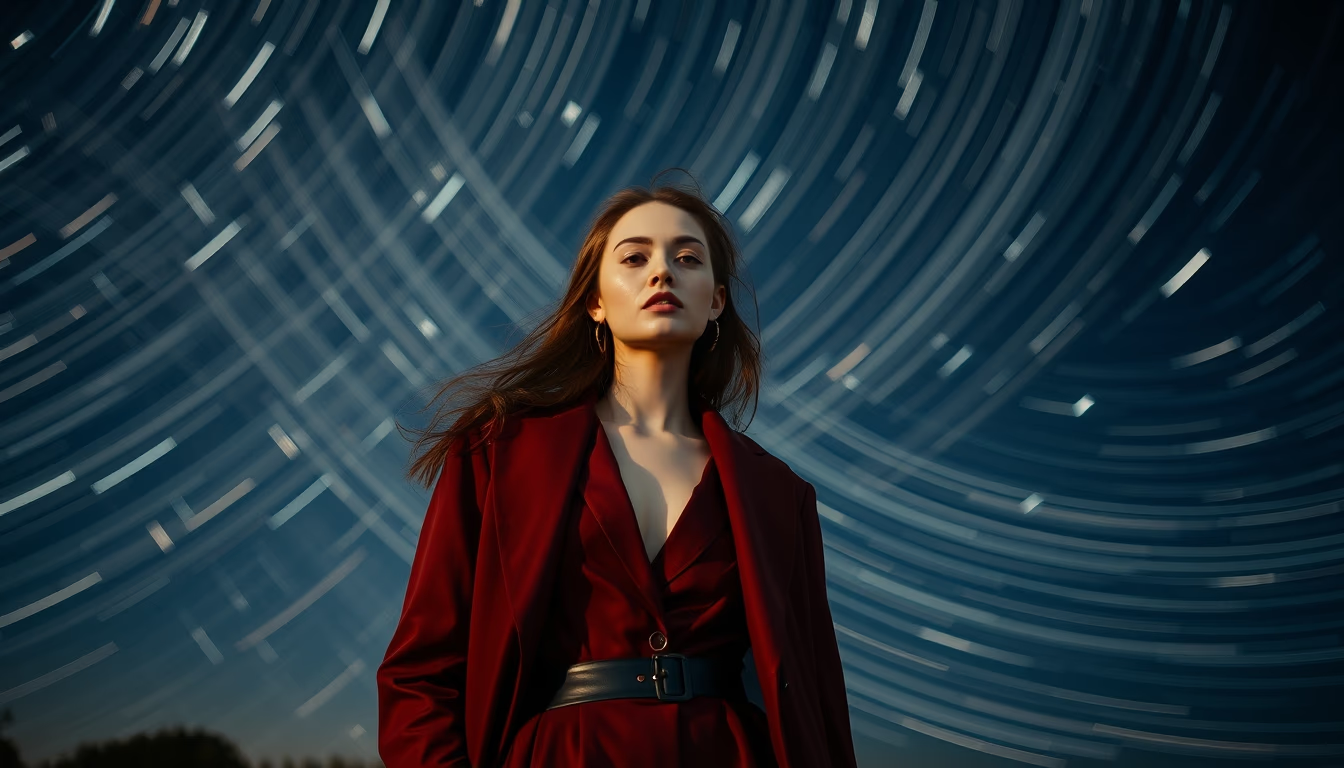
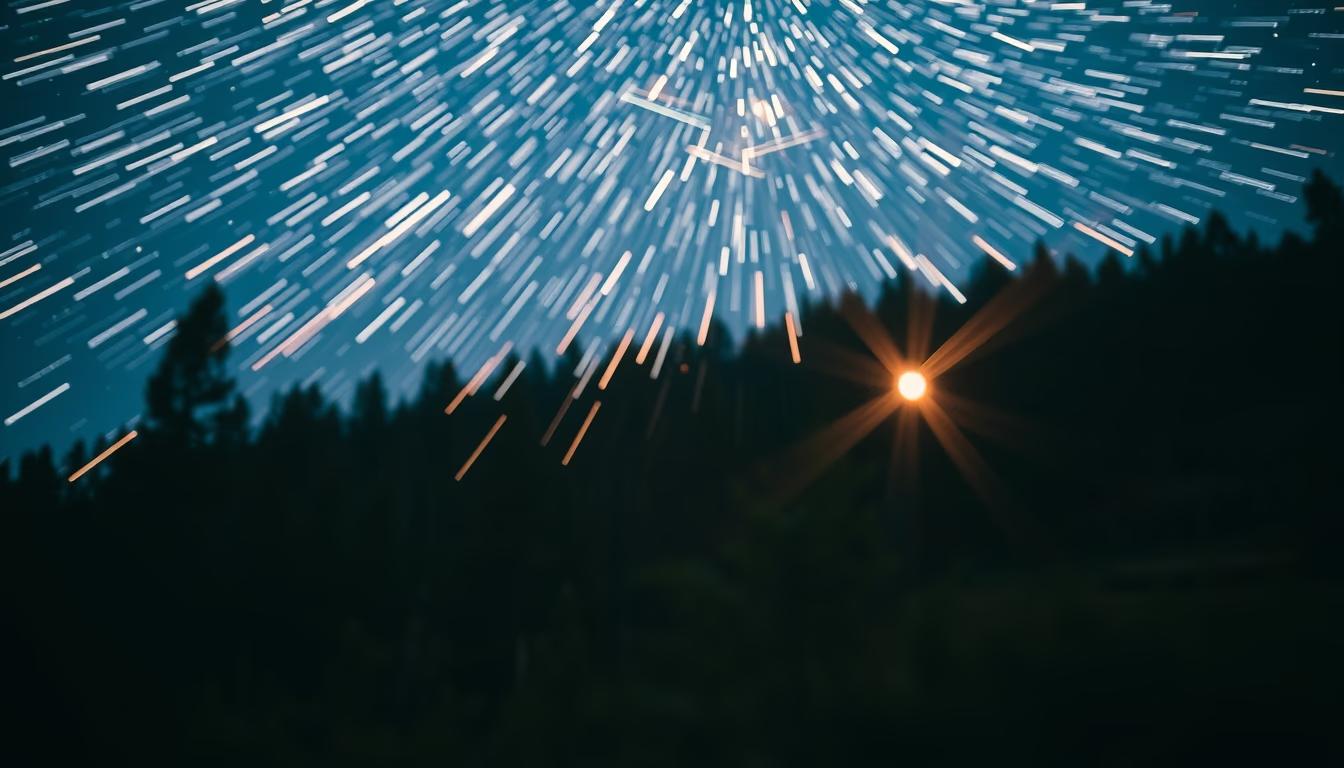
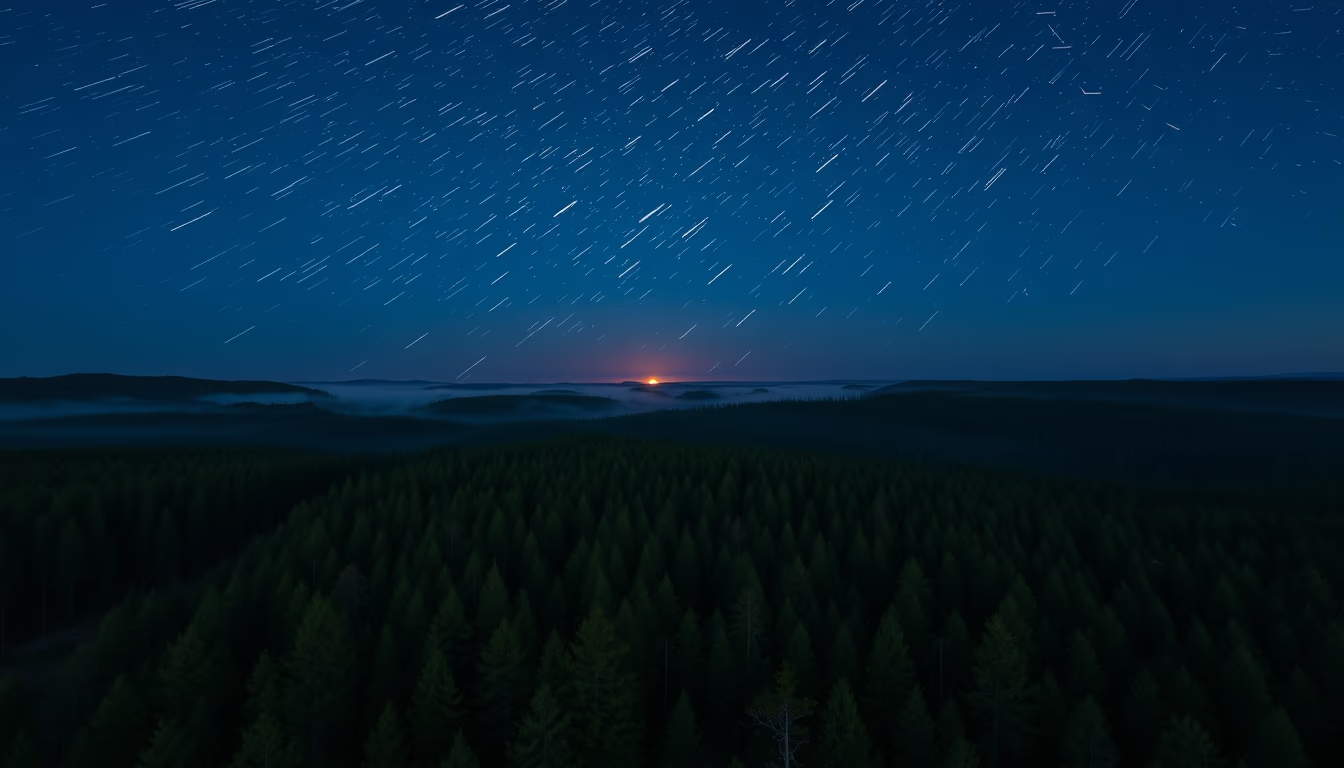
Stars leave circular trails in the sky in long exposure photographs, recording Earth's rotation over hours.
About this subject
Star trails are a photographic effect created by long exposure of the night sky. As Earth rotates, stars appear to move in concentric arcs around the celestial pole. This technique requires cameras fixed on tripods, exposures from tens of minutes to hours, and locations with very low light pollution. The result is hypnotic images that reveal the rhythm of the cosmos.
The practice of recording star trails dates back to early photography, when sensitive plates needed long exposure times. Today, it is popular among amateur and professional astrophotographers. Modern digital cameras allow stacking multiple short exposures to reduce noise, creating smooth trails. Neutral density filters are sometimes used to block light from the Moon or nearby cities.
Culturally, star trails evoke the vastness of the universe and human smallness. Many photographers seek iconic natural settings such as deserts, mountains, or archaeological sites to compose their images. In equatorial regions, trails are parallel lines, while near the poles they form perfect circles. The North Celestial Pole near Polaris serves as a guide for composition in the Northern Hemisphere.
Fun fact: a single 360-degree trail requires exactly 24 hours of continuous exposure, something rarely done due to sunrise. Stacking technique allows simulating long durations without risk of overexposure. Star trails are also used in citizen science to measure Earth's rotation or identify meteors and satellites that leave different trails.
Frequently Asked Questions
How long an exposure is needed for star trails?
Typically from 30 minutes to several hours. For a complete 360-degree circle, 24 hours would be needed, but in practice stacking multiple short exposures is used.
What equipment is essential for photographing star trails?
A camera with manual mode, a sturdy tripod, a remote shutter release or intervalometer, and a wide-angle lens. Dark locations away from cities are crucial.
What differentiates star trails from fixed-star astrophotography?
Star trails record the apparent motion of stars, while fixed-star astrophotography uses short exposures or trackers to capture stars as sharp points.
Direct URL
https://pub-c7d6a6ea828543ac903a74a341ccb2e1.r2.dev/imagens/star-trails-long-exposure-high-fashion-editorial-p0.avifHow to credit
Include a visible link back to UtilizAí. Copy one of the snippets below:
<a href="https://xn--utiliza-eza.com/en/midia/imagens/star-trails-long-exposure-high-fashion-editorial-p0">Star trails long exposure</a> by <a href="https://xn--utiliza-eza.com">UtilizAí</a>, licensed under <a href="https://creativecommons.org/licenses/by/4.0/">CC BY 4.0</a>.
[Star trails long exposure](https://xn--utiliza-eza.com/en/midia/imagens/star-trails-long-exposure-high-fashion-editorial-p0) by [UtilizAí](https://xn--utiliza-eza.com), CC BY 4.0
License: CC-BY-4.0