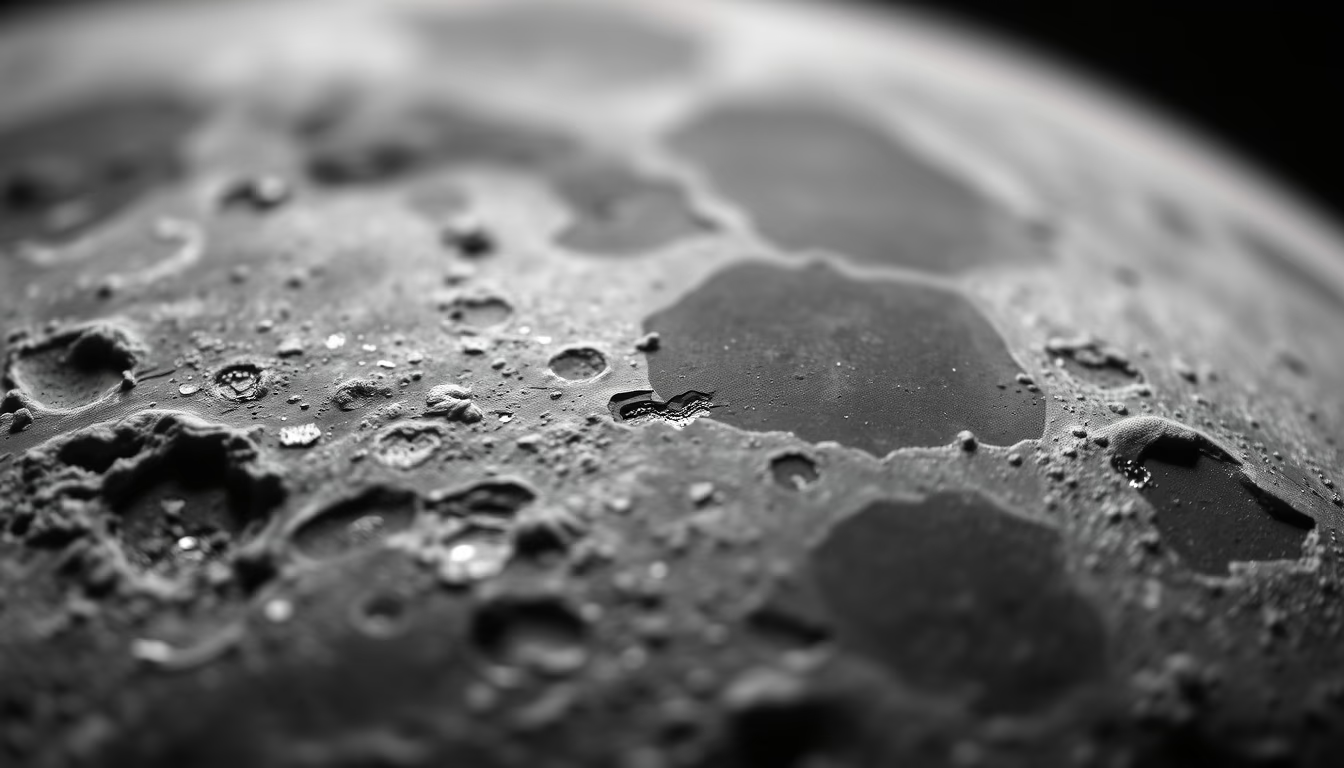
Moon detail crater closeup
1344×768 · AVIF · CC BY 4.0
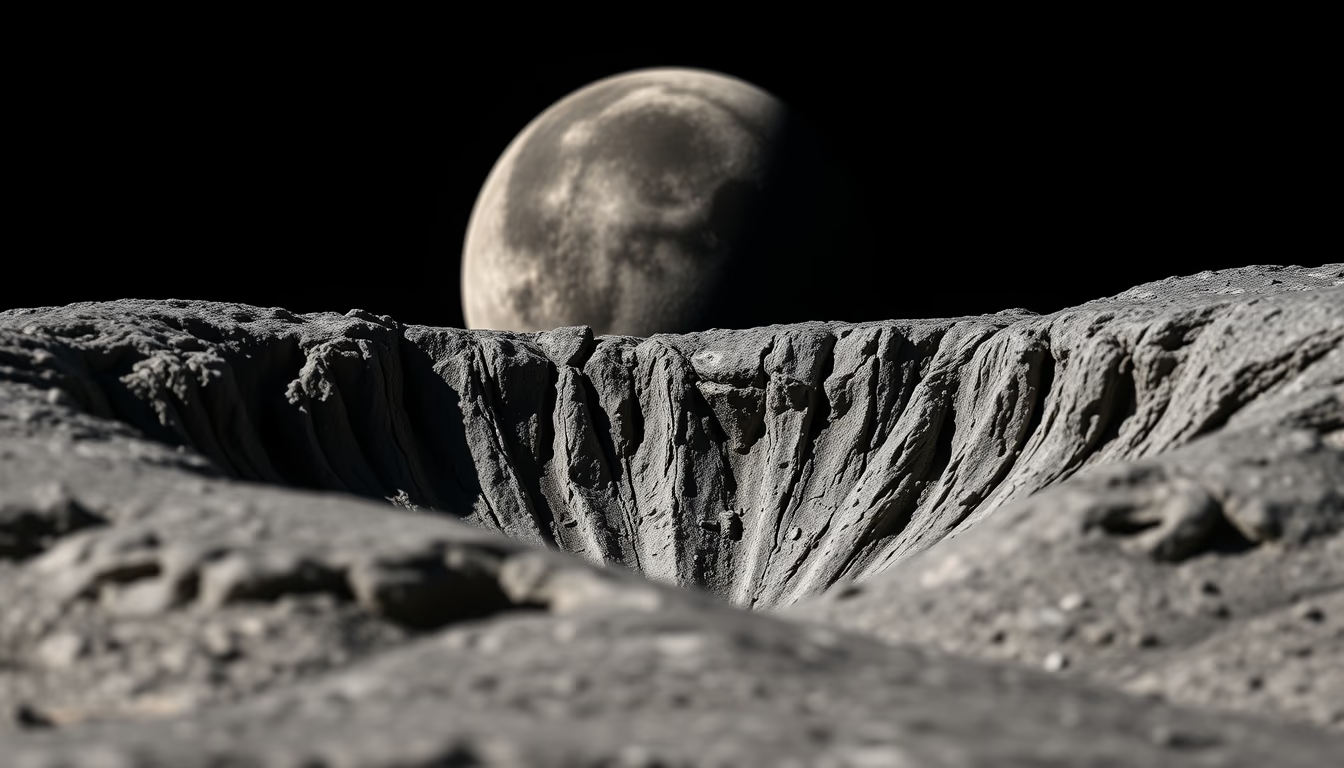
Details of the impacts that shaped the Moon: craters, their formation, and significance for planetary science.
About this subject
The lunar surface is marked by countless impact craters, resulting from collisions with asteroids and comets over billions of years. Unlike Earth, the Moon has no atmosphere or significant tectonic activity, preserving these scars for eons. Craters range from simple small depressions to large multi-ring basins, such as the South Pole-Aitken Basin, one of the largest in the Solar System.
Crater formation occurs in three stages: contact and compression, excavation, and modification. When an impactor hits the surface at tens of kilometers per second, the released energy vaporizes rock and creates a shock wave that excavates the ground. Ejected material forms a raised rim and, in some cases, central peaks, resulting from the rebound of the underlying rock.
Studying lunar craters provides clues about the history of the Solar System. Crater density in different areas allows surface dating: older regions have more craters. Moreover, samples returned by Apollo missions helped calibrate this chronology. The Moon acts as a geological archive, recording impacts that occurred over millions of years.
Craters such as Tycho, Copernicus, and Aristarchus are visible from Earth with small telescopes. Tycho, for instance, displays a bright ray system extending hundreds of kilometers, formed by ejected material. These rays are relatively young geologically, with an estimated age of about 100 million years. Amateur lunar observation remains popular, allowing anyone to explore these fascinating features.
Frequently Asked Questions
Why does the Moon have so many craters?
The Moon has no atmosphere to slow or disintegrate impactors, and its surface is geologically inactive, preserving craters for billions of years.
What is the largest crater on the Moon?
The South Pole-Aitken Basin is the largest impact crater on the Moon, about 2,500 km in diameter and up to 8 km deep.
How do lunar craters help date the surface?
Regions with more craters are considered older. By counting craters and using known ages from samples, a relative timescale was established.
Direct URL
https://pub-c7d6a6ea828543ac903a74a341ccb2e1.r2.dev/imagens/moon-detail-crater-closeup-minimalist-composition-p6.avifHow to credit
Include a visible link back to UtilizAí. Copy one of the snippets below:
<a href="https://xn--utiliza-eza.com/en/midia/imagens/moon-detail-crater-closeup-minimalist-composition-p6">Moon detail crater closeup</a> by <a href="https://xn--utiliza-eza.com">UtilizAí</a>, licensed under <a href="https://creativecommons.org/licenses/by/4.0/">CC BY 4.0</a>.
[Moon detail crater closeup](https://xn--utiliza-eza.com/en/midia/imagens/moon-detail-crater-closeup-minimalist-composition-p6) by [UtilizAí](https://xn--utiliza-eza.com), CC BY 4.0
License: CC-BY-4.0