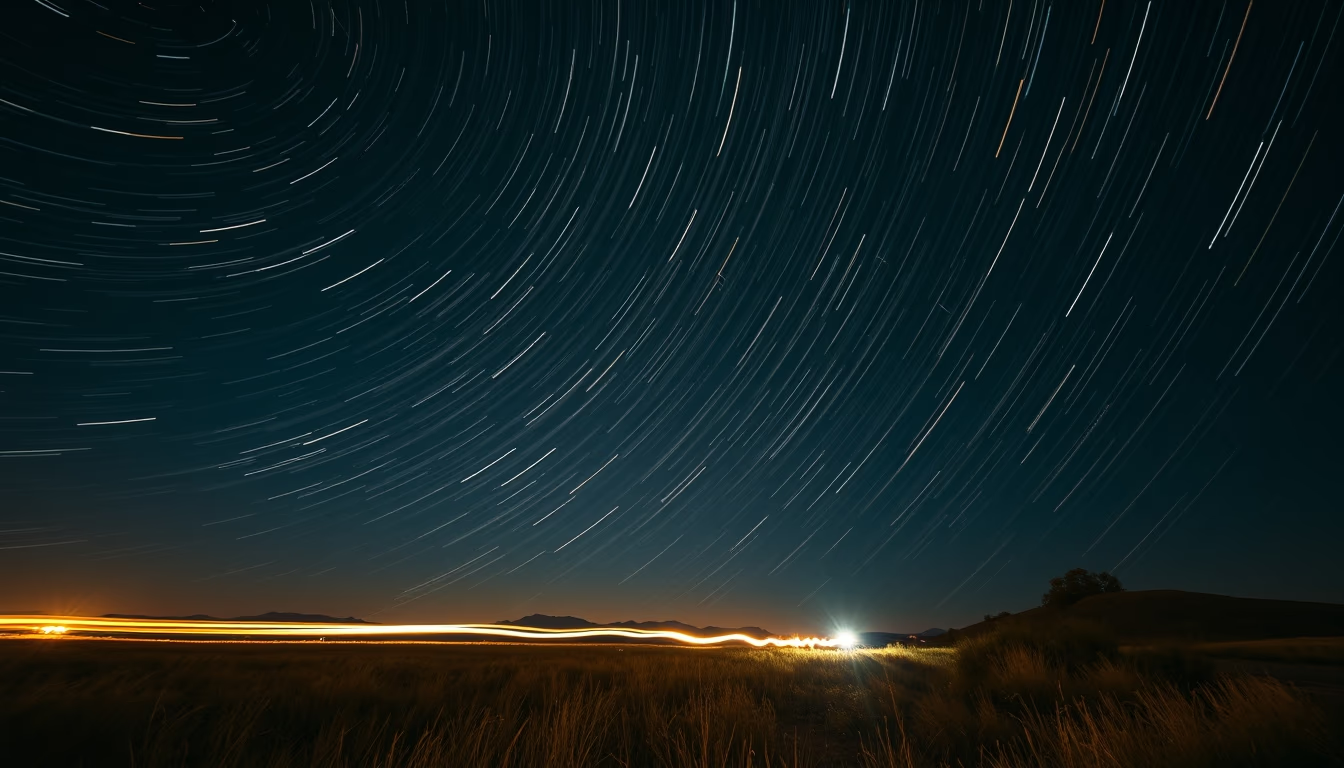
Star trails long exposure
1344×768 · AVIF · CC BY 4.0
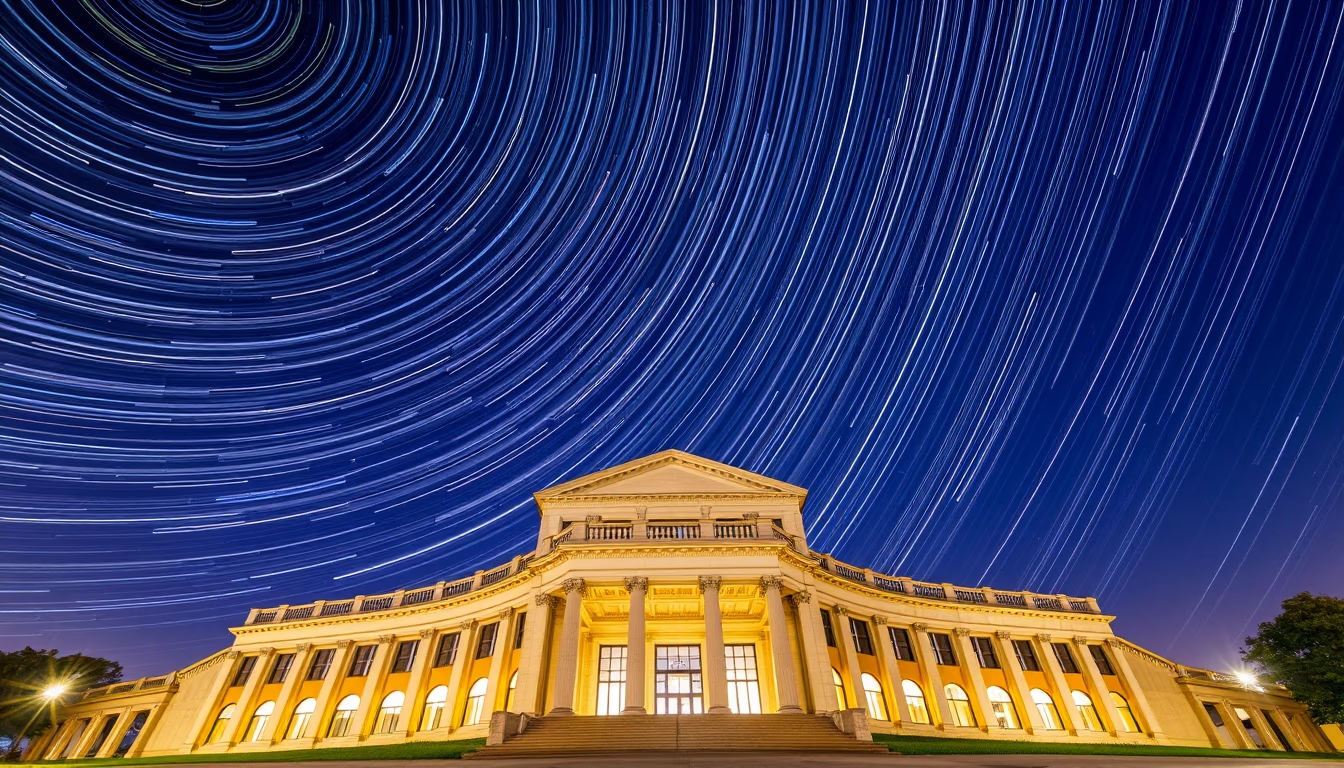
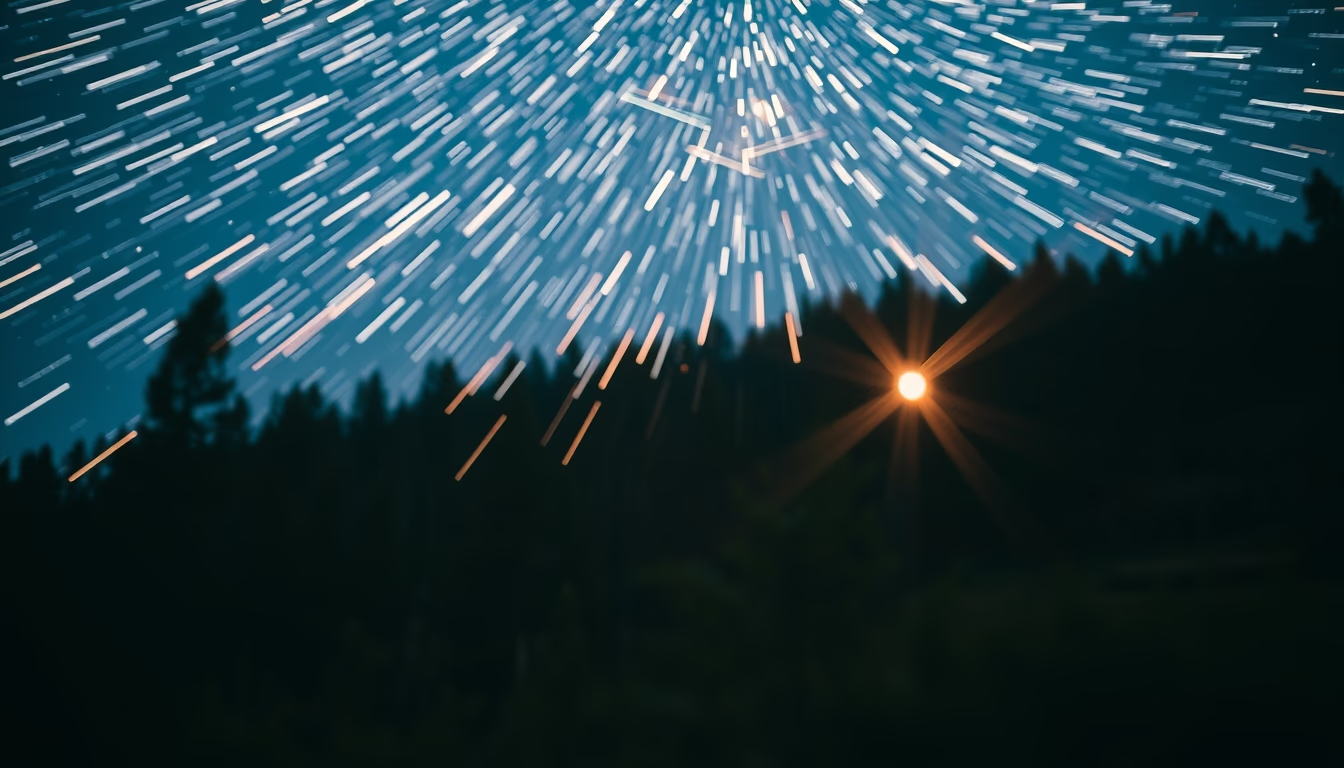
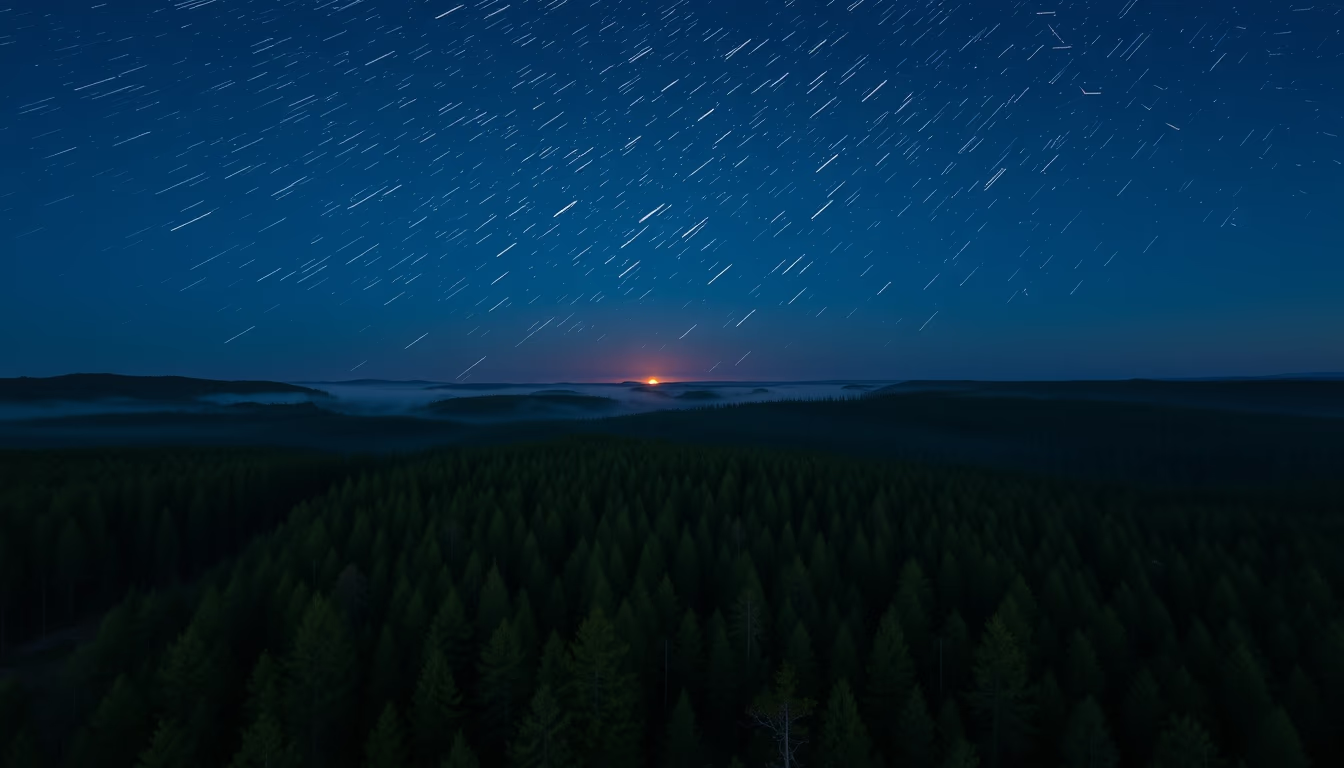
Star trails long exposure: a technique that reveals the apparent motion of stars across the night sky, combined with architectural elements.
About this subject
Star trails are a photographic phenomenon created by the apparent motion of stars due to Earth's rotation. In a long exposure, lasting from minutes to hours, each star traces an arc across the sky, forming concentric circles around the celestial poles. In the northern hemisphere the center is Polaris, while in the southern hemisphere it is the South Celestial Pole, marked by the Southern Cross constellation.
The long exposure technique requires a sturdy tripod and a remote shutter release to avoid vibrations. Traditionally, photographers used film; today, digital cameras allow stacking multiple short exposures to reduce noise and increase dynamic range. Location choice is critical: areas with low light pollution, such as national parks or rural zones, produce sharper and brighter trails.
Combining star trails with architectural photography adds scale and contrast. Historic buildings, monuments, or modern structures lit by artificial light or moonlight serve as visual anchors. Techniques like light painting on the foreground help highlight architectural details without interfering with the sky. Common exposure times range from 30 minutes to several hours, depending on the desired trail length.
Star trails are visual records of Earth's rotation: a 15° arc corresponds to one hour of exposure. Photos longer than 6 hours show complete circles but require extra batteries and precise temperature control. For beginners, apps like Stellarium help predict star positions, and cameras with intervalometers facilitate automatic stacking.
Frequently Asked Questions
How are star trails created?
They are created by the apparent motion of stars across the sky due to Earth's rotation. A long exposure captures this movement, producing arcs or circles of light.
What equipment is needed to photograph star trails?
A sturdy tripod, manual camera, wide-angle lens, remote shutter or intervalometer, and extra batteries. A dark location with low light pollution is essential.
Can star trails be combined with illuminated architecture?
Yes, buildings with artificial lights or lit by the moon create interesting contrast. Use light painting on the foreground to highlight details without overexposing the sky.
Direct URL
https://pub-c7d6a6ea828543ac903a74a341ccb2e1.r2.dev/imagens/star-trails-long-exposure-architectural-photography-p1.avifHow to credit
Include a visible link back to UtilizAí. Copy one of the snippets below:
<a href="https://xn--utiliza-eza.com/en/midia/imagens/star-trails-long-exposure-architectural-photography-p1">Star trails long exposure</a> by <a href="https://xn--utiliza-eza.com">UtilizAí</a>, licensed under <a href="https://creativecommons.org/licenses/by/4.0/">CC BY 4.0</a>.
[Star trails long exposure](https://xn--utiliza-eza.com/en/midia/imagens/star-trails-long-exposure-architectural-photography-p1) by [UtilizAí](https://xn--utiliza-eza.com), CC BY 4.0
License: CC-BY-4.0