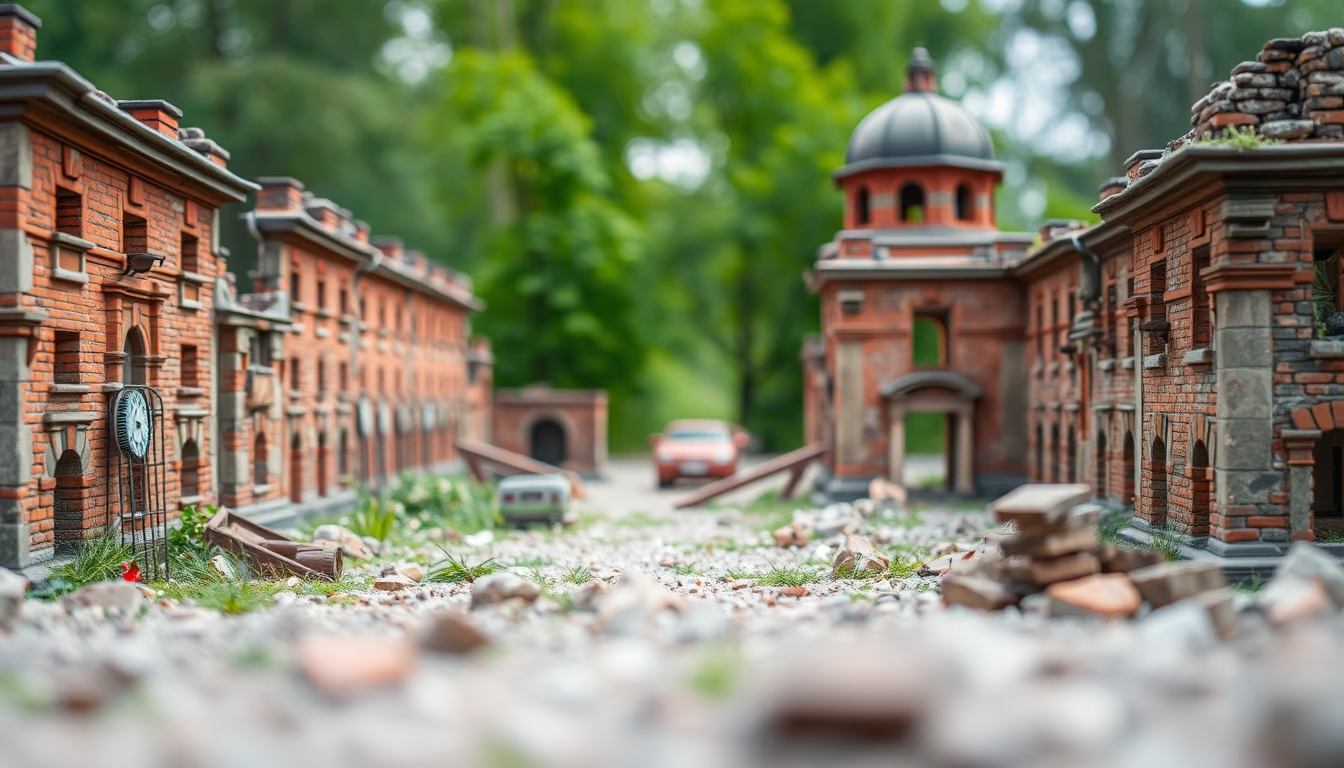
Stalingrad ruins
1344×768 · AVIF · CC BY 4.0
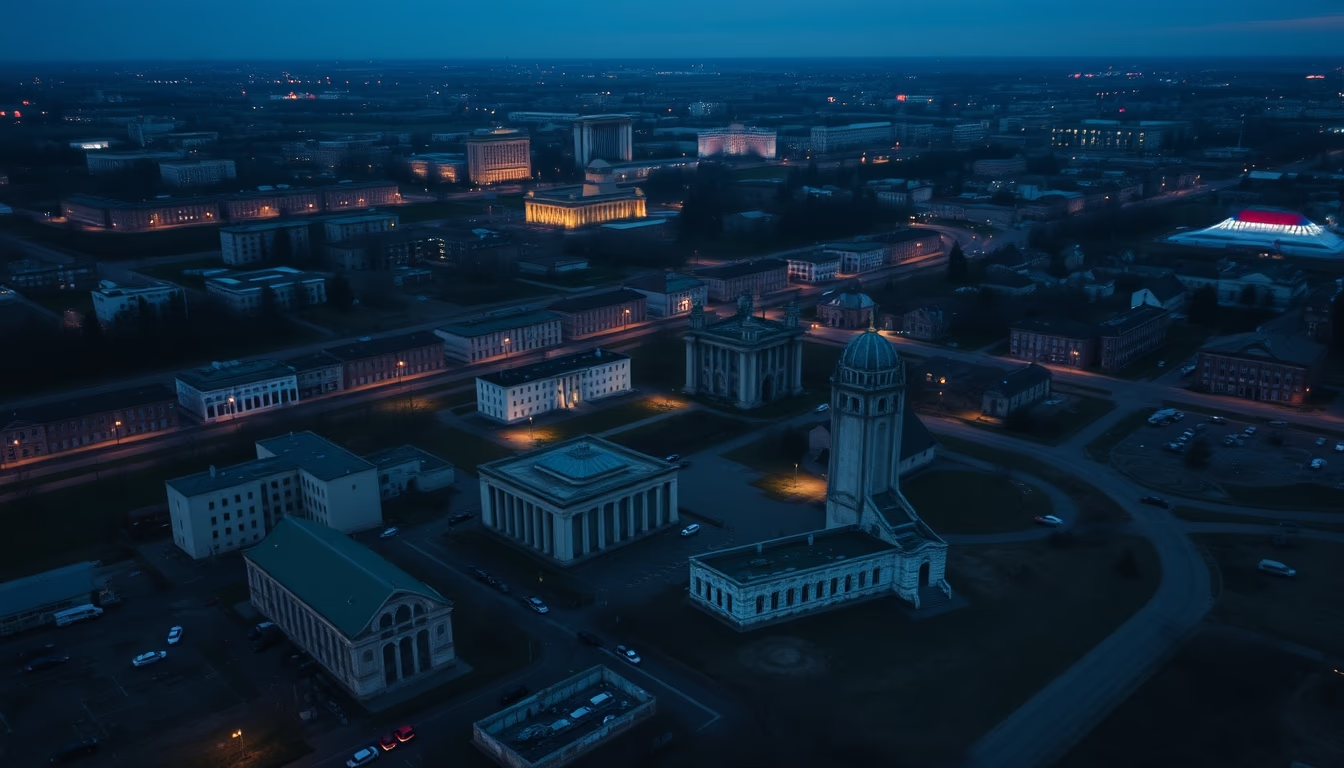
The Battle of Stalingrad (1942-1943) was the decisive confrontation of World War II on the Eastern Front, resulting in the surrender of the German 6th Army.
About this subject
The Battle of Stalingrad, fought between 23 August 1942 and 2 February 1943, is widely regarded as the turning point of World War II in Europe. The city, then a major industrial center and river port on the Volga River, bore the name of Josef Stalin and became a symbol of Soviet resistance. The German 6th Army, commanded by General Friedrich Paulus, received orders from Hitler to capture the city at all costs, triggering a brutal urban struggle that lasted for months.
Conditions in Stalingrad were apocalyptic. Fighting occurred house-to-house, factory-to-factory, with Soviet and German soldiers often separated by only a single wall. The snow and intense cold of the Russian winter exacerbated the suffering on both sides. In November 1942, the Red Army launched Operation Uranus, a counterattack that encircled the 6th Army, trapping approximately 300,000 German soldiers. Hitler forbade any attempt to break out and ordered Paulus to hold out.
German resistance was gradually strangled by hunger, cold, and lack of ammunition. On 2 February 1943, Paulus surrendered, defying Hitler's orders, who had expected the commander's suicide. About 91,000 German soldiers were taken prisoner, but only 5,000 of them survived Soviet captivity. Total casualties, military and civilian, are estimated at over 2 million, making it one of the bloodiest battles in history.
The German defeat at Stalingrad marked the end of the German offensive in the Soviet Union and began the Red Army's advance toward Berlin. The city was rebuilt after the war and renamed Volgograd in 1961. Today, monuments such as the Mamayev Kurgan memorial and the statue "The Motherland Calls!" remind of the sacrifice and strategic importance of the battle.
Frequently Asked Questions
Why was Stalingrad strategically important?
Stalingrad was a vital industrial and transport hub. Controlling it would allow the Axis to advance into the Caucasus and its oil fields, as well as block Soviet supply via the Volga.
How many people died in the Battle of Stalingrad?
An estimated over 2 million people died, including Soviet and German soldiers and civilians. It was one of the deadliest battles in history.
What happened to German prisoners after the battle?
About 91,000 German soldiers were taken prisoner. Slightly over 5,000 survived Soviet captivity due to disease, starvation, and forced labor.
Direct URL
https://pub-c7d6a6ea828543ac903a74a341ccb2e1.r2.dev/imagens/stalingrad-ruins-aerial-drone-shot-fresh2.avifHow to credit
Include a visible link back to UtilizAí. Copy one of the snippets below:
<a href="https://xn--utiliza-eza.com/en/midia/imagens/stalingrad-ruins-aerial-drone-shot-fresh2">Stalingrad ruins</a> by <a href="https://xn--utiliza-eza.com">UtilizAí</a>, licensed under <a href="https://creativecommons.org/licenses/by/4.0/">CC BY 4.0</a>.
[Stalingrad ruins](https://xn--utiliza-eza.com/en/midia/imagens/stalingrad-ruins-aerial-drone-shot-fresh2) by [UtilizAí](https://xn--utiliza-eza.com), CC BY 4.0
License: CC-BY-4.0