Stalingrad ruins
1344×768 · AVIF · CC BY 4.0
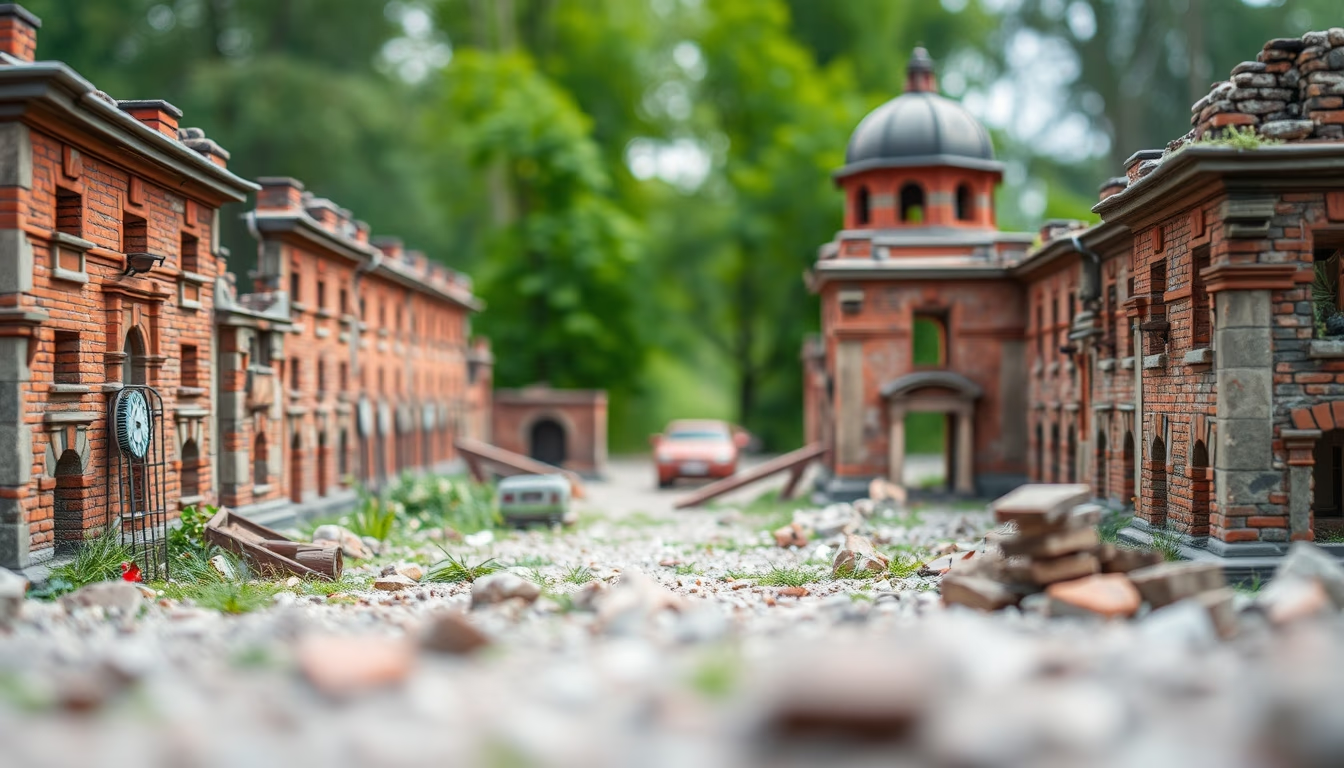
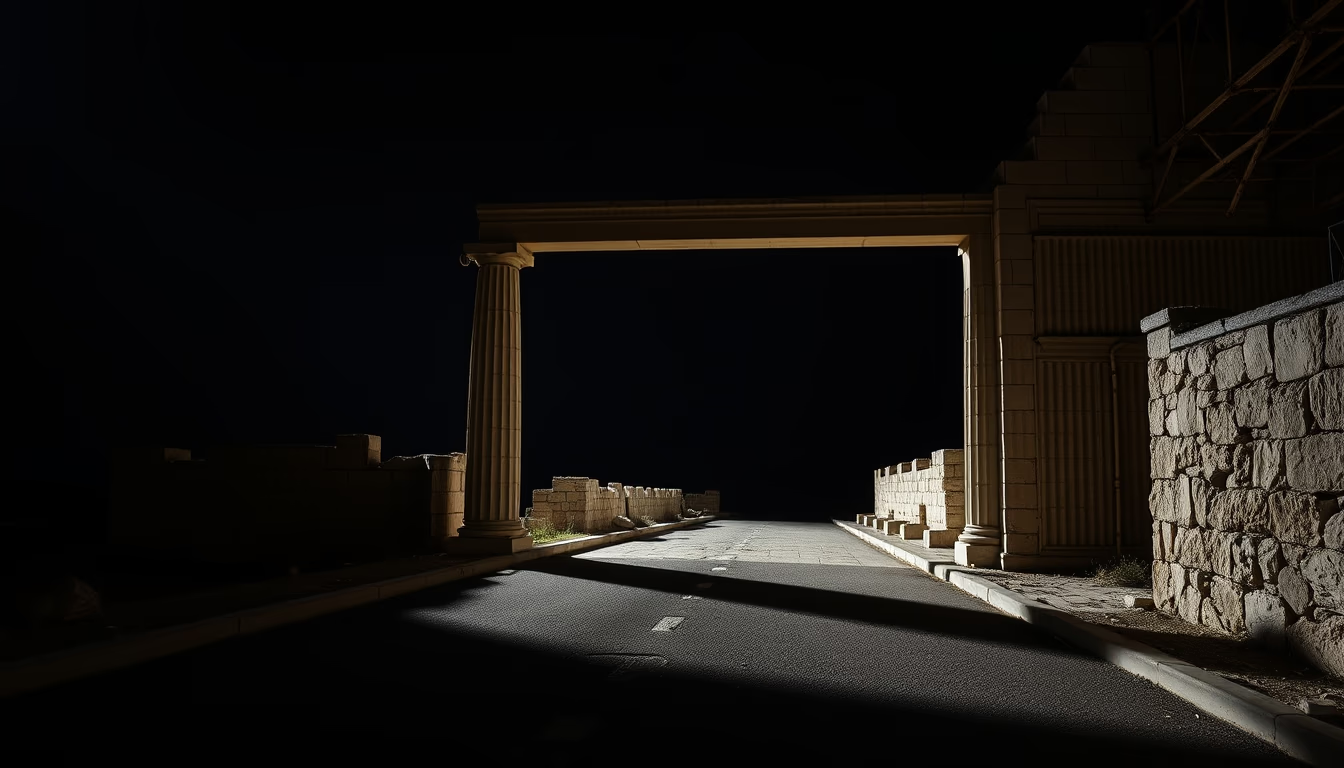
Ruins of Stalingrad, site of the bloodiest battle in World War II, where millions perished between 1942 and 1943.
About this subject
The Battle of Stalingrad, fought from August 23, 1942 to February 2, 1943, was the decisive confrontation between Nazi Germany and the Soviet Union. Hitler aimed to capture the industrial city on the Volga River to cut off Soviet supply routes and advance into the Caucasus. Stalin ordered the city to be defended at all costs, turning every street, factory, and building into a fortress. The German 6th Army, led by Friedrich Paulus, faced the Red Army under Georgy Zhukov and Vasily Chuikov. The fighting was brutal, with hand-to-hand combat, snipers, and heavy artillery. The city was reduced to rubble, with 99% of buildings destroyed or damaged. The Stalingrad Tractor Factory became a symbol of resistance, where workers continued producing tanks while frontline battles raged inside the workshops. The climax was the encirclement and annihilation of the 6th Army, which surrendered in February 1943. Estimated casualties range from 1.2 to 2 million dead, including soldiers and civilians. The Soviet victory marked the turning point in the war against Germany, boosting Allied morale. Today, the city is called Volgograd, and the Mamayev Kurgan memorial, with the statue "The Motherland Calls," honors the fallen. The preserved ruins serve as a testament to devastation and human resilience.
Frequently Asked Questions
Why was the Battle of Stalingrad so important?
It was the first major defeat of the Wehrmacht and the turning point of World War II, halting the German advance into the Soviet Union and decisively weakening Nazi military power.
How many people died in Stalingrad?
Estimates vary between 1.2 and 2 million dead, including Soviet and German soldiers as well as Soviet civilians. It was the deadliest battle in history.
What happened to the city of Stalingrad after the battle?
The city was completely devastated: 99% of buildings were destroyed or damaged. After the war, it was rebuilt and renamed Volgograd in 1961. Ruins like the Grind mill were preserved as memorials.
Direct URL
https://pub-c7d6a6ea828543ac903a74a341ccb2e1.r2.dev/imagens/stalingrad-ruins-tilt-shift-miniature-fresh17.avifHow to credit
Include a visible link back to UtilizAí. Copy one of the snippets below:
<a href="https://xn--utiliza-eza.com/en/midia/imagens/stalingrad-ruins-tilt-shift-miniature-fresh17">Stalingrad ruins</a> by <a href="https://xn--utiliza-eza.com">UtilizAí</a>, licensed under <a href="https://creativecommons.org/licenses/by/4.0/">CC BY 4.0</a>.
[Stalingrad ruins](https://xn--utiliza-eza.com/en/midia/imagens/stalingrad-ruins-tilt-shift-miniature-fresh17) by [UtilizAí](https://xn--utiliza-eza.com), CC BY 4.0
License: CC-BY-4.0