Sphinx egypt face
1344×768 · AVIF · CC BY 4.0
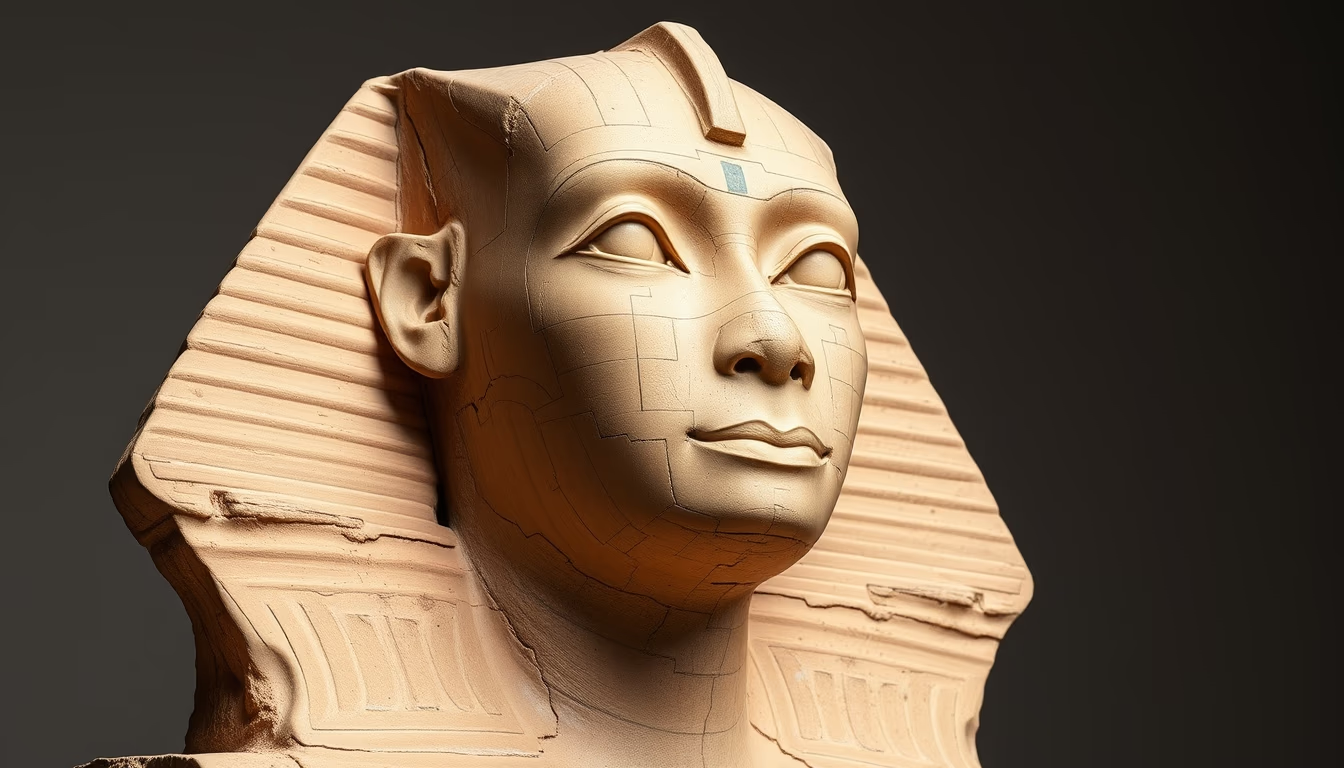
The Great Sphinx of Giza, Egypt, is a colossal limestone statue with a lion's body and a human head, symbolizing ancient Egyptian civilization.
About this subject
The Great Sphinx of Giza is one of the most monumental and enigmatic statues in the world, carved from a single block of limestone. Located on the Giza Plateau, west bank of the Nile, near the famous pyramids, it measures approximately 73 meters long, 20 meters high, and 14 meters wide. Its construction is believed to have occurred during the reign of Pharaoh Khafre (c. 2558, 2532 BCE), representing the pharaoh with a lion's body, symbolizing strength and wisdom.
The Sphinx has endured centuries of wind erosion and human damage. During the New Kingdom, it was partially restored by Thutmose IV, who recorded his dream on a stele between the monument's paws. In modern times, major restoration projects were undertaken, especially in the 1930s and more recently in the 21st century, to combat deterioration from pollution and groundwater.
One of the greatest mysteries involves the Sphinx's missing nose. Contrary to popular legend, it was not broken by Napoleon's soldiers but by a Muslim sheikh named Muhammad Saim al-Dahr in the 14th century, who considered the statue a pagan idol. Additionally, there are theories about hidden underground chambers, but excavations have not conclusively confirmed such claims.
Culturally, the Sphinx is a global icon of Ancient Egypt, inspiring countless references in art, literature, and media. Its face, carved with idealized human features, continues to attract millions of tourists annually, and it has been a UNESCO World Heritage Site since 1979, along with the Giza pyramids.
Frequently Asked Questions
What is the meaning of the Great Sphinx of Giza?
The Sphinx represents Pharaoh Khafre with a lion's body, symbolizing power, protection, and wisdom. In Egyptian culture, it served as a guardian of the Giza Plateau and royal tombs.
Why is the Sphinx's nose broken?
The nose was intentionally destroyed in the 14th century by Muhammad Saim al-Dahr, a Muslim sheikh who considered the statue a pagan idol. Legends about Napoleon or cannon fire are unfounded.
Are there secret chambers under the Sphinx?
There are theories about underground tunnels and chambers, but official archaeological excavations have not found conclusive evidence. Some areas have been mapped with radar, but nothing confirmed.
Direct URL
https://pub-c7d6a6ea828543ac903a74a341ccb2e1.r2.dev/imagens/sphinx-egypt-face-studio-editorial-portrait-p3.avifHow to credit
Include a visible link back to UtilizAí. Copy one of the snippets below:
<a href="https://xn--utiliza-eza.com/en/midia/imagens/sphinx-egypt-face-studio-editorial-portrait-p3">Sphinx egypt face</a> by <a href="https://xn--utiliza-eza.com">UtilizAí</a>, licensed under <a href="https://creativecommons.org/licenses/by/4.0/">CC BY 4.0</a>.
[Sphinx egypt face](https://xn--utiliza-eza.com/en/midia/imagens/sphinx-egypt-face-studio-editorial-portrait-p3) by [UtilizAí](https://xn--utiliza-eza.com), CC BY 4.0
License: CC-BY-4.0