Sphinx egypt face
1344×768 · AVIF · CC BY 4.0
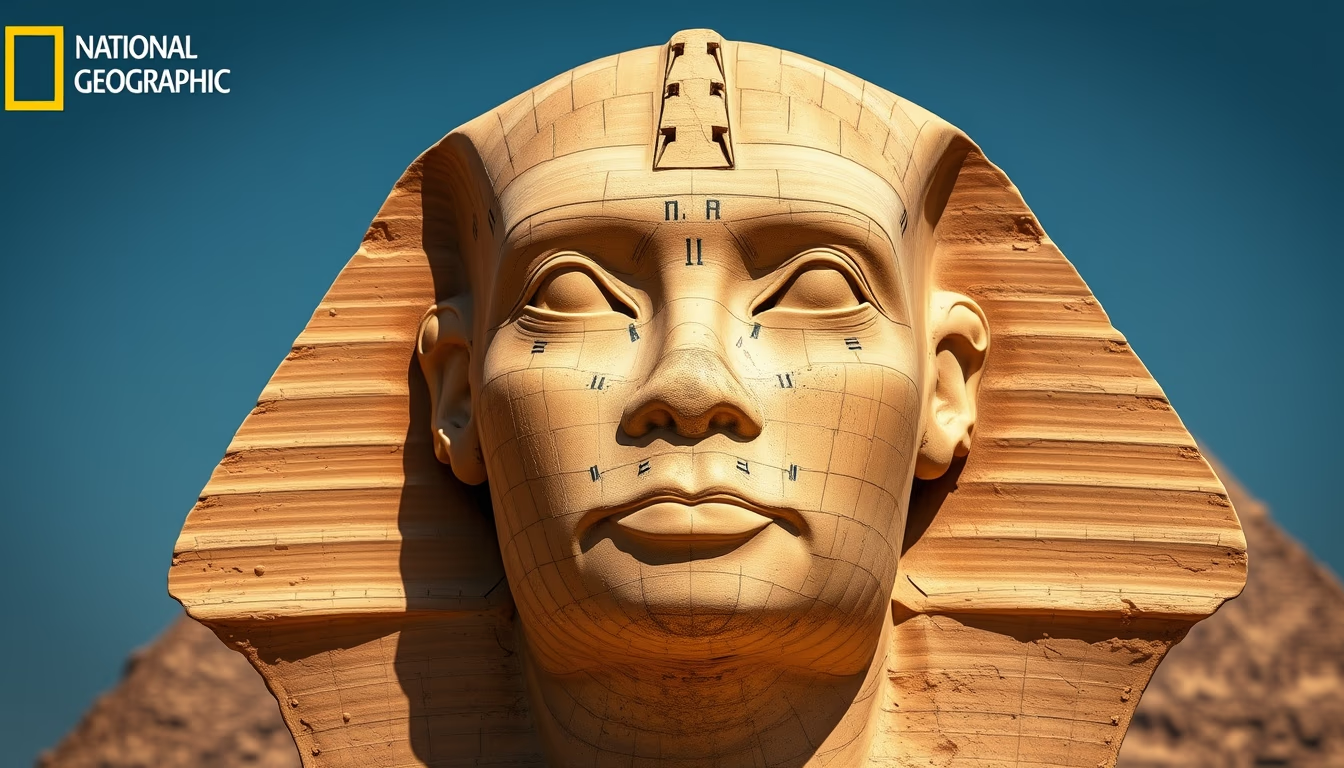
The Great Sphinx of Giza, with its enigmatic face, is one of the most monumental and mysterious statues of Ancient Egypt, carved from limestone over 4,500 years ago.
About this subject
The Great Sphinx of Giza, located on the Giza Plateau near Cairo, is a colossal statue with a lion's body and a human head, carved directly from limestone bedrock. It is believed to have been built during the reign of Pharaoh Khafre (c. 2558, 2532 BC), serving as a guardian for his pyramid. The face of the Sphinx, approximately 4 meters wide, displays features that many Egyptologists associate with Khafre himself, though there is no absolute consensus due to erosion and restorations over millennia.
The statue measures about 73 meters long and 20 meters high, making it one of the world's largest monoliths. The Sphinx's famously missing nose was likely destroyed by human action, possibly during the medieval period, contrary to myths attributing it to Napoleon. In addition, the Sphinx has suffered centuries of wind and rain erosion, as well as damage from modern pollution.
Mysteries surrounding the Sphinx include theories about hidden chambers, tunnels, and the possibility that it is much older than assumed. Geological studies indicate that erosion at the base may have been caused by heavy rainfall, suggesting a date earlier than the dynastic period, but this hypothesis is controversial. Recent restorations, such as those in the 1980s and 1990s, used modern techniques to preserve the structure.
Culturally, the Great Sphinx is a global icon representing the power and wisdom of Ancient Egypt. It attracts millions of tourists annually and is frequently depicted in films, books, and documentaries. The face, despite being weathered, maintains a serene expression that evokes fascination and speculation about its true meaning.
Frequently Asked Questions
Why is the Sphinx's nose broken?
The Sphinx's nose was likely intentionally destroyed by a Sufi Muslim named Muhammad Sa'im al-Dahr in the 14th century as an act of iconoclasm, not by Napoleon or natural forces.
What is the significance of the Sphinx's face?
The Sphinx's face is widely believed to represent Pharaoh Khafre, but it also symbolizes royal power and connection to the sun god Ra, combining the strength of a lion with human intelligence.
Is the Sphinx older than the pyramids?
There is debate about the Sphinx's age. The conventional theory places it during Khafre's reign, contemporary with the Pyramid of Khafre. However, some geologists suggest water erosion indicates an earlier date, possibly before 5000 BC, but this is not widely accepted.
Direct URL
https://pub-c7d6a6ea828543ac903a74a341ccb2e1.r2.dev/imagens/sphinx-egypt-face-national-geographic-style-p11.avifHow to credit
Include a visible link back to UtilizAí. Copy one of the snippets below:
<a href="https://xn--utiliza-eza.com/en/midia/imagens/sphinx-egypt-face-national-geographic-style-p11">Sphinx egypt face</a> by <a href="https://xn--utiliza-eza.com">UtilizAí</a>, licensed under <a href="https://creativecommons.org/licenses/by/4.0/">CC BY 4.0</a>.
[Sphinx egypt face](https://xn--utiliza-eza.com/en/midia/imagens/sphinx-egypt-face-national-geographic-style-p11) by [UtilizAí](https://xn--utiliza-eza.com), CC BY 4.0
License: CC-BY-4.0