Sphinx egypt face
1344×768 · AVIF · CC BY 4.0
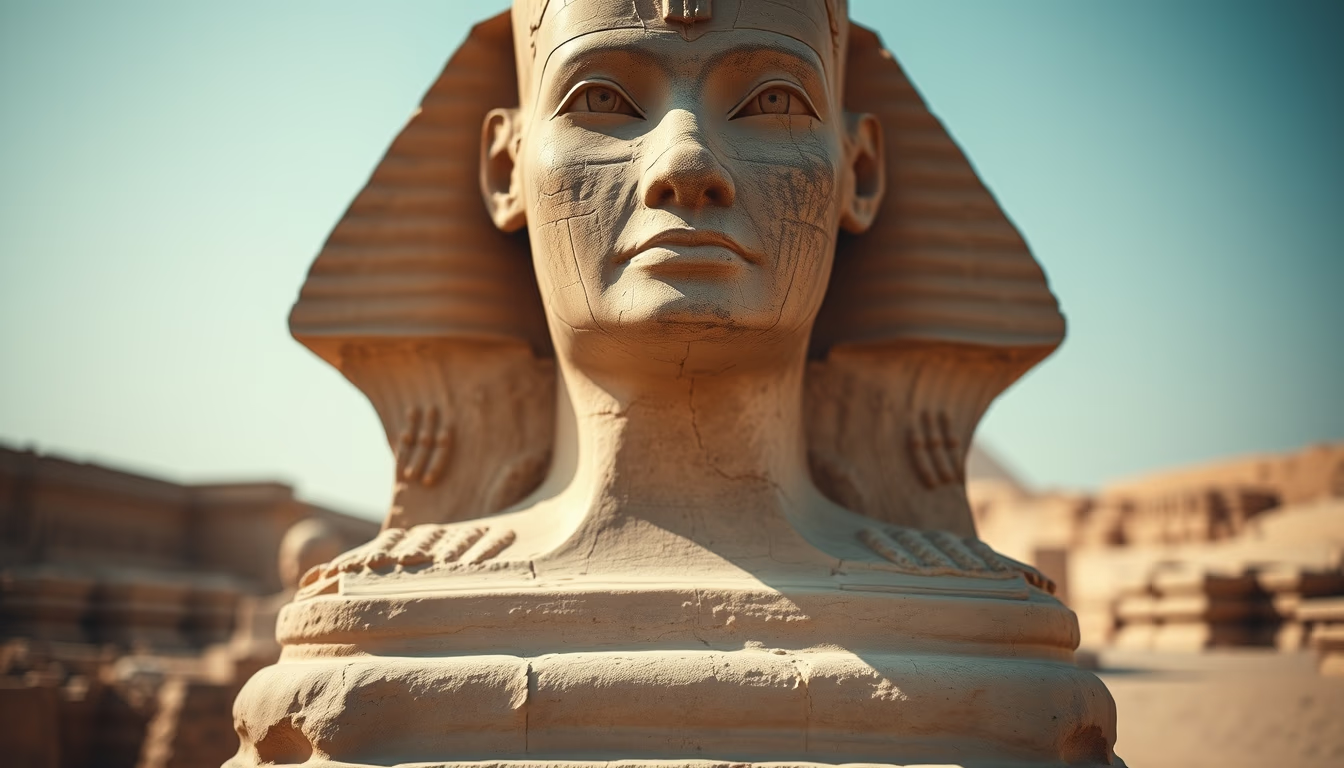
The face of the Great Sphinx of Giza, a millennia-old limestone monument, holds mysteries about its original appearance and the pharaoh it represents.
About this subject
The Great Sphinx of Giza, in Egypt, is one of the world's most iconic statues, carved directly from the limestone bedrock of the Giza Plateau. It is estimated to have been built during the reign of Pharaoh Khafre (c. 2558, 2532 BC), although no inscriptions conclusively prove this authorship. The Sphinx's face, originally about 20 meters high and 73 meters long, combines human and lion features, symbolizing divine royalty and protective strength.
The Sphinx's face has suffered centuries of erosion and vandalism. Its nose, for example, disappeared over time, possibly due to human or natural causes. In the 14th century, Egyptian historian Al-Maqrizi attributed the nose loss to iconoclasm by a Muslim devotee, but this claim is contested. Recent studies suggest the nose was already damaged before the 15th century. The face also lost part of its ceremonial beard, which was removed and now can be seen in fragments at the British Museum and the Egyptian Museum in Cairo.
The original painting of the Sphinx is another debated topic. Pigment analysis suggests that the face was brightly colored, with red ochre on the face and yellow and blue stripes on the nemes headdress. Over millennia, the monument was repeatedly buried by desert sand, which partly preserved it. Modern excavations, such as those in the early 20th century, uncovered the statue to ground level, allowing detailed studies of its structure and wear.
Interestingly, the Sphinx is not isolated; it is part of a funerary complex including the pyramids of Khufu, Khafre, and Menkaure. Its eastward orientation aligns with the rising sun, suggesting a religious function linked to solar rebirth. Although damaged, the face continues to fascinate researchers and tourists, sparking conspiracy theories about secret chambers and lost civilizations, but scientific archaeology focuses on its Pharaonic history and Old Kingdom context.
Frequently Asked Questions
Why is the Sphinx's nose broken?
The nose of the Great Sphinx of Giza was lost over centuries. The exact cause is uncertain, but theories include natural erosion, intentional vandalism, or cannon fire during military drills. Historical accounts indicate the nose was already missing by the 15th century.
Which pharaoh does the Sphinx represent?
The Sphinx's face is traditionally associated with Pharaoh Khafre of the 4th Dynasty Old Kingdom. However, there is no definitive evidence, and some scholars suggest it could represent Khufu or another ruler.
What was the original color of the Sphinx's face?
Pigment analysis indicates the Sphinx's face was originally painted in red ochre, while the nemes headdress had yellow and blue stripes. Traces of paint can still be found in protected areas of the statue.
Direct URL
https://pub-c7d6a6ea828543ac903a74a341ccb2e1.r2.dev/imagens/sphinx-egypt-face-macro-closeup-p5.avifHow to credit
Include a visible link back to UtilizAí. Copy one of the snippets below:
<a href="https://xn--utiliza-eza.com/en/midia/imagens/sphinx-egypt-face-macro-closeup-p5">Sphinx egypt face</a> by <a href="https://xn--utiliza-eza.com">UtilizAí</a>, licensed under <a href="https://creativecommons.org/licenses/by/4.0/">CC BY 4.0</a>.
[Sphinx egypt face](https://xn--utiliza-eza.com/en/midia/imagens/sphinx-egypt-face-macro-closeup-p5) by [UtilizAí](https://xn--utiliza-eza.com), CC BY 4.0
License: CC-BY-4.0