Sphinx egypt face
1344×768 · AVIF · CC BY 4.0
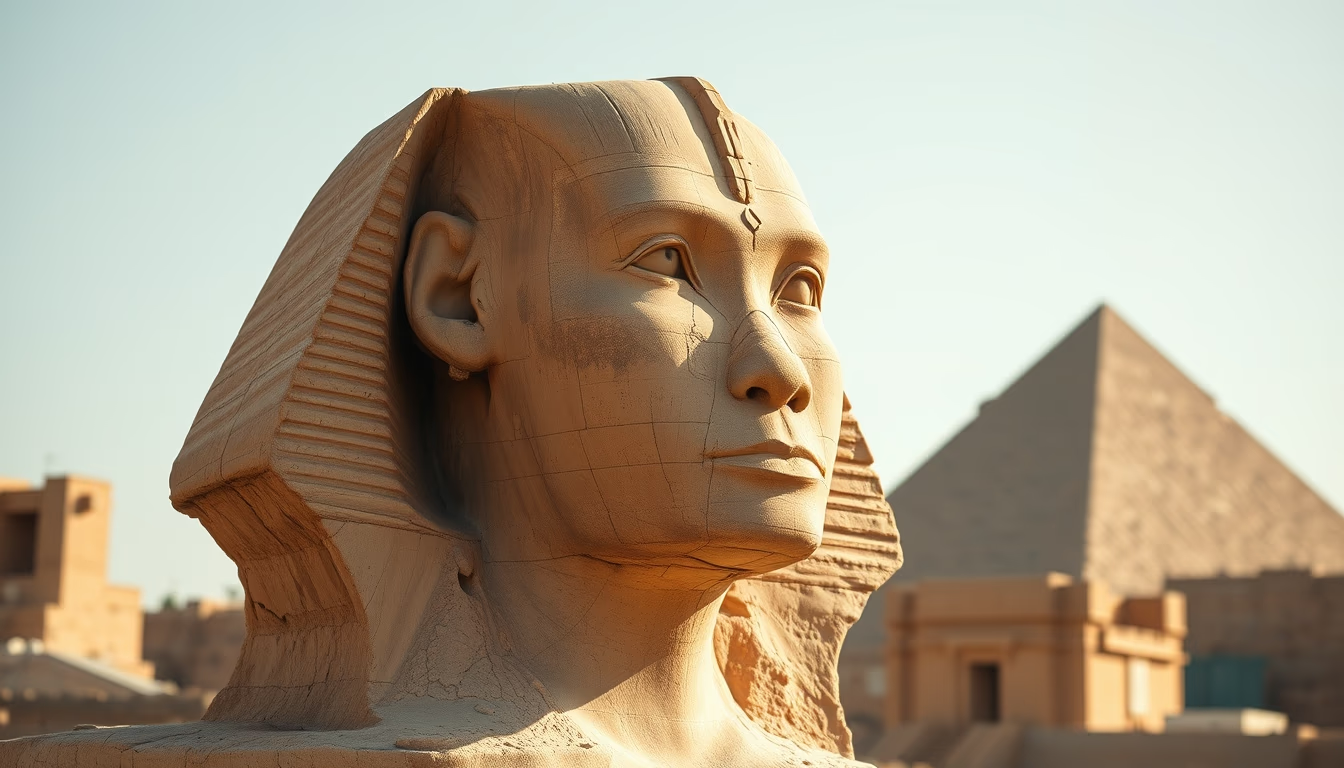
The face of the Great Sphinx of Giza, the ancient limestone guardian of the Egyptian plateau, carved over 4,500 years ago.
About this subject
The Great Sphinx of Giza is one of the most iconic statues of antiquity, carved directly into the limestone bedrock of the Giza plateau in Egypt. Measuring approximately 73 meters long and 20 meters high, it represents a mythological creature with a lion's body and a human head, traditionally associated with Pharaoh Khafre, who reigned around 2500 BCE. The statue is part of Khafre's funerary complex and likely served as a symbolic guardian of the site, protecting the royal tombs.
The Sphinx is aligned west to east, facing directly toward the rising sun, connecting it to the sun god Ra. Its human head represents the pharaoh's power and intelligence, while the lion's body symbolizes strength and royalty. Over millennia, the statue has suffered natural erosion and human damage. Its nose, for instance, was lost long before the modern era, contrary to popular myth, it was not destroyed by Napoleon's soldiers, but rather by a Sufi named Muhammad Sa'im al-Dahr in the 14th century.
Desert sands periodically buried the Sphinx up to its neck for long periods. Excavations in the 20th century, led by archaeologists such as Selim Hassan, uncovered its base and parts of its body. Today, the statue faces threats from pollution and rising groundwater, requiring ongoing conservation efforts. In 2024, the Egyptian government launched a new restoration project to preserve its structure.
The Great Sphinx remains a global icon of ancient Egypt, attracting millions of tourists each year. Its mystery and grandeur inspire continuous research into its construction, exact age, and original meaning for Egyptian civilization.
Frequently Asked Questions
Why did the Sphinx lose its nose?
The Sphinx's nose was deliberately destroyed in the 14th century by a Sufi named Muhammad Sa'im al-Dahr, who considered the statue an idol. Contrary to popular myth, it was not caused by Napoleon's soldiers.
How tall is the Great Sphinx?
The Great Sphinx stands about 20 meters tall (from head top to paw base) and is 73 meters long, with a maximum width of approximately 19 meters.
What does the Sphinx represent in Egyptian culture?
The Sphinx combined a lion's body (strength and royalty) with a human head (intelligence and divine power of the pharaoh). It served as a symbolic guardian of tombs and temples, often associated with the sun god Ra.
Direct URL
https://pub-c7d6a6ea828543ac903a74a341ccb2e1.r2.dev/imagens/sphinx-egypt-face-documentary-photography-p1.avifHow to credit
Include a visible link back to UtilizAí. Copy one of the snippets below:
<a href="https://xn--utiliza-eza.com/en/midia/imagens/sphinx-egypt-face-documentary-photography-p1">Sphinx egypt face</a> by <a href="https://xn--utiliza-eza.com">UtilizAí</a>, licensed under <a href="https://creativecommons.org/licenses/by/4.0/">CC BY 4.0</a>.
[Sphinx egypt face](https://xn--utiliza-eza.com/en/midia/imagens/sphinx-egypt-face-documentary-photography-p1) by [UtilizAí](https://xn--utiliza-eza.com), CC BY 4.0
License: CC-BY-4.0